
Eloralintide: what the trials show, status and safety
Summary
Eloralintide is an experimental copy of amylin, a hunger-regulating hormone from the pancreas, given in the trials as a subcutaneous injection once a week. No country has approved it; the phase 3 trials report from 2028. In a 48-week trial in 263 adults, weight fell by 9 to 20 per cent, against 0.4 per cent on placebo. Nausea reached 64 per cent in one group.
Key findings at a glance
- The 48-week trial reported mean weight changes of minus 9 to minus 20 per cent. That phase 2 trial ran in 263 adults without type 2 diabetes, at 46 American centres. The six treated groups averaged minus 9, 12, 18, 20, 20 and 16 per cent, against minus 0.4 per cent on placebo [1].
- The registry figures agree with the paper. Per group they read minus 9.4, 12.4, 17.6, 20.1, 19.9 and 16.5 per cent. Between 71.55 and 97.50 per cent of treated participants lost at least 5 per cent of their weight, against 31.21 per cent on placebo [2].
- Nausea was heavy at the middle of the dose range. It reached 64 per cent at the third of four fixed levels and 54 per cent in one step-up group, against 14 per cent on placebo [1].
- The earlier 12-week study looked far gentler. In 100 adults the commonest reports were decreased appetite at 19 per cent, headache at 12 per cent and nausea at 8 per cent. Weight fell by 2.6 to 11.3 per cent [3].
- It prefers one receptor, by design. In cells, it activated the human AMY1 receptor 12-fold more strongly than the calcitonin receptor and 11-fold more strongly than the AMY3 receptor [4].
- Twenty-two registered trials, one sponsor, no approval. Five of them are phase 3, with planned completion between February 2028 and July 2030. Eli Lilly is the sponsor of every single one [5].
- It is banned in sport at all times under the catch-all class for substances no health authority has approved [6].
What it is
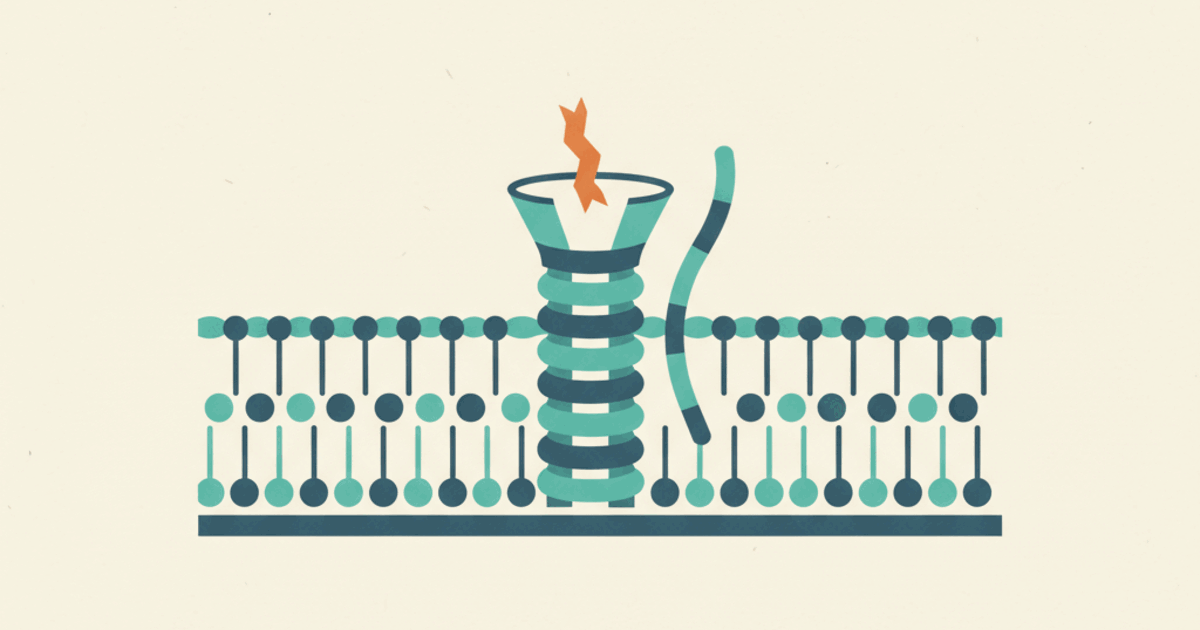
Eloralintide is a synthetic amylin analogue: a rebuilt version of a natural hormone. Amylin is released by the same pancreatic cells that release insulin. It slows the stomach, damps the release of glucagon and sends a fullness signal to the brainstem [7], [4].
Natural amylin acts for minutes and clumps easily into fibres. The rebuilt version fixes both problems. A twenty-carbon fatty acid chain hangs off the molecule and clips reversibly onto albumin, the main carrier protein in blood. That stretches its action to about a week [7], [8].
Eli Lilly developed it under the code LY3841136. There is no brand name, because no market has approved it. All 22 registered trials and all three primary papers come from that one company [5], [7].
Quick facts
| Field | Value | Ref |
|---|---|---|
| Name | Eloralintide; proposed international non-proprietary name, list 131 of 2024 | [7] |
| Development codes | LY3841136, AMY-1176, AT53786 | [9], [10] |
| Class | Long-acting, selective amylin receptor agonist; a modified peptide, not a hormone copy in the strict sense | [4], [11] |
| Structure | 37 residues, ring closed by a methylene thioether rather than the usual disulfide bridge; ornithine replaces one lysine; two residues methylated; amidated end | [7], [9] |
| Sequence | XCNTATCATG XLAEFLVRSS NNFGPKLPPT EVGSNTY, where the first X is a gamma-glutamyl residue and the eleventh is ornithine | [11] |
| Formula and mass | C201H319N49O65S2, about 4526 g/mol; the exact mass is 4523.2604 | [8], [11] |
| Half-life | Never published. The papers state only that the profile supports weekly use | [3] |
| Route in trials | Subcutaneous injection, once weekly, in every registered trial | [5] |
| Status | Not approved in any market; phase 3 | [5], [12] |
| Developer | Eli Lilly and Company, Indianapolis | [5] |
| CAS registry number | 2883634-40-8 | [7] |
| PubChem CID | 175663130 | [8] |
| UNII | 73G3354J8W | [9] |
| InChIKey | RLBIFQNAUXZCQB-UHFFFAOYSA-N | [8] |
| ChEMBL, KEGG, Wikidata | CHEMBL6068462, D12886, Q141202873. No DrugBank entry found | [10], [11], [13] |
| ATC code | None. Codes are normally issued around approval | [10] |
How it works
The amylin receptor is not a single protein but a pair, and that pairing is the whole story of this molecule.
- Two proteins make the receptor. A calcitonin receptor joins one of three helper proteins called RAMP1, RAMP2 and RAMP3. The combination with RAMP1 is the AMY1 receptor [4].
- Eloralintide favours AMY1. In cells built to carry one receptor each, it activated the human AMY1 receptor 12-fold more strongly than the calcitonin receptor. The margin over the AMY3 receptor was 11-fold [4].
- That preference is the point of the design. It separates the substance from dual amylin and calcitonin receptor agonists such as cagrilintide, which hit both without preference [4], [14].
- In rats the selectivity showed up as less aversion. Lean rats given eloralintide developed significantly less conditioned taste aversion than rats given cagrilintide (p < 0.05). This is animal data and does not transfer to people [4].
- The fatty chain buys the week. Over 12 weeks of weekly injections, exposure rose in step with the dose: the dose-normalised ratios were 1.1 for total exposure and 1.0 for peak concentration [3].
- The reference databases describe the target more coarsely. KEGG lists the calcitonin receptor and the calcitonin receptor-like receptor as targets, which is broader than the published selectivity measurements [11].
Two reviews from 2026 raise the same open question about the entire class. It is not settled whether eating less reflects genuine fullness or a mild feeling of sickness, and receptor preference may be what decides it [14], [15].
What the trials found
Three peer-reviewed papers carry all the human evidence, plus one set of registry results. A literature search on 20 September 2026 returned nine records for the name in total [16].
Weight over 48 weeks
Phase 2 RCT The central trial randomised 263 adults without type 2 diabetes at 46 American centres, and ran for 48 weeks against placebo. Participants averaged 49.0 years of age (standard deviation 12.6) and 109.1 kg in weight (22.8), with a body mass index of 39.1 (6.8). Four out of five were women, and four out of five were white [1].
There were four fixed dose levels and two step-up groups. Average weight change was minus 9 per cent at the lowest level, with a 95 per cent confidence interval of minus 12.6 to minus 6.3. It then read minus 12 per cent (minus 14.9 to minus 9.8), minus 18 per cent (minus 20.7 to minus 14.5) and minus 20 per cent (minus 22.7 to minus 17.5) as the level rose. The two step-up groups reached minus 20 per cent (minus 22.7 to minus 17.0) and minus 16 per cent (minus 18.6 to minus 14.1), against minus 0.4 per cent (minus 2.2 to plus 1.4) on placebo [1].
Phase 2 trial NCT06230523, 263 adults without type 2 diabetes at 46 American centres, 48 weeks. Levels 1 to 4 are the four fixed dose levels from lowest to highest; the two escalation groups stepped up from level 3 and from level 2. Figures are the efficacy estimand from the publication. Sources [1], [2].
Phase 2 RCT The registry holds a second set of figures, calculated a different way. They read minus 9.4, 12.4, 17.6, 20.1, 19.9 and 16.5 per cent, against minus 0.4 per cent. In kilograms that is minus 10.2 to minus 21.3, against minus 0.2 [2].
Phase 2 RCT The share reaching at least 5 per cent weight loss ran from 71.55 to 97.50 per cent across the treated groups. Placebo was 31.21 per cent. The two sets of estimates differ because one counts people who stayed on treatment and the other everyone randomised [1], [2].
Weight and tolerability over 12 weeks
Phase 1 RCT Before that came a 12-week study in 100 adults with overweight or obesity, at three American centres, with weekly injections and no step-up. Average age was 44 years, 29 per cent were women, and the average body mass index was 32.6 [3].
Phase 1 RCT Weight fell by 2.6 to 11.3 per cent across the dose groups by week 12. Gastrointestinal complaints were uncommon: diarrhoea 10 per cent, nausea 8 per cent, vomiting 4 per cent. COVID-19 was recorded in 11 per cent, a passing infection of the 2022 to 2024 study window rather than a drug effect. Most events were mild, and there were no deaths [3].
The first study in humans
Phase 1 RCT The first-in-human study ran from March 2022 to January 2024 and enrolled 148 people in total. In the single-dose part, 48 healthy adults with an average body mass index of 27.5 received one injection and were followed for four weeks [4], [17].
Phase 1 RCT At week four, weight had fallen by 2.5 per cent at one of the higher single doses (p < 0.01). At the highest single dose it fell 4.4 per cent (p < 0.001), against a rise of 0.6 per cent on placebo. Nine participants reported 16 events between them, 15 of which were mild. Two of them accounted for four gastrointestinal events, one of which was a moderate bout of vomiting [4].
How it compares indirectly
Network meta-analysis A 2026 analysis pooled six randomised trials with 4642 participants and compared amylin-based treatments indirectly. High-dose eloralintide ranked second for weight reduction at minus 18.01 per cent against placebo (ranking score 0.89), behind high-dose subcutaneous amycretin at minus 23.95 per cent (1.00) [18].
Network meta-analysis The authors call their own evidence sparse, of low certainty, and the findings preliminary. Indirect comparison is not the same as a head-to-head trial, and none of the amylin analogues has been tested against another in one [18].
Cardiometabolic measures
Narrative review One review of the early studies describes falls in pulse rate, blood pressure, inflammation markers and blood lipids, and a loss weighted towards fat mass. It highlights the fall in pulse as a contrast with GLP-1 medicines, which raise heart rate [19].
Narrative review The same authors state plainly that no amylin receptor agonist has been through a trial measuring heart attacks or strokes. They call these figures context rather than prediction, and the underlying numbers are not in the accessible abstracts [19].
The combination trials have no results yet
No results Eloralintide has been given together with tirzepatide in four completed phase 1 studies and one phase 2 trial in type 2 diabetes with 367 participants. None has been published. Results from combination groups say nothing about the substance on its own [20], [21].
No results Three further trials pair it with macupatide, a separate Eli Lilly molecule with its own database entry. Treating those results as eloralintide results would overstate what the substance does alone [22], [23].
What is still unknown
- Anything past 48 weeks. That is the longest published treatment period. The phase 3 trials run to 2028 and 2030 [1], [5].
- Whether it protects the heart. No trial measuring heart attacks or strokes is registered, and the cardiometabolic findings are surrogate measures [19], [5].
- How the heart rhythm responds. No dedicated study of cardiac repolarisation exists for this substance. That is missing data, not a clean result [5].
- What happens in kidney or liver impairment. Two phase 1 studies with 28 and 36 participants were still running on 20 September 2026 [24].
- Pregnancy, breastfeeding, fertility and children. No data at all. An interaction study with an oral contraceptive had not started [25].
- Whether the weight comes back. No published data on what happens after stopping.
- Whether it works outside the trial population. The phase 2 group was 78 per cent women and 78 per cent white, recruited only in the United States [1].
Side effects and safety
All safety data come from company-run trials under medical supervision. There is no approved label, no leaflet and no safety monitoring system for use outside a trial, because there is no approval [12], [5].
- Nausea is the defining complaint, and it is not dose-ordered. Across the 48-week groups it ran 11, 13, 64, 33, 54 and 25 per cent, against 14 per cent on placebo. The rate at the third fixed level was higher than at the fourth, and the paper does not explain that [1].
- Fatigue tracks the dose more tidily. It ran 0, 13, 29, 43, 46 and 21 per cent across the same groups, against 12 per cent on placebo [1].
- Decreased appetite was the top report over 12 weeks at 19 per cent, followed by headache at 12 per cent and fatigue at 11 per cent. It is both the intended pharmacology and a recorded side effect [3].
- Serious events did not exceed placebo. Over 48 weeks they occurred in 3 of 53 on placebo. In the treated groups of 28, 24, 28, 54, 24 and 52 they occurred 3, 1, 1, 3, 2 and 1 times, with no dose trend [2].
- No deaths occurred in either trial. Over 12 weeks there was one serious event, judged unrelated by the investigator [2], [3].
- There are no contraindications and no official warnings, because there is no assessed product label. Trial exclusion criteria, such as thyroid disease or previous weight-loss surgery, are entry rules and not contraindications [12].
Phase 2 trial NCT06230523, 263 adults, 48 weeks. Levels 1 to 4 are the four fixed dose levels from lowest to highest. The rate at level 3 exceeds the rate at the higher level 4, and the publication does not account for it. Source [1].
One claim about this substance needs care. The 12-week data, with nausea at 8 per cent, were read as evidence of gentler gastrointestinal tolerance than rival compounds. The 48-week data do not support a blanket version of that claim [3], [1].
A further gap sits in the chemistry. Natural human amylin readily forms amyloid fibres, and suppressing that tendency is the central design problem of the whole class. No data specific to eloralintide address it [15].
Why this page lists no doses
This page gives no amounts for eloralintide in any unit. The substance is an investigational medicine that no health authority anywhere has assessed, so no amount has ever been declared acceptable outside a supervised trial [12], [5].
Where trial groups are mentioned above, they appear as levels from lowest to highest, because the figures belong to the results they explain. A table of amounts, steps and intervals would read as instructions rather than as a citation [1].
Development and approval status
Eloralintide is not approved in any market and never has been. Register checks on 20 September 2026 found nothing anywhere, and five phase 3 trials were under way [12], [5].
From a first injection in 2022 to phase 3
- 2022First study in humansThe single- and multiple-dose study opens on 30 March and runs to January 2024 with 148 participants, ref [17]
- 2024Phase 2 beginsThe 48-week dose-finding trial starts on 5 February at 46 American centres, ref [2]
- 2025Two papers and a finished trialThe preclinical description appears, the phase 2 trial completes in August, and its results reach the Lancet, refs [4], [1]
- Dec 2025Phase 3 opensENLIGHTEN-2 begins in adults with type 2 diabetes, 1035 participants planned, ref [26]
- Feb 2026Four more phase 3 trialsENLIGHTEN-1, -3, -4 and -6 start within five days of each other, covering obesity, sleep apnoea and knee pain, refs [27], [28], [29], [30]
- 2028First phase 3 results dueENLIGHTEN-2 has a planned completion date of February 2028, ref [26]
- 2030Last planned completionENLIGHTEN-1 is scheduled to finish in July 2030, ref [27]
- March 2022 the first study in humans opens, with single and multiple doses in 148 healthy and overweight participants [17].
- February 2024 the 48-week phase 2 dose-finding trial starts at 46 American centres [2].
- 2025 the preclinical description is published, and the phase 2 trial completes in August [4], [2].
- November 2025 the phase 2 results appear in the Lancet online, ahead of the print issue of 6 December [1].
- December 2025 ENLIGHTEN-2 opens, the first phase 3 trial, in adults with type 2 diabetes [26].
- February 2026 four more phase 3 trials open. They cover obesity without diabetes, obstructive sleep apnoea, knee osteoarthritis pain, and obesity persisting on weekly incretin treatment [27], [28], [29], [30].
- 2028 to 2030 the phase 3 trials are scheduled to report [26], [27].
| Market | Status | Since or note |
|---|---|---|
| United States | Unapproved | Investigational only |
| European Union | Unapproved | No assessment report |
| Germany | Unapproved | Follows the European route |
| United Kingdom | Unapproved | Unlicensed |
| Australia | Unregistered | Not listed |
| Canada | Unapproved | No product number |
| Switzerland | Unapproved | None found |
Two entries rest on machine queries run alongside a control substance in the same database: the American and the Canadian. A blank result there means absence, not a broken query [12], [31].
The European, British, Australian and Swiss entries are weaker. Those registers either render their results in the browser or could not be reached, so the status there is inferred from the worldwide picture [32], [33], [34], [35].
Japan and China are not in the table, but both are in the programme. A 12-week study in 128 Japanese participants and a single-dose study in 30 Chinese participants have both finished. That places the substance in trials rather than on either market [20].
An independent cross-check supports the picture. The chemistry database ChEMBL records no first approval and no classification code, although its development phase entry lags behind the registry [10].
The wider legal position is set out under are peptides legal and FDA-approved peptides.
Anti-doping
Eloralintide is prohibited at all times, in and out of competition. It is not named on the 2026 prohibited list. It falls into class S0, which covers any pharmacological substance with no current approval by a government health authority for human therapeutic use [6].
The wording names drugs under pre-clinical or clinical development as an example, so no interpretation is needed here. Everything in S0 counts as a specified substance, which affects how a sanction is measured but not the ban itself [6].
The class covering peptide hormones and growth factors does not apply: it lists no amylin or calcitonin receptor agonists. Neither does the entry for insulins and insulin mimetics, because amylin is a separate hormone with its own receptor system [6].
Eloralintide is also absent from the annex to the German anti-doping statute, which lists no amylin analogues at all. That is a gap in a closed list rather than a permission, and medicines law applies regardless [36].
No detection method specific to eloralintide has been published. The full picture is at peptides banned in sport.
Compared with related peptides
| Substance | How it acts | Strongest published weight result | Ref |
|---|---|---|---|
| Eloralintide | Prefers the AMY1 receptor over the calcitonin receptor | Minus 20 per cent at 48 weeks, phase 2, 263 adults | [1] |
| Cagrilintide | Activates amylin and calcitonin receptors without preference | Minus 6.0 to minus 10.8 per cent at 26 weeks, 706 adults | [37] |
| Semaglutide | GLP-1 receptor; approved medicine | Minus 14.9 per cent at 68 weeks, 1961 adults | [38] |
| Tirzepatide | GIP and GLP-1 receptors; approved medicine | Minus 15.0 to minus 20.9 per cent at 72 weeks, 2539 adults | [39] |
| Retatrutide | Three metabolic receptors; investigational | Minus 8.7 to minus 24.2 per cent at 48 weeks, 338 adults | [40] |
| Pramlintide | The first approved amylin analogue, short-acting | See its own record | — |
Network meta-analysis of six randomised trials, 4642 adults with overweight or obesity and no diabetes, 12 to 68 weeks. These are indirect comparisons, not head-to-head results, and the authors call the evidence sparse and of low certainty. Source [18].
The numbers in that table cannot be lined up against each other. They come from separate trials with different populations, different lengths and different statistical methods [41].
Cagrilintide is the closest relative and the sharpest contrast. Both are long-acting amylin copies carrying a fatty chain, given once a week in their trials. But cagrilintide comes from a different company, uses a real disulfide bridge, and activates the calcitonin receptor as readily as the amylin one [4], [37].
Pramlintide shows what the class looked like before the fatty acid chain. It is approved, short-acting and needs frequent injection, and its effect on weight is modest [42].
Among the investigational compounds, eloralintide sits in a crowded field. Reviews list it alongside petrelintide, MET-233i, ABBV-295, AZD6234 and the multi-receptor molecule amycretin [42], [15].
Common misconceptions
- "Eloralintide is basically cagrilintide." No. Different company, different chemistry and, above all, a different receptor profile: cagrilintide hits both receptors, eloralintide favours AMY1 by a factor of 12 [4], [7].
- "It is just synthetic amylin, so it is gentle." No. Natural amylin lasts minutes and clumps into fibres. This version swaps residues, changes the closing ring, and carries a fatty chain that keeps it working for a week. An injection cannot be taken back [7], [9].
- "Phase 3 means it is nearly approved." No. Phase 3 means the largest trials are running. No application is visible in any register checked, and the trials report between 2028 and 2030 [5], [10].
- "The 20 per cent is comparable with approved medicines." No. It comes from a 48-week dose-finding trial in 263 people, 78 per cent of them women, all recruited in the United States. Approved medicines were tested over 68 to 72 weeks in thousands [1], [39].
- "It is gentle on the stomach." The 12-week figures say 8 per cent nausea; the 48-week figures say up to 64 per cent. The second set covers the longer exposure [3], [1].
- "It is not on the doping list, so it is allowed." No. Class S0 catches every substance without approval and names drugs in development explicitly. The examples on the list are not exhaustive [6].
- "It is not in the German anti-doping annex, so trading it is legal." Two different bodies of law. The annex does not list it, so the doping offences do not bite. Medicines law still forbids placing an unapproved medicine on the market [36].
Frequently asked questions
What is eloralintide?
It is a laboratory-built copy of amylin, a hormone the pancreas releases together with insulin. Amylin slows the stomach, damps glucagon and signals fullness to the brainstem. Natural amylin lasts minutes; eloralintide carries a fatty acid chain that binds to albumin in the blood, which stretches its action to about a week. Eli Lilly developed it under the code LY3841136.
Is eloralintide approved anywhere?
No. Register checks on 20 September 2026 found no approval in the United States, the European Union, Germany, the United Kingdom, Australia, Canada or Switzerland. Japan and China have none either. It is an investigational medicine in phase 3. There is no brand name, no package leaflet and no authorised form of it.
How much weight did people lose in the eloralintide trial?
The trial ran 48 weeks in 263 adults without type 2 diabetes. Average weight fell by 9, 12, 18 and 20 per cent across the four fixed dose levels. The two step-up groups reached 20 and 16 per cent, against minus 0.4 per cent on placebo.
What are the side effects of eloralintide?
Nausea and fatigue dominate. In the 48-week trial nausea ran from 11 to 64 per cent across the dose groups, against 14 per cent on placebo. Fatigue ran from 0 to 46 per cent, against 12 per cent. In the earlier 12-week study nausea was 8 per cent. No deaths occurred in either trial.
How is eloralintide different from cagrilintide?
Both are long-acting amylin copies, given once a week in their trials, but they hit different receptor mixtures. Cagrilintide activates the amylin and the calcitonin receptor without preference, which is why it is called a dual agonist. Eloralintide activates the human AMY1 receptor 12-fold more strongly than the calcitonin receptor. They also differ chemically, down to the ring that closes the molecule.
Is eloralintide a GLP-1 drug like semaglutide?
No. It does not touch the GLP-1 receptor. It acts on the amylin receptor system, which is built from the calcitonin receptor paired with a helper protein, and it reaches the brain by a different route. One review notes a contrast worth knowing: GLP-1 medicines raise the pulse, while the early eloralintide studies describe a fall.
Is eloralintide banned in sport?
Yes, at all times, in and out of competition. It is not named on the 2026 prohibited list. Class S0 covers every pharmacological substance without current approval from a government health authority, and names drugs in clinical development as an example. Its absence from the German anti-doping statute annex changes nothing.
When could eloralintide be approved?
No date can be given, and no application is visible in any register checked. The five phase 3 trials have planned completion dates between February 2028 and July 2030. A regulator then needs time to assess the dossier. Anyone quoting an approval year for eloralintide is guessing.
Can eloralintide be obtained legally?
Not for use in people, anywhere. Outside an authorised clinical trial there is no lawful route, because no market has approved the substance. Material traded online as a research peptide is not a medicine. Nobody has checked its identity, purity or content, and no batch release stands behind it.
Sources
- Billings LK, Hsia S, Bays H, Tidemann-Miller B, O'Hagan J, Tham LS, Butler A, Kazda C, Mather KJ, Coskun T (2025). Eloralintide, a selective amylin receptor agonist for the treatment of obesity: a 48-week phase 2, multicentre, double-blind, randomised, placebo-controlled trial. The Lancet 406(10520):2631-2643, issue of 6 December 2025, published online 6 November 2025. PMID 41207310. DOI 10.1016/S0140-6736(25)02155-5. Funded by Eli Lilly; six authors are employees and shareholders. Structured abstract read on 20 September 2026; the full text is behind a paywall.
- ClinicalTrials.gov, NCT06230523, with posted results. Phase 2 dose-finding trial, 263 participants, completed 14 August 2025, 46 American centres. Primary outcome percent change from baseline in body weight at week 48, per arm: -0.4, -9.4, -12.4, -17.6, -20.1, -19.9, -16.5; in kilograms -0.2, -10.2, -13.3, -18.7, -21.3, -21.0, -18.0. Share with at least 5 per cent loss 31.21, 71.55, 87.12, 84.99, 92.72, 97.50, 90.80 per cent. Serious events 3/53, 3/28, 1/24, 1/28, 3/54, 2/24, 1/52; deaths 0 in all arms. https://clinicaltrials.gov/study/NCT06230523
- Bhattachar S, Tham LS, Tidemann-Miller B, Ibriga H, Qu H, Briere DA, Haupt A, Mather KJ, Pratt E (2026). Eloralintide, a selective, long-acting amylin receptor agonist for treatment of obesity: phase 1 proof of concept. Diabetes, Obesity and Metabolism 28(4):2651-2660. PMID 41559929. DOI 10.1111/dom.70439. The 12-week multiple-dose part of NCT05295940, 100 participants, three American centres. All authors are employees and shareholders of Eli Lilly.
- Briere DA, Qu H, Lansu K, He MM, Moyers JS, Coskun T, Long A, Allen D, O'Farrell L, Bowen B, Pratt E, Tidemann-Miller B, Tham LS, Ibriga H, Alsina-Fernandez J, Mather KJ, Haupt A, Bhattachar SN (2025). Eloralintide (LY3841136), a novel amylin receptor agonist for the treatment of obesity: from discovery to clinical proof of concept. Molecular Metabolism 102:102271. PMID 41109426. DOI 10.1016/j.molmet.2025.102271. Preclinical characterisation plus the single-dose part of the first-in-human study. All authors are employees and shareholders of Eli Lilly.
- ClinicalTrials.gov API v2, query for the intervention "eloralintide OR LY3841136", run on 20 September 2026: 22 studies, 12 in phase 1, 5 in phase 2 and 5 in phase 3, with Eli Lilly and Company as lead sponsor of every one. No record names any other sponsor. https://clinicaltrials.gov/api/v2/studies?query.intr=eloralintide+OR+LY3841136
- World Anti-Doping Agency. The 2026 Prohibited List, in force 1 January 2026. Class S0 Non-Approved Substances, read in full on 20 September 2026: "Any pharmacological substance which is not addressed by any of the subsequent sections of the List and with no current approval by any governmental regulatory health authority for human therapeutic use (e.g. drugs under pre-clinical or clinical development or discontinued, designer drugs, substances approved only for veterinary use) is prohibited at all times." A full-text search for "eloralintid", "amylin" and "calcitonin" returned nothing; sections S2 and S4.4 were read in full and contain no amylin analogues. https://www.wada-ama.org/en/prohibited-list
- World Health Organization (2024). Proposed INN: list 131, eloralintide / eloralintidum. WHO Drug Information vol. 38 no. 2, pages 322 f. Gives the systematic chemical name, the class description "amylin analogue", the molecular formula C201H319N49O65S2 and the CAS number. Listed as a proposed international non-proprietary name, not yet a confirmed one. https://cdn.who.int/media/docs/default-source/international-nonproprietary-names-(inn)/pl131.pdf
- PubChem, compound CID 175663130, queried 20 September 2026 for formula, mass, InChIKey and synonyms. Title "Eloralintide"; synonyms Eloralintide, AT53786, 2883634-40-8. https://pubchem.ncbi.nlm.nih.gov/compound/175663130
- FDA Global Substance Registration System, substance "Eloralintide", UNII 73G3354J8W, UUID 12c3f8b0-e128-4930-bc67-85de2a39756f, queried 20 September 2026. Records substance class protein, protein type peptide, the two subunits, the amino acid substitutions and the thioether ring closure, plus the codes LM-232, AMY-1176 and NCI Thesaurus C206906. Its own formula estimate, C153H234N41O52S2 at 3546.934 Da, is smaller than the figure in the other three registers and appears not to include the lipid side chain. https://gsrs.ncats.nih.gov/
- ChEMBL, molecule CHEMBL6068462, queried 20 September 2026: first approval null, classification codes empty, dosed ingredient false, black box warning 0. Its recorded maximum phase of 2.0 lags behind the trial registry, where five phase 3 trials were already running. https://www.ebi.ac.uk/chembl/api/data/molecule/CHEMBL6068462
- KEGG DRUG, entry D12886 "Eloralintide (USAN)", queried 20 September 2026. Formula C201H319N49O65S2, exact mass 4523.2604, molecular weight 4526.11, sequence XCNTATCATG XLAEFLVRSS NNFGPKLPPT EVGSNTY, type modified peptide, comment "amylin derivative", targets CALCR and CALCRL. https://rest.kegg.jp/get/dr:D12886
- openFDA, Drugs@FDA and label endpoints, queried 20 September 2026 for the generic name: both returned "No matches found". A control query for semaglutide in the same endpoint returned a record, so the blank result reflects absence and not a broken query. The enforcement endpoint likewise returned nothing. https://api.fda.gov/drug/drugsfda.json?search=openfda.generic_name:eloralintide
- Wikidata, entity Q141202873, retrieved 20 September 2026. Holds the CAS number, the UNII, the KEGG identifier and a PubChem substance identifier, and no DrugBank accession. https://www.wikidata.org/wiki/Q141202873
- Fischer SL, Borner T (2026). Beyond GLP-1: amylin-based pharmacotherapy and the search for better-tolerated weight-loss drugs. Pharmacological Research 232:108382. PMID 42586227. DOI 10.1016/j.phrs.2026.108382. Places eloralintide among the selective amylin receptor agonists, against the dual amylin and calcitonin receptor agonists, and raises the question whether reduced food intake reflects fullness or aversion.
- Bailey CJ, Flatt PR, Conlon JM (2026). Long-acting amylin-related peptides as therapies for obesity and type 2 diabetes. Peptides 196:171480. PMID 41747885. DOI 10.1016/j.peptides.2026.171480. Covers the class, the amyloid problem of natural amylin and the gastrointestinal effects that mark the introduction period.
- PubMed, E-utilities query for "eloralintide OR LY3841136" on 20 September 2026: nine records in total, all read in abstract. No publication exists on the combination trials and none on doping detection. https://eutils.ncbi.nlm.nih.gov/entrez/eutils/esearch.fcgi?db=pubmed&term=eloralintide+OR+LY3841136
- ClinicalTrials.gov, NCT05295940. First study in humans, phase 1, 148 participants, healthy and overweight adults with a body mass index of 18.5 to 32, three American centres, single doses in part A and multiple doses in part B. Started 30 March 2022, completed 25 January 2024. https://clinicaltrials.gov/study/NCT05295940
- Kamrul-Hasan ABM, Khalil I, Mahajan K, Dutta D, Banerjee M, Pappachan JM (2026). Novel amylin-based therapies for weight management in adults with overweight or obesity without diabetes: a network meta-analysis. Endocrinology, Diabetes & Metabolism 9(3):e70247. PMID 42175595. DOI 10.1002/edm2.70247. Six randomised trials, 4642 participants, 12 to 68 weeks. Mean differences against placebo: amycretin subcutaneous high dose -23.95 per cent, eloralintide high dose -18.01, CagriSema high dose -17.18, semaglutide -11.45, liraglutide -6.4. The authors describe the data as sparse and of low certainty.
- Sigalov A, Frishman WH (2026). Cardiometabolic risk reduction through selective amylin receptor agonism: emerging cardiovascular implications of eloralintide. Cardiology in Review, published online 16 September 2026. PMID 42745233. DOI 10.1097/CRD.0000000000001468. Narrative review without its own data. Describes falls in weight, pulse, blood pressure, high-sensitivity C-reactive protein and lipids, and states that no amylin receptor agonist has been through a cardiovascular outcome trial.
- ClinicalTrials.gov, NCT06345066, NCT06297616, NCT06916065 and NCT06916091. Four completed phase 1 studies with 96, 128, 188 and 30 participants: combination with tirzepatide, Japanese participants, relative bioavailability, and Chinese participants. None published. https://clinicaltrials.gov/study/NCT06297616
- ClinicalTrials.gov, NCT06603571. Phase 2 trial of eloralintide and tirzepatide, alone or together, in 367 adults with type 2 diabetes; ten arms, active and not recruiting on 20 September 2026, no results posted. https://clinicaltrials.gov/study/NCT06603571
- ClinicalTrials.gov, NCT07215559, NCT07589608 and NCT07765511. A phase 2 and a phase 2b trial of macupatide and eloralintide, alone or in combination, with 200 and 400 participants, plus a phase 1 study of the pair. No results posted on 20 September 2026. https://clinicaltrials.gov/study/NCT07215559
- ChEMBL, molecule CHEMBL6068487, macupatide (LY3532226), queried 20 September 2026: a separate entry for a separate molecule from the same company, maximum phase 1.0. https://www.ebi.ac.uk/chembl/
- ClinicalTrials.gov, NCT07426380 and NCT07401862. Phase 1 pharmacokinetic studies in kidney impairment, 28 participants, and in liver impairment, 36 participants. Both were still running on 20 September 2026. https://clinicaltrials.gov/study/NCT07426380
- ClinicalTrials.gov, NCT07701083, NCT07738614 and NCT07808060. Phase 1 studies comparing two formulations, 58 participants, measuring gastric emptying, 56 participants, and testing interaction with a combined oral contraceptive, 34 participants and not yet recruiting. No results in any case. https://clinicaltrials.gov/study/NCT07808060
- ClinicalTrials.gov, NCT07282600, ENLIGHTEN-2. Phase 3, 1035 participants with type 2 diabetes and a body mass index of at least 27, recruiting, started 15 December 2025, planned completion February 2028. https://clinicaltrials.gov/study/NCT07282600
- ClinicalTrials.gov, NCT07321886, ENLIGHTEN-1. Phase 3, 1980 participants with obesity or overweight and no type 2 diabetes, recruiting, started 6 February 2026, planned completion July 2030. https://clinicaltrials.gov/study/NCT07321886
- ClinicalTrials.gov, NCT07369011, ENLIGHTEN-3. Phase 3, 800 participants with moderate to severe obstructive sleep apnoea, co-primary outcomes weight change and apnoea-hypopnoea index, started 10 February 2026, planned completion April 2028. https://clinicaltrials.gov/study/NCT07369011
- ClinicalTrials.gov, NCT07353931, ENLIGHTEN-4. Phase 3, 900 participants with knee osteoarthritis pain, co-primary outcomes weight change and the WOMAC pain subscale, started 9 February 2026, planned completion May 2028. https://clinicaltrials.gov/study/NCT07353931
- ClinicalTrials.gov, NCT07392190, ENLIGHTEN-6. Phase 3, 900 participants with obesity persisting on stable weekly incretin treatment, with and without type 2 diabetes, started 10 February 2026, planned completion July 2028. https://clinicaltrials.gov/study/NCT07392190
- Health Canada Drug Product Database, active ingredient endpoint, queried 20 September 2026 for the substance name: empty array, no drug identification number. A control query for tirzepatide in the same endpoint returned several records. https://health-products.canada.ca/api/drug/activeingredient/
- European Medicines Agency, medicines search, queried 20 September 2026: no medicine entry. The page renders its results in the browser, so neither a hit line nor a "no results" message could be read automatically; there is no JSON interface. The finding is negative evidence of moderate confidence. https://www.ema.europa.eu/en/medicines
- MHRA Products, United Kingdom, queried 20 September 2026: no product entry. The page returned only a loading message, so this is negative evidence of moderate confidence. https://products.mhra.gov.uk/
- Therapeutic Goods Administration, Australian Register of Therapeutic Goods. The site could not be reached from the working environment on 20 September 2026, so no control query was possible. The Australian entry rests on the worldwide absence of approval alone. https://www.tga.gov.au/resources/artg
- Swissmedic and swissmedicinfo, checked 20 September 2026: the list of authorised medicines returned an error page and the information portal needs JavaScript. The Swiss entry rests on indirect evidence. https://www.swissmedicinfo.ch/
- Annex to section 2(3) of the German anti-doping act, official citation BGBl. 2023 I no. 67, full text searched on 20 September 2026 for eloralintide, amylin, pramlintide and calcitonin: no entry. A control search in the same file finds ipamorelin, tesamorelin, CJC-1295, GHRP-6 and TB-500, so the search works. https://www.gesetze-im-internet.de/antidopg/anlage.html
- Lau DCW, Erichsen L, Francisco AM, Satylganova A, le Roux CW, McGowan B, et al. (2021). Once-weekly cagrilintide for weight management in people with overweight and obesity: a multicentre, randomised, double-blind, placebo-controlled and active-controlled, dose-finding phase 2 trial. The Lancet 398(10317):2160-2172. PMID 34798060. Cited here only as the comparison figure for the sister compound: 706 participants, 26 weeks, -6.0 to -10.8 per cent against -3.0 per cent on placebo.
- Wilding JPH, Batterham RL, Calanna S, Davies M, Van Gaal LF, Lingvay I, et al. (2021). Once-weekly semaglutide in adults with overweight or obesity. New England Journal of Medicine 384(11):989-1002. PMID 33567185. STEP 1, 1961 participants, 68 weeks, -14.9 per cent against -2.4 per cent on placebo.
- Jastreboff AM, Aronne LJ, Ahmad NN, Wharton S, Connery L, Alves B, et al. (2022). Tirzepatide once weekly for the treatment of obesity. New England Journal of Medicine 387(3):205-216. PMID 35658024. SURMOUNT-1, 2539 participants, 72 weeks, -15.0, -19.5 and -20.9 per cent by dose group against -3.1 per cent on placebo.
- Jastreboff AM, Kaplan LM, Frias JP, Wu Q, Du Y, Gurbuz S, et al. (2023). Triple-hormone-receptor agonist retatrutide for obesity: a phase 2 trial. New England Journal of Medicine 389(6):514-526. PMID 37366315. 338 participants, 48 weeks, -8.7 to -24.2 per cent by dose level against -2.1 per cent on placebo.
- Lempesis IG, Dalamaga M (2026). Obesity pharmacotherapy reimagined: the era of multi-receptor agonists and next-generation metabolic modulators, perspectives and controversies. Metabolism Open 30:100463. PMID 41948476. DOI 10.1016/j.metop.2026.100463. Places the amylin pathway in the wider landscape and names long-term safety monitoring and phenotype-stratified trials as open priorities.
- Alhazmi A, le Roux CW (2026). Amylin analogs: the next major class of weight loss therapy. A review of experimental data and early-phase clinical trials. Diabetes, Obesity and Metabolism 28 suppl. 5:42-50. PMID 42452898. DOI 10.1111/dom.71074. Cut-off 30 April 2026. Lists eloralintide alongside cagrilintide, petrelintide, MET-233i, ABBV-295 and AZD6234, and contrasts them with pramlintide, the first approved amylin analogue.
Cite this page
The facts on this page were checked on 20 September 2026, and every register behind the status table was queried that day. Two things could move quickly: the first phase 3 results are due in February 2028, and the combination trials with tirzepatide remain unpublished.
myPeptides Research & Editing. (2026). Eloralintide: what the trials show, status and safety. Version 1.0, 20 September 2026. myPeptides Peptide Register. Retrieved from https://mypep.app/peptides/eloralintide
How pages in this register are compiled and graded is described under methodology; the full register is at peptides.
| Version | Date | Change |
|---|---|---|
| 1.0 | 2026-09-20 | Initial publication |
Last verified: 20 September 2026. Next review: on publication of any phase 3 or combination result, on any regulatory filing, or on any change to the anti-doping classification.