
Cagrilintide: what the trials show, status and safety
Summary
Cagrilintide is an experimental peptide that copies amylin, a hormone released with insulin after a meal. Given on its own for 26 weeks, it reduced body weight by 6.0% to 10.8% depending on the dose, against 3.0% on a dummy injection. Combined with semaglutide as CagriSema, the reduction was 20.4% over 68 weeks. No country has approved either the single substance or the combination.
Key findings at a glance
- Between 6.0% and 10.8% of body weight lost after 26 weeks. That is the full range across five doses in the largest published trial of cagrilintide on its own. It enrolled 706 adults, and those on a dummy injection lost 3.0% [1].
- 20.4% lost after 68 weeks with the combination. REDEFINE 1 tested cagrilintide plus semaglutide in 3,417 adults without diabetes, against 3.0% on a dummy injection, the placebo [2].
- 13.7% lost in adults who also had type 2 diabetes. That is the same combination over the same 68 weeks, in 1,206 people, against 3.4% on a dummy injection. The effect is clearly smaller in this group [3].
- Half a dose takes about a week to clear. The measured half-life was 159 to 195 hours, which is what allows a weekly injection [4].
- Approved in no country. The manufacturer lists the combination as filed for obesity, meaning an application has been submitted, and names neither the authority nor the date [5]. Independent registers show no approval anywhere [6].
- Stomach and bowel complaints dominate the side effects. In REDEFINE 1 they affected 79.6% of the combination group against 39.9% on placebo [2].
- Banned in sport at all times. Category S0 of the 2026 prohibited list covers every substance that no health authority has approved for human use [7].
What it is
Cagrilintide is a peptide made in the laboratory, a chain of 37 amino acid building blocks. It copies amylin, a hormone that the pancreas releases together with insulin and that helps signal the end of a meal. Novo Nordisk developed it under the code NNC0174-0833, also written AM833, and described its chemistry in 2021 [8], [9].
Natural amylin is unusable as a medicine for two reasons. It disappears within minutes, and it clumps into fibres, the same kind of deposit found in the pancreas in type 2 diabetes [8].
Cagrilintide was built to avoid both problems. Altered building blocks suppress the clumping. A fatty acid chain on the first building block makes the peptide cling to albumin, a carrier protein in the blood. Because of that grip, the body needs about a week to clear half of a dose [4], [8], [9].
Quick facts
| Field | Value | Ref |
|---|---|---|
| Development codes | NNC0174-0833, also written AM833 | [9], [10] |
| Class | Long-acting amylin analogue; agonist at the amylin receptors and at the calcitonin receptor | [9] |
| Structure | 37 amino acids, one internal disulfide bridge, C20 fatty diacid on lysine 1 | [9] |
| Sequence | KCNTATCATQRLAEFLRHSSNNFGPILPPTNVGSNTP | [9] |
| Formula and mass | C194H312N54O59S2 in PubChem, C194H312O58N54S2 in the FDA register, both at 4,409 | [9], [11] |
| Half-life | 159 to 195 hours, roughly seven to eight days | [4] |
| Route in trials | Injected under the skin, once a week | [1] |
| Status | Investigational, phase 3, approved nowhere | [5], [12] |
| Developer | Novo Nordisk A/S | [8] |
| CAS registry number | 1415456-99-3 | [9] |
| UNII | AO43BIF1U8 | [9] |
| PubChem CID | 171397054 | [11] |
| ChEMBL | CHEMBL4802169 | [10] |
| IUPHAR/BPS ligand | 13768 | [12] |
Two public registers disagree about the chemical formula. PubChem gives one oxygen atom more than the FDA register, while both state the same mass of 4,409 [9], [11]. The discrepancy has not been resolved, so both versions appear above rather than one being chosen.
How it works
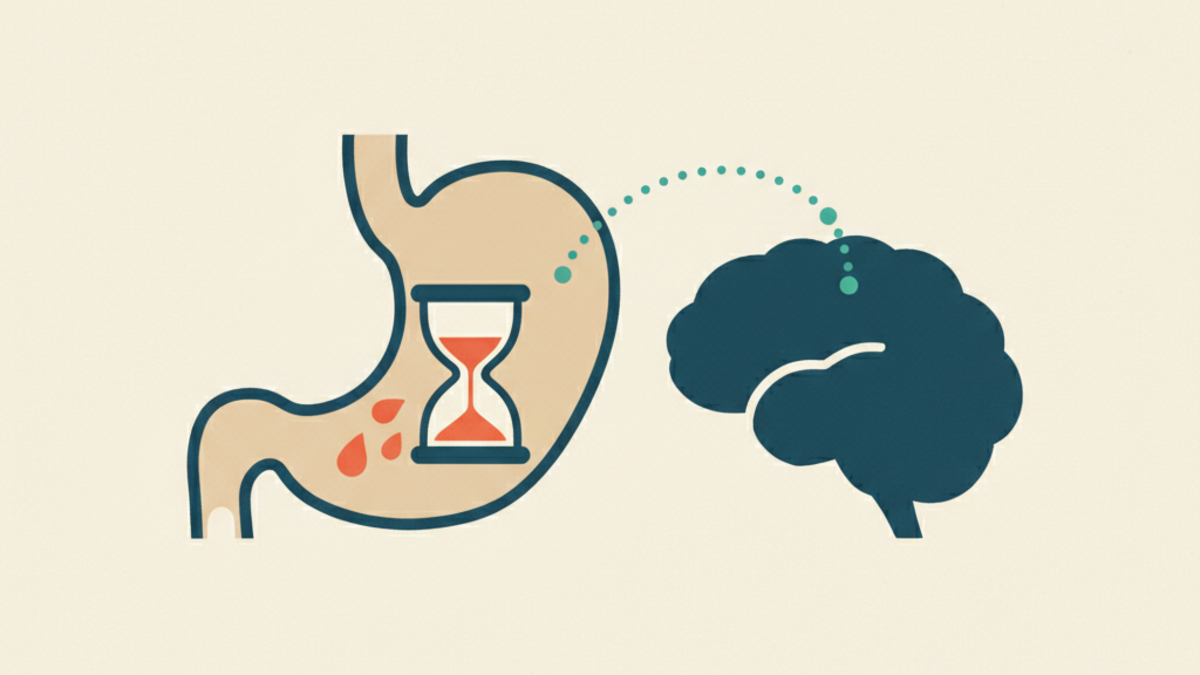
Cagrilintide switches on the docking points, or receptors, that natural amylin uses, and one further receptor besides [13], [14].
- The amylin receptors. These are built from a calcitonin receptor joined to one of three helper proteins, which gives three variants named AMY1, AMY2 and AMY3. Cagrilintide activates all three, and the structures of it bound to each have been mapped [14].
- The calcitonin receptor on its own. Cagrilintide also activates this one directly, which selective amylin drugs do not. Because of that dual action the literature files it as a dual amylin and calcitonin receptor agonist, shortened to DACRA [13], [14].
- The effect on appetite. In animals the substance reduces how much is eaten. Mice bred without the two relevant helper proteins responded far less to it, which points to the AMY1 and AMY3 receptors as the route to the weight effect [15].
How much the calcitonin part contributes is unsettled. A 2026 review asks openly whether the reduced eating reflects ordinary fullness or an unpleasant sensation that suppresses appetite, and states that the question is unanswered in humans [16]. A preclinical comparison with another dual agonist found different receptor balances gave different results in diabetic rats [17].
This is what separates cagrilintide from its better-known relatives. Semaglutide and tirzepatide work through gut hormone receptors, GLP-1 and GIP; cagrilintide works through a different family altogether, which is why the two are combined rather than substituted.
What the trials found
Two words describe how far a drug has come. A phase 2 trial tests dose and effect in a few hundred people; a phase 3 trial tests thousands before a licence is applied for. The single most important distinction on this page: cagrilintide alone and CagriSema are not the same thing, and almost every widely quoted figure belongs to the combination.
Weight, cagrilintide on its own
Phase 2 RCT The largest published trial of the single substance enrolled 706 adults without diabetes. They were assigned at random to one of five dose levels, to liraglutide, an approved weight-management drug, or to a dummy injection. After 26 weeks, weight had fallen by 6.0% to 10.8% across the cagrilintide doses, against 3.0% on placebo, a difference of 3.0 to 7.8 percentage points [1]. The trial registry lists the individual arms: 6.1%, 6.9%, 8.5%, 9.5% and 10.8%, against 8.5% for liraglutide [18].
Dose-finding trial in 706 adults with overweight or obesity and without diabetes, over 26 weeks. The five dose levels are listed in the table further down. Sources [1], [18].
Phase 2 RCT At the highest dose the reduction of 10.8% exceeded liraglutide at 9.0%, a difference of 1.8 percentage points [1]. A second, much smaller trial gave the single substance to 30 adults with type 2 diabetes for 32 weeks and recorded 8.1% [19]. Those two results are the published evidence for cagrilintide by itself.
Weight, cagrilintide combined with semaglutide
Phase 3 RCT REDEFINE 1 gave the combination to adults with obesity and without diabetes for 68 weeks. Weight fell by 20.4% against 3.0% on placebo, a difference of 17.3 percentage points [2]. The trial also ran arms of semaglutide alone and cagrilintide alone, each with 302 people, but the published report gives no separate figures for them.
Phase 3 RCT REDEFINE 2 repeated the design in 1,206 adults who also had type 2 diabetes. Weight fell by 13.7% against 3.4% [3]. REDEFINE 5, in 331 adults in Japan and Taiwan, compared the combination directly against semaglutide alone and reported 18.4% against 11.9% [20].
Phase 1b RCT The idea was first tested in 96 adults over 20 weeks. Everyone in it also received semaglutide, so the comparison shows what cagrilintide adds on top. Weight fell by 15.4% to 17.1% with cagrilintide against 8.0% to 9.8% without it [4].
Blood sugar
Phase 3 RCT REIMAGINE 2 was the largest diabetes trial, with 2,713 participants over 68 weeks. Long-term blood sugar reflects the average of the past two to three months. It fell by 1.91 percentage points on the combination against 1.75 on semaglutide alone, a difference of 0.16 points [21]. That trial also contained a cagrilintide-only arm of 152 people.
Phase 2 RCT The clearest side-by-side comparison remains a small trial in 92 adults with type 2 diabetes. Over 32 weeks blood sugar fell by 2.2 percentage points on the combination, 1.8 on semaglutide alone and 0.9 on cagrilintide alone [19]. On its own, in other words, cagrilintide moves blood sugar much less than a GLP-1 drug does.
Phase 3 RCT Two smaller late-stage trials of the combination looked at other starting points. In people treated with diet and exercise alone, long-term blood sugar fell by 1.8 percentage points. In people already using a long-acting insulin, it fell by 2.33 points [22], [23]. In REDEFINE 2, 73.5% of the combination group reached a blood sugar value of 6.5% or below, against 15.9% on placebo [3].
Blood pressure
Secondary analysis In REDEFINE 1, upper blood pressure fell by 10.9 mmHg on the combination against 2.8 mmHg on placebo, and the lower reading by 5.4 against 1.7 mmHg [24]. Among participants already taking blood pressure medicines, 39.6% reduced or stopped them, against 18.8% on placebo. In the subgroup with stubborn high blood pressure the difference was not statistically reliable [24].
Heart rhythm and organ function
Phase 1, dedicated study A study designed specifically to look for effects on the heart's electrical recovery found none of clinical importance at the highest dose tested [25]. This is a measured negative result rather than missing data.
Phase 1 PK studies Two small studies gave a single dose to people with reduced kidney or liver function. Blood levels differed little from normal function [26]. The authors stress that with four to fourteen people per group the studies were too small to settle safety questions.
Pooled analyses
A meta-analysis pools the results of several trials into one calculation, which sharpens the estimate but hides differences between the trials.
Meta-analysis Across four trials with 5,023 participants, cagrilintide on its own reduced weight by 6.08% more than placebo. Blood pressure improved modestly, and there was no reliable effect on long-term blood sugar [27]. A network analysis of six obesity trials ranked the combination at its highest dose behind amycretin and eloralintide and ahead of semaglutide and liraglutide [28].
Meta-analysis A third analysis of three trials, covering 3,545 people, found serious side effects roughly 1.8 times as often on cagrilintide alone as on semaglutide (risk ratio 1.83) [29]. All of these pool a handful of trials run by the same company, and all report considerable variation between them.
What is still unknown
- Whether it prevents anything. REDEFINE 3 is counting heart attacks and strokes in 7,101 people and is not due to finish before October 2027 [30].
- What cagrilintide alone does beyond 26 weeks. The late-stage trials of the single substance, the RENEW series, were still running in September 2026 [30].
- What happens after 68 weeks. Nothing longer has been published for the combination, and the substance would be used for years.
- Several finished trials remain unpublished. REDEFINE 4 against tirzepatide, REDEFINE 6 in China and REIMAGINE 5 against tirzepatide had all completed without a published report [30].
- Pregnancy, breastfeeding and children. No data exist. The trial in children and adolescents is scheduled to finish in 2033 [30].
Side effects and safety
Every safety figure below comes from trials run by the manufacturer. Because no authority has approved the substance, there is no examined package insert, no official weighing of benefit against risk, and no system that records side effects outside trials.
- Stomach and bowel complaints are the largest group. In the dose-finding trial they affected 41% to 63% of participants on cagrilintide, against 32% on placebo. Nausea alone ran at 20% to 47%, against 18% [1]. With the combination the figures rise: 79.6% against 39.9% in REDEFINE 1, and 72.5% against 34.4% in REDEFINE 2 [2], [3]. Most events were described as mild or moderate and passing.
- Reactions where the needle goes in come second. They ranked second already in the dose-finding trial. One analysis puts the risk on the combination at more than three times that on semaglutide [1], [29].
- Nausea is more frequent than on semaglutide alone. The same analysis puts it at about 1.6 times as often on the combination (risk ratio 1.64) [29].
- Around one in ten participants stops treatment. In the dose-finding trial 10% stopped, 4% of them because of side effects [1]. In REDEFINE 5, 10% stopped the combination against 6% on semaglutide [20]. A network analysis found a raised dropout rate only at the highest combination dose [28].
- Low blood sugar was not a prominent problem. No moderate or severe episodes were reported in the phase 2 diabetes trial [19]. In the trial adding the combination to insulin, low blood sugar was tracked as a safety measure [23].
- Deaths. One death occurred in REDEFINE 5, in the semaglutide group, and the investigator did not consider it treatment-related [20].
Four open questions sit alongside the measured events. The calcitonin receptor is active in bone, and a study of what cagrilintide does to bone turnover was still running in 2026 [30]. Whether the calcitonin component causes unpleasant sensations rather than ordinary fullness is unresolved [16].
The clumping tendency of natural amylin was engineered out, but no long-term human data confirm that it stays out [8], [31]. A 2026 commentary raises the relationship between amylin and blood pressure regulation as an open question for the whole drug class [32].
Doses used in trials
The doses below are simply what the cited studies gave, listed so that the results can be understood. They are not advice on how to use anything. All of them were reached by stepping up the amount over several weeks under medical supervision, so the starting amounts were far below the figures in the table.
| Study | Arms and doses | Route | Duration | n | Ref |
|---|---|---|---|---|---|
| Phase 2 dose-finding (NCT03856047) | Cagrilintide 0.3, 0.6, 1.2, 2.4 and 4.5 mg weekly; liraglutide 3.0 mg daily; placebo | Subcutaneous | 26 weeks | 706 | [1], [30] |
| Phase 1b combination (NCT03600480) | Cagrilintide 0.16 to 4.5 mg weekly, each with semaglutide 2.4 mg | Subcutaneous | 20 weeks, then 5 weeks of follow-up | 96 | [4] |
| Phase 2, type 2 diabetes (NCT04982575) | Combination, semaglutide and cagrilintide, all escalated to 2.4 mg weekly | Subcutaneous | 32 weeks | 92 | [19] |
| REDEFINE 1 (NCT05567796) | Cagrilintide 2.4 mg with semaglutide 2.4 mg; each alone; placebo | Subcutaneous | 68 weeks | 3,417 | [2] |
| REDEFINE 2 (NCT05394519) | Combination 2.4 mg with 2.4 mg; placebo | Subcutaneous | 68 weeks | 1,206 | [3] |
| REDEFINE 5 (NCT05813925) | Combination 2.4 mg with 2.4 mg; semaglutide 2.4 mg | Subcutaneous | 68 weeks | 331 | [20] |
| REIMAGINE 2 (NCT06065540) | Six arms at 2.4 mg or 1.0 mg per component, including cagrilintide alone | Subcutaneous | 68 weeks | 2,713 | [21] |
| REIMAGINE 1 (NCT06323174) | Combination 2.4 mg with 2.4 mg or 1.0 mg with 1.0 mg; placebo | Subcutaneous | 40 weeks | 189 | [22] |
| REIMAGINE 3 (NCT06323161) | Combination 2.4 mg with 2.4 mg or 1.0 mg with 1.0 mg; placebo | Subcutaneous | 40 weeks | 274 | [23] |
| Heart rhythm study (NCT05804162) | Cagrilintide escalated to 4.5 mg weekly; moxifloxacin control | Subcutaneous | To target dose | 105 analysed of 107 enrolled | [25], [30] |
| Kidney function (NCT04209049) | Cagrilintide 0.6 mg, single dose | Subcutaneous | Single dose | 33 | [26] |
| Liver function (NCT05564104) | Cagrilintide 0.9 mg, single dose | Subcutaneous | Single dose | 32 | [26] |
There is no approved product and therefore no examined guidance on storage, shelf life or preparation. Figures circulating in commercial catalogues have no register behind them.
Development and approval status
Programme timeline
- 2014First given to peopleSingle-dose safety study in 54 adults, ref [30]
- 2021Chemistry and phase 2 results published26-week dose-finding trial in 706 adults, refs [1], [8]
- 2023First direct comparison with semaglutidePhase 2 in 92 adults with type 2 diabetes, ref [19]
- 2025REDEFINE 1 and REDEFINE 2 publishedCombination results in 3,417 and 1,206 adults, refs [2], [3]
- 2026Combination filed for obesity; cagrilintide alone still in phase 3Manufacturer pipeline, authority and date not named, ref [5]
- 2014 — the substance is given to people for the first time, in a single-dose study in 54 adults [30].
- 2021 — the chemistry is published, and so is the 26-week dose-finding trial in 706 adults [1], [8].
- 2023 — the first trial to compare the combination against each substance alone reports [19].
- 2025 — REDEFINE 1 and REDEFINE 2 are published, the largest results to date [2], [3].
- 2026 — the manufacturer lists the combination as filed for obesity, while cagrilintide alone remains in phase 3 [5].
| Market | Status | Note | Ref |
|---|---|---|---|
| United States | Investigational | No approval, no label | [6] |
| European Union | Investigational | No authorisation | [33] |
| Germany | Investigational | Follows EU route | [33] |
| United Kingdom | Investigational | No authorisation | [34] |
| Canada | Investigational | No identification number | [35] |
| Australia | Investigational | No registration | [36] |
| Switzerland | Investigational | No authorisation | [37] |
Every register behind this table was queried on 6 September 2026. Two independent scientific databases record the same picture. One lists cagrilintide as not approved. The other gives a highest trial phase of 3 and no first approval date [10], [12].
The word "filed" does a lot of work in public discussion and deserves care. It means an application has been submitted for assessment, nothing more. The manufacturer's own pipeline names neither the authority that received it nor the date it arrived [5]. Cagrilintide as a single drug is not part of that application and remains in phase 3.
Anti-doping
Cagrilintide is banned in sport at all times, in and out of competition. Category S0 of the 2026 prohibited list covers "any pharmacological substance which is not addressed by any of the subsequent sections of the List and with no current approval by any governmental regulatory health authority for human therapeutic use" [7]. The substance is not named on the list; it falls under the ban because no authority has approved it, and the examples given there are explicitly not exhaustive. Section S2, which covers peptide hormones, contains no amylin or calcitonin receptor drugs. A 2026 laboratory study described how cagrilintide breaks down and set out a method for detecting it in doping control [38]. The wider picture for this class is at peptides banned in sport.
Compared with related peptides
| Peptide | Receptors | Status | Strongest weight result in its own trial | Half-life |
|---|---|---|---|---|
| Cagrilintide | Amylin receptors, calcitonin receptor | Phase 3, approved nowhere | −10.8% at 26 weeks, phase 2, n = 706 [1] | 159 to 195 hours [4] |
| CagriSema, the combination | The above plus GLP-1 | Filed for obesity, approved nowhere | −20.4% at 68 weeks, REDEFINE 1, n = 3,417 [2] | Not stated here |
| Semaglutide | GLP-1 | Approved in many markets | −14.9% at 68 weeks, STEP 1, n = 1,961 [39] | Not stated here |
| Tirzepatide | GIP, GLP-1 | Approved in many markets | −20.9% at 72 weeks, SURMOUNT-1, n = 2,539 [40] | Not stated here |
| Retatrutide | GIP, GLP-1, glucagon | Phase 3, approved nowhere | −24.2% at 48 weeks, phase 2, n = 338 [41] | Not stated here |
| Pramlintide | Amylin receptors | Approved as an add-on to insulin | Not stated here | Short, several doses a day [42] |
These figures come from separate trials. The people enrolled, the length of treatment, the starting weights and the statistical methods all differ, so the column ranks trials rather than drugs.
Five separate trials, not a direct comparison: enrolment, duration, starting weight and statistical method all differ. Sources [1], [2], [39], [40], [41].
Two things stand out. Cagrilintide on its own is the weakest of the group, and the whole reason for combining it with semaglutide is that the two act through different hormone systems. And of the substances above, only pramlintide and the two GLP-1 drugs are approved medicines anywhere.
Common misconceptions
- "Cagrilintide and CagriSema are the same thing." They are not. Cagrilintide is one substance; CagriSema is a fixed combination of cagrilintide and semaglutide. The much-quoted 20.4% belongs to the combination. Cagrilintide alone reached 10.8% in its largest published trial [1], [2].
- "Cagrilintide is approved because CagriSema has been filed." Filed means an application was submitted for assessment. Every register checked shows no approval, and two scientific databases record the same [5], [6], [10], [12].
- "It is just synthetic amylin." Natural amylin lasts minutes and clumps into fibres. Cagrilintide was deliberately altered to prevent both, and it activates the calcitonin receptor as well, which natural amylin does not do in this way [8], [13].
- "Cagrilintide is another name for pramlintide." Both copy amylin and both are injected, and there the similarity ends. Pramlintide is short-acting, is given several times a day and is an approved add-on to insulin [42].
- "Amycretin is a newer version of cagrilintide." It is a separate molecule, now named zenagamtide, which combines amylin and GLP-1 activity in a single peptide. CagriSema keeps two molecules in one injection [5], [42].
- "It is an unserious research peptide." The opposite mistake. Development has run since 2014 through more than fifty registered trials, including one with over 7,000 participants [30]. That does not make it available: it is approved nowhere and belongs inside clinical trials.
- "The REDEFINE 1 figures apply to people with diabetes too." They do not. The same combination over the same 68 weeks gave 20.4% without diabetes and 13.7% with it [2], [3].
Frequently asked questions
Is cagrilintide approved anywhere?
No. As checked on 6 September 2026, the drug registers of the United States, the European Union, Germany, the United Kingdom, Canada, Australia and Switzerland list no approval for cagrilintide. The manufacturer describes the CagriSema combination as filed for obesity, which means an application has been handed in. An application is not an approval, and the manufacturer names neither the authority nor the date.
What is cagrilintide?
It is a peptide made in the laboratory, a chain of 37 amino acid building blocks that copies the hormone amylin. Amylin is released from the pancreas together with insulin and helps signal that a meal is finished. A fatty acid chain attached to the first building block makes cagrilintide last long enough for weekly injection. Novo Nordisk developed it under the code NNC0174-0833.
What is the difference between cagrilintide and CagriSema?
Cagrilintide is one substance on its own. CagriSema is a fixed combination of cagrilintide and semaglutide, a GLP-1 drug, in a single weekly injection. Most of the widely quoted weight figures, including the 20.4% from REDEFINE 1, come from the combination. Cagrilintide alone reached 10.8% in its largest published trial.
How much weight did people lose in the cagrilintide trials?
The largest published trial of cagrilintide on its own enrolled 706 adults. Over 26 weeks they lost between 6.0% and 10.8% of their body weight, depending on the dose, against 3.0% on a dummy injection. A smaller trial in type 2 diabetes reported 8.1% over 32 weeks. The combination with semaglutide reached 20.4% over 68 weeks.
What are the most common cagrilintide side effects?
Stomach and bowel complaints come first: nausea, constipation, diarrhoea and vomiting. In the dose-finding trial these affected 41% to 63% of participants on cagrilintide against 32% on placebo. Reactions where the needle goes in were the second most common group. Most events were described as mild or moderate and passing.
How long does cagrilintide stay in the body?
Roughly seven to eight days are needed to clear half of a dose. The measured half-life was 159 to 195 hours across the doses studied, which is why trials inject it once a week. The long stay comes from a fatty acid chain that makes the peptide cling to a carrier protein in the blood.
Is cagrilintide the same as pramlintide?
No. Both copy amylin, but they differ in almost everything else. Pramlintide is short-acting, needs several injections a day and is approved as an add-on to insulin. Cagrilintide lasts about a week, also switches on the calcitonin receptor and is approved nowhere.
Is cagrilintide banned in sport?
Yes, at all times, in and out of competition. Category S0 of the 2026 prohibited list covers every drug that no health authority currently approves for human use. Cagrilintide is not named on the list; it falls under the ban because of its unapproved status. A laboratory method for detecting it was described in 2026.
Has cagrilintide been tested on its own in a late-stage trial?
Not with published results. The phase 3 trials of cagrilintide as a single drug, the RENEW series, were still running on 6 September 2026. One late-stage diabetes trial included a cagrilintide arm of 152 people, but reported the combination against semaglutide as its main result.
What is still unknown about cagrilintide?
Whether it prevents heart attacks, strokes or kidney damage, which the ongoing REDEFINE 3 trial is meant to answer by 2027. Also unknown: what happens beyond 68 weeks, and what it does on its own over more than 26 weeks. There are no data on pregnancy or on children, and the calcitonin part of its action is not understood.
Sources
- Lau DCW et al. (2021). Once-weekly cagrilintide for weight management in people with overweight and obesity: a multicentre, randomised, double-blind, placebo-controlled and active-controlled, dose-finding phase 2 trial. The Lancet 398(10317):2160-2172. PMID 34798060. DOI 10.1016/S0140-6736(21)01751-7
- Garvey WT et al. (2025). Coadministered cagrilintide and semaglutide in adults with overweight or obesity (REDEFINE 1). New England Journal of Medicine 393(7):635-647. PMID 40544433. DOI 10.1056/NEJMoa2502081
- Davies MJ et al. (2025). Cagrilintide-semaglutide in adults with overweight or obesity and type 2 diabetes (REDEFINE 2). New England Journal of Medicine 393(7):648-659. PMID 40544432. DOI 10.1056/NEJMoa2502082
- Enebo LB et al. (2021). Safety, tolerability, pharmacokinetics, and pharmacodynamics of concomitant administration of multiple doses of cagrilintide with semaglutide 2.4 mg for weight management: a randomised, controlled, phase 1b trial. The Lancet 397(10286):1736-1748. PMID 33894838. DOI 10.1016/S0140-6736(21)00845-X
- Novo Nordisk. Research and development pipeline; entries for CagriSema in obesity (filed), CagriSema in type 2 diabetes (phase 3), cagrilintide in obesity (phase 3) and subcutaneous zenagamtide. Manufacturer communication, retrieved 6 September 2026. https://www.novonordisk.com/science-and-technology/r-d-pipeline.html
- openFDA. Drugs@FDA and label API queries for generic name "cagrilintide" and brand name "cagrisema"; all responses NOT_FOUND. Retrieved 6 September 2026. https://api.fda.gov/drug/drugsfda.json?search=openfda.generic_name:cagrilintide
- World Anti-Doping Agency. The 2026 Prohibited List, in force from 1 January 2026; official text as annex to BGBl. III No. 219/2025; sections S0 and S2 reviewed in full. Retrieved 6 September 2026. https://rdb.manz.at/__api/documents/ris.c.BGBl__III_Nr__219_2025/attachments/ris.c.BGBl__III_Nr__219_2025.Anlagen_0002_F0BD5BBE_465B_4C18_BFE4_16E75843E435.pdf
- Kruse T et al. (2021). Development of cagrilintide, a long-acting amylin analogue. Journal of Medicinal Chemistry. PMID 34288673. DOI 10.1021/acs.jmedchem.1c00565
- FDA Global Substance Registration System. Substance record "Cagrilintide", UUID 524748b5-2a42-4b81-822e-35062e471925, UNII AO43BIF1U8; protein subtype amylin analog. Retrieved 6 September 2026. https://gsrs.ncats.nih.gov/api/v1/substances(524748b5-2a42-4b81-822e-35062e471925)?view=full
- ChEMBL. Molecule CHEMBL4802169; maximum phase 3, first approval null, no ATC classification. Retrieved 6 September 2026. https://www.ebi.ac.uk/chembl/api/data/molecule/CHEMBL4802169?format=json
- PubChem. Compound CID 171397054, "Cagrilintide"; formula C194H312N54O59S2, mass 4,409, InChIKey LDERDVMBIYGIOI-IZVMHKDJSA-N. Retrieved 6 September 2026. https://pubchem.ncbi.nlm.nih.gov/compound/171397054
- IUPHAR/BPS Guide to PHARMACOLOGY. Ligand 13768, cagrilintide; approved false, approval source empty. Retrieved 6 September 2026. https://www.guidetopharmacology.org/services/ligands?name=cagrilintide
- Gingell JJ et al. (2021). AM833 is a novel agonist of calcitonin family G protein-coupled receptors: pharmacological comparison with six selective and nonselective agonists. Journal of Pharmacology and Experimental Therapeutics. PMID 33727283. DOI 10.1124/jpet.121.000567
- Structural and dynamic features of cagrilintide binding to calcitonin and amylin receptors (2025). Nature Communications. PMID 40204768. DOI 10.1038/s41467-025-58680-y
- Cagrilintide lowers bodyweight through brain amylin receptors 1 and 3 (2025). EBioMedicine. PMID 40609154. DOI 10.1016/j.ebiom.2025.105836
- Beyond GLP-1: amylin-based pharmacotherapy and the search for better-tolerated weight-loss drugs (2026). Pharmacological Research. PMID 42586227. DOI 10.1016/j.phrs.2026.108382
- Larsen AT et al. (2022). Does receptor balance matter? Comparing the efficacies of the dual amylin and calcitonin receptor agonists cagrilintide and KBP-336 on metabolic parameters in preclinical models. Biomedicine & Pharmacotherapy. PMID 36242844. DOI 10.1016/j.biopha.2022.113842
- ClinicalTrials.gov. NCT03856047, posted results section; percentage weight change at week 26 by arm. Retrieved 6 September 2026. https://clinicaltrials.gov/study/NCT03856047?tab=results
- Frias JP et al. (2023). Efficacy and safety of co-administered once-weekly cagrilintide 2.4 mg with once-weekly semaglutide 2.4 mg in type 2 diabetes: a multicentre, randomised, double-blind, active-controlled, phase 2 trial. The Lancet 402(10403):720-730. PMID 37364590. DOI 10.1016/S0140-6736(23)01163-7
- Yamauchi T et al. (2026). Efficacy and safety of co-administered cagrilintide and semaglutide versus semaglutide alone in adults with overweight or obesity with or without type 2 diabetes in Japan and Taiwan (REDEFINE 5). The Lancet Diabetes & Endocrinology 14:450-462. PMID 42009015. DOI 10.1016/S2213-8587(25)00402-4
- Buse JB et al. (2026). Cagrilintide-semaglutide versus semaglutide or cagrilintide in people with type 2 diabetes (REIMAGINE 2). The Lancet Diabetes & Endocrinology 14:662-677. PMID 42251859. DOI 10.1016/S2213-8587(26)00125-7
- Aroda VR et al. (2026). Efficacy and safety of once-weekly cagrilintide-semaglutide in adults with type 2 diabetes inadequately controlled on diet and exercise (REIMAGINE 1). The Lancet Diabetes & Endocrinology 14:649-661. PMID 42251860. DOI 10.1016/S2213-8587(26)00126-9
- Rosenstock J et al. (2026). Cagrilintide-semaglutide as an add-on to basal insulin in adults with type 2 diabetes (REIMAGINE 3). The Lancet 408:38-51. PMID 42251856. DOI 10.1016/S0140-6736(26)01022-6
- CagriSema reduces blood pressure in adults with overweight or obesity: REDEFINE 1 (2026). Hypertension. PMID 41328546. DOI 10.1161/HYPERTENSIONAHA.125.26055
- Cagrilintide is not associated with clinically relevant QTc prolongation: a thorough QT study in healthy participants (2024). Diabetes, Obesity and Metabolism 26:5919-5926. PMID 39279639. DOI 10.1111/dom.15951
- Renal or hepatic impairment does not affect pharmacokinetics, safety, or tolerability of subcutaneous cagrilintide (2026). Clinical Pharmacokinetics. PMID 42228334. DOI 10.1007/s40262-026-01654-0
- Cagrilintide and CagriSema for weight reduction and metabolic risk modification in overweight or obesity: a systematic review and meta-analysis (2026). Journal of Diabetes and Metabolic Disorders. PMID 42180166. DOI 10.1007/s40200-026-01942-3
- Novel amylin-based therapies for weight management in adults with overweight or obesity without diabetes: a network meta-analysis (2026). Endocrinology, Diabetes & Metabolism. PMID 42175595. DOI 10.1002/edm2.70247
- Efficacy and safety of cagrilintide and cagrisema versus semaglutide as anti-obesity medications: a systematic review, meta-analysis and meta-regression (2026). Diabetes, Obesity and Metabolism. PMID 41834765. DOI 10.1111/dom.70667
- ClinicalTrials.gov API v2. Study records retrieved for the intervention terms cagrilintide, AM833, NNC0174-0833 and CagriSema, 53 entries in total, including NCT02300844, NCT05669755 (REDEFINE 3), NCT06131437 (REDEFINE 4), NCT05996848 (REDEFINE 6), NCT06534411 (REIMAGINE 5), NCT07220642 (RENEW 1), NCT07253285 and NCT07010432. Retrieved 6 September 2026. https://clinicaltrials.gov/api/v2/studies?query.intr=cagrilintide
- Amyloidogenicity of peptides targeting diabetes and obesity (2022). Colloids and Surfaces B: Biointerfaces. PMID 34715595
- Amylin and the renin-angiotensin system: risk or opportunity in amylin-based therapy? (2026). The Lancet. PMID 41207308
- European Medicines Agency. Medicines search, full text "cagrilintide"; no authorised medicine entry. Retrieved 6 September 2026. https://www.ema.europa.eu/en/medicines?search_api_fulltext=cagrilintide
- MHRA Products. Product search "cagrilintide"; no marketing authorisation entry. Retrieved 6 September 2026. https://products.mhra.gov.uk/search/?search=cagrilintide
- Health Canada. Drug Product Database API, active ingredient query "cagrilintide"; empty result. Retrieved 6 September 2026. https://health-products.canada.ca/api/drug/activeingredient/?ingredientname=cagrilintide
- Therapeutic Goods Administration. Australian Register of Therapeutic Goods; no entry identified. Retrieved 6 September 2026. https://www.tga.gov.au/resources/artg
- Swissmedic. Swiss medicinal product information; no entry for cagrilintide. Retrieved 6 September 2026. https://www.swissmedicinfo.ch/
- In vitro metabolic profiling of weight-loss-inducing amylin receptor agonists in the context of preventive doping research (2026). Journal of Pharmaceutical and Biomedical Analysis. PMID 41702251. DOI 10.1016/j.jpba.2026.117418
- Wilding JPH et al. (2021). Once-weekly semaglutide in adults with overweight or obesity (STEP 1). New England Journal of Medicine 384(11):989-1002. PMID 33567185. DOI 10.1056/NEJMoa2032183
- Jastreboff AM et al. (2022). Tirzepatide once weekly for the treatment of obesity (SURMOUNT-1). New England Journal of Medicine 387(3):205-216. PMID 35658024. DOI 10.1056/NEJMoa2206038
- Jastreboff AM et al. (2023). Triple-hormone-receptor agonist retatrutide for obesity: a phase 2 trial. New England Journal of Medicine 389(6):514-526. PMID 37366315. DOI 10.1056/NEJMoa2301972
- Long-acting amylin-related peptides as therapies for obesity and type 2 diabetes (2026). Peptides. PMID 41747885. DOI 10.1016/j.peptides.2026.171480
Cite this page
Facts on this page were verified on 6 September 2026, and every register query behind the status table was run on that date. Pages about substances in active development age quickly, so the version and date matter as much as the content.
myPeptides Research & Editing. (2026). Cagrilintide: what the trials show, status and safety. Version 1.0, 6 September 2026. myPeptides Peptide Register. Retrieved from https://mypep.app/peptides/cagrilintide
How pages in this register are compiled and graded is described under methodology; the full register is at peptides.
| Version | Date | Change |
|---|---|---|
| 1.0 | 2026-09-06 | Initial publication |
Last verified: 6 September 2026. Next review: on publication of the phase 3 monotherapy results, on a regulatory decision for the combination, or on any change in the anti-doping classification.