
Enicepatide: what the trials show, status and safety
Summary
Enicepatide is an experimental injectable drug, developed by Roche, that activates two gut hormone receptors: GLP-1 and GIP. In a 48-week phase 2 trial in 467 adults with obesity, the trial reported a mean weight change in the highest dose arm 22.5 per cent larger than on placebo, assuming everyone stayed on treatment. Counting those who stopped, the difference was 18.3 per cent. Neither phase 2 trial has been published in full, stomach and bowel side effects were common, and the substance is approved nowhere.
Key findings at a glance
- The headline weight result is 22.5 per cent, placebo-adjusted, after 48 weeks. It comes from the highest of five dose arms in a phase 2 trial of 467 adults with obesity but without diabetes. It assumes everyone kept taking the drug [1], [2].
- Counting everyone who was randomised, the figure is 18.3 per cent. This second analysis includes people who stopped treatment early (p < 0.001) [1], [2].
- In people who started with prediabetes, blood sugar was measured again at week 48. In the highest dose arm, 73.0 per cent had normal values, against 7.5 per cent on placebo [3].
- In type 2 diabetes, only the highest dose arm has been reported. Long-term blood sugar (HbA1c) fell by 2.65 points from 8.1 per cent, and weight by 15.5 per cent. No placebo figures were released [4].
- Stomach and bowel side effects rose with the dose. They affected up to 65 per cent of a treated group, against 28 per cent on placebo, and vomiting reached 25 per cent in one arm [3].
- No phase 2 trial is published in a peer-reviewed journal. Everything beyond the first human study comes from company announcements and a congress poster [5], [4], [3].
- Enicepatide is approved in no country and is in phase 3. Two large trials, ENITH-1 and ENITH-2, started in March 2026 with 2,000 and 1,600 planned participants [6], [7].
What it is
Enicepatide is a synthetic peptide: a chain of 38 building blocks with a fatty-acid side chain attached. That side chain binds to proteins in the blood and slows the drug's removal, which is why the trials give it only once a week [8], [5].
The American company Carmot Therapeutics discovered it under the code CT-388. Roche agreed to buy Carmot in December 2023 and completed the purchase in January 2024; Roche now runs the programme. The substance has no brand name, because it is sold nowhere [9], [10], [4].
Quick facts
| Field | Value | Ref |
|---|---|---|
| Name | Enicepatide (international non-proprietary name); codes CT-388 and RO7795068 | [11], [8] |
| Class | Dual GLP-1 and GIP receptor agonist, signal-biased at both receptors | [5], [11] |
| Structure | 38 positions, with a capped first building block, a stabilising building block (Aib) at position 12, a fatty-acid chain on position 19 and an amide at the end | [8] |
| Formula | C226H345FN48O67 | [11] |
| Molecular mass | About 4825.5 g/mol, calculated from the formula; no official figure is published | [11] |
| Half-life | 123 to 151 hours, roughly five to six days | [5] |
| Route in trials | Subcutaneous injection, once weekly | [5], [12] |
| Status | Approved in no market; phase 3 | [4] |
| Developer | Carmot Therapeutics, now part of the Roche Group | [10] |
| CAS registry number | 2869147-44-2 | [11] |
| UNII | MTP9QR7GYF | [8] |
| PubChem | No compound entry (CID); substance record SID 518139746 only | [13] |
| ATC code | None assigned | [14] |
How it works
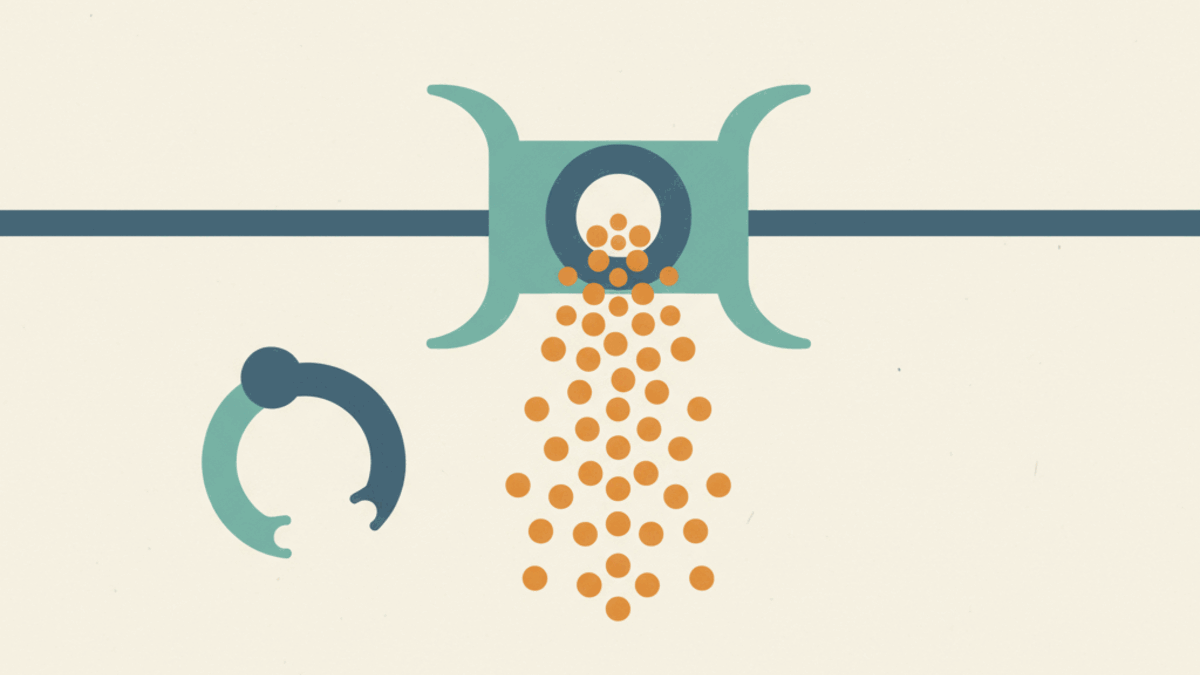
Enicepatide switches on two receptors for gut hormones that the body releases after a meal, and it does so in an unusual way.
- The GLP-1 receptor reduces appetite. Activating it slows stomach emptying, curbs hunger and releases insulin when blood sugar is high. In cell tests enicepatide was strongly active here: half its maximum effect was reached at a tiny concentration of 0.087 nM (nanomolar), with 99 per cent of the full response (Emax) [5].
- The GIP receptor also influences blood sugar and fat storage. Here enicepatide was weaker: half-maximum at 2.47 nM, with an Emax of 92 per cent. The balance leans towards GLP-1; for tirzepatide the authors describe the reverse [5].
- It is "signal-biased". Receptors normally recruit a helper protein (beta-arrestin-2) that pulls them inside the cell and dampens the signal. At the GLP-1 receptor, enicepatide recruited it to only 4 per cent and caused 6 per cent internalisation [5].
- At the GIP receptor the bias is partial. Beta-arrestin-2 recruitment reached 28 per cent (half-maximum at 11 nM), so "fully biased" overstates it [5].
- The expected benefit is a hypothesis. Roche says the design should reduce desensitisation and prolong the drug's action. Whether that translates into more weight loss or fewer side effects in people has not been tested against any comparator [15], [5].
Animal data · In mice and monkeys enicepatide improved blood sugar control. In mice it also reduced weight and appetite and improved liver tissue in a model of fatty liver inflammation (MASH) [5].
Unlike retatrutide or survodutide, enicepatide does not act on the glucagon receptor. It belongs to the same two-receptor family as tirzepatide [11], [5].
What the trials found
Eight trials are registered, from the first human study in 2021 to five trials started or planned in 2026, three of them phase 3. None is from a sponsor other than Carmot or Roche [16], [12], [17].
Weight in people without diabetes
Phase 2 RCT (poster and company release) The trial CT-388-103 randomised 467 adults in the United States to placebo or one of five dose arms for 48 weeks. They weighed 108 kg on average, with an average body mass index of 38; 68 per cent were women and half had prediabetes [2], [3].
Phase 2 RCT (poster and company release) Assuming everyone stayed on treatment (the efficacy estimand), average weight changed by 0.2 per cent on placebo. In the five dose arms it changed by 6.7, 14.2, 16.6, 18.4 and 22.7 per cent. All were different from placebo (p ≤ 0.001) [2], [3].
Phase 2 trial, 467 adults with obesity and without diabetes, 48 weeks, efficacy estimand (assumes everyone stayed on treatment). Congress poster, no journal publication yet. Sources [2], [3].
Phase 2 RCT (poster and company release) The difference from placebo in the highest arm was 22.5 per cent (95 per cent CI 25.3 to 19.8). Weight was still falling at week 48 [1], [2].
Phase 2 RCT (poster and company release) The second analysis (treatment-regimen estimand) counts everyone as randomised, including people who stopped. The placebo-adjusted results then shrink to the following figures [2]:
- lowest dose arm: 5.0 per cent (95 per cent CI 8.4 to 1.6)
- second dose arm: 10.7 per cent (14.0 to 7.4)
- middle dose arm: 11.7 per cent (15.0 to 8.4)
- fourth dose arm: 13.4 per cent (16.7 to 10.0)
- highest dose arm: 18.3 per cent (21.6 to 14.9), p < 0.001 [1]
Phase 2 RCT (poster and company release) In the highest arm, 95.7 per cent lost at least 5 per cent of their weight and 87 per cent at least 10. At least 20 per cent was reached by 47.8 per cent, at least 30 by 26.1 per cent. Body mass index fell below 30 in 54 per cent, against 13 per cent on placebo [2], [1].
Blood sugar in people with prediabetes
Phase 2 RCT (poster) Of 233 participants with prediabetes who reached week 48, many returned to normal blood sugar. In the highest arm this was 27 of 37, or 73.0 per cent; on placebo 3 of 40, or 7.5 per cent [3].
Subgroup of the phase 2 trial CT-388-103, 233 participants with prediabetes at the start who reached week 48. The response did not rise steadily with the dose. Congress poster. Source [3].
Phase 2 RCT (poster) The other arms reached 45.0 per cent (18 of 40), 69.8 (30 of 43), 52.9 (18 of 34) and 69.2 (27 of 39). The middle arm did worse than the second, a reminder that small subgroups give uneven figures [3].
Blood sugar and weight in type 2 diabetes
Phase 2 RCT (press release only) The trial CT-388-104 treated 447 adults with type 2 diabetes and overweight or obesity for 48 weeks across four dose arms. Their long-term blood sugar (HbA1c) averaged 8.1 per cent at the start [4], [17].
Phase 2 RCT (press release only) Roche reported results for the highest dose arm only. After 48 weeks HbA1c had fallen by 2.65 percentage points, and by 4.13 in those starting above 8.5 per cent. Of the participants in this arm, 90 per cent reached 6.5 per cent or less and 62 per cent below 5.7 [4].
Phase 2 RCT (press release only) Weight fell by 15.5 per cent on average, again without a clear plateau. Roche says both main goals were met and the effects rose with the dose [4].
These figures need careful reading, for three reasons:
- They are absolute, not placebo-adjusted. The release gives no placebo result, no confidence intervals, no p-values and no estimand [4].
- Only one arm of four is shown. Nothing has been released for the three lower dose arms [4].
- The registry and the company disagree on timing. The registry lists weight and HbA1c at week 36 as the primary outcomes, with week 48 as secondary. Roche describes week 48 as the primary time point [17], [4].
The first human studies
Phase 1 The first-in-human study CT-388-101 began in April 2021, in Australia and Mexico. In a single-dose part, 40 people took part (30 on drug, 10 on placebo); in a four-week multiple-dose part, 24 (18 on drug, 6 on placebo) [5], [16].
Phase 1 By day 29, weight had changed by 4.7 to 8.0 per cent on the drug, against 0.5 per cent on placebo. Fasting glucose and glucose tolerance improved. Carmot had earlier reported 8.4 per cent (7.7 kg) for the top cohort; the difference is unexplained [5], [18].
Phase 1b (company release) In a 24-week cohort of the same study, adults with obesity lost 18.8 per cent more than placebo (p < 0.001). All treated participants lost more than 5 per cent and 85 per cent more than 10. More than 15 per cent was lost by 70 per cent, more than 20 by 45 per cent [15].
Phase 1b (company release) Everyone in that cohort who started with prediabetes had normal blood sugar at 24 weeks. The poster later cites 18.9 per cent for the same cohort. Neither source gives the cohort size [15], [3].
What is still unknown
- Full, peer-reviewed results. Neither phase 2 trial has appeared in a journal as of 26 September 2026 [2], [4].
- Placebo figures and lower arms in type 2 diabetes. Only the highest arm's absolute changes are public [4].
- Results of a 12-week diabetes cohort in phase 1. Roche announced them for 2024; no primary source reports them [15].
- Heart and vessel outcomes. A cardiovascular outcome trial is planned from the first half of 2027 [4].
- Effects beyond 48 weeks. ENITH-1 and ENITH-2 run for 72 weeks [6], [7].
- Direct comparisons. No trial has tested enicepatide against tirzepatide or semaglutide [5].
- Liver fat in people. A 2025 congress abstract on liver scans could not be accessed for this page [19].
Side effects and safety
No product information approved by a regulator exists, so everything below comes from trial reports. Roche calls the pattern "consistent with the incretin class": mostly stomach and bowel effects, mostly mild to moderate [1], [4].
- Most people had some side effect. In the 48-week obesity trial, 76 to 86 per cent of the treated groups reported at least one adverse event, against 64 per cent on placebo. The highest arm reached 86 per cent. Groups had 76 to 79 participants each [3].
- Stomach and bowel effects rose with the dose. They affected 47 to 65 per cent of the treated groups (65 per cent in the highest arm), against 28 per cent on placebo [3].
- The individual symptoms were common. Nausea affected 33 to 46 per cent against 19 per cent on placebo; diarrhoea 14 to 32 against 10; constipation 22 to 26 against 8 [3].
- Vomiting reached 25 per cent. It peaked in the middle arm, at 25 per cent, and was 21 per cent in the highest arm; on placebo it was 0 per cent [3].
- Serious events were uncommon. They occurred in 1 to 5 per cent of treated participants (5 per cent in the highest arm) against 0 per cent on placebo. They did not rise with the dose, and no one died [3].
In the obesity trial 5.9 per cent of all treated participants stopped because of side effects, against 1.3 per cent on placebo. By arm the figures were 1, 3, 14, 5 and 7 per cent [1], [3].
Stopping the study for any reason was more common on placebo, at 34 per cent, than on the drug, at 14 to 31 per cent. Only 80 per cent in the highest arm reached their planned final dose level, against 86 to 99 per cent in the other arms [3].
In the type 2 diabetes trial, 2.0 per cent on the drug and 0.0 per cent on placebo stopped because of side effects. Roche reports no new safety signals, but has published no table of event rates [4].
In the first human study, the commonest events were headache, skin irritation (contact dermatitis), reduced appetite, nausea and vomiting. In the highest single-dose group, 5 of 6 people had nausea (83.3 per cent) [5].
One severe retinal detachment occurred in the single-dose part and was judged unrelated. One case of moderate, persistent vomiting was probably drug-related. Heart rate rose by 15.8 beats per minute in the top group, against a fall of 5.5 on placebo, and settled afterwards [5].
The trials exclude people for reasons common to this drug class. The obesity trial excluded anyone with a personal or family history of medullary thyroid cancer, and all phase 2 and 3 trials exclude past pancreatitis. These are precautions, not proven risks of enicepatide [12], [17], [6], [7].
There are no data on kidney or liver impairment, drug interactions, immune reactions, pregnancy or use beyond 48 weeks [5], [4].
Why this page lists no doses
This page gives no amounts of enicepatide in any unit, no escalation schedules and no injection routines. The substance is investigational and approved nowhere; the only lawful setting for its use is a clinical trial, and no regulator has assessed what amount people tolerate [4], [20].
The trials themselves show why a single figure would mislead. In phase 2, participants were brought up to their target level step by step, with weekly injections at the study site. The arm with the most discontinuations for side effects, 14 per cent, was not the highest [3].
The American medicines agency has not named enicepatide in its warnings about unapproved weight-loss drugs sold under a research label. No warning letter checked for this page mentions it either [21], [22]. Anything offered under this name outside a trial has no verified identity, content or sterility.
Development and approval status
Enicepatide is approved in no market. On 26 September 2026 it was in phase 3 for obesity with and without type 2 diabetes, and Roche plans further phase 3 trials in blood sugar control and heart outcomes from 2027 [4].
From a Carmot compound to a Roche phase 3 programme
- 2021First human study beginsCT-388-101 starts in April in Australia and Mexico, ref [16]
- 2023Roche agrees to buy CarmotMerger agreement announced on 4 December, ref [9]
- 2024Purchase completedCarmot becomes part of the Roche Group on 29 January, ref [10]
- 202424-week phase 1b result18.8 per cent placebo-adjusted weight loss announced in May, ref [15]
- 2026Phase 2 obesity topline22.5 per cent placebo-adjusted in the highest arm, announced 27 January, ref [1]
- 2026ENITH-1 and ENITH-2 startTwo 72-week phase 3 trials begin on 16 and 23 March, refs [6], [7]
- 2026Full phase 2 data at a diabetes congressPoster at the American Diabetes Association meeting in June, refs [2], [3]
- 2026Phase 2 type 2 diabetes toplineHbA1c and weight for the highest arm only, announced 22 September, ref [4]
- 2026ZYNERGY combination trialEnicepatide with petrelintide, planned start 30 September, ref [23]
- 2021: the first human study starts [16].
- December 2023 to January 2024: Roche agrees to buy Carmot for 2.7 billion US dollars plus up to 400 million in milestones, and completes the deal [9], [10].
- March 2025: Roche and Zealand Pharma agree to develop petrelintide, an amylin analogue, alone and combined with enicepatide [24].
- 2026: phase 2 results, phase 3 start, two trials in China from July, and the ZYNERGY combination trial with 486 planned participants [1], [4], [6], [25], [23], [26].
- From the first half of 2027: further phase 3 trials in blood sugar control and cardiovascular outcomes, as planned by Roche [4].
| Market | Status | Since or note |
|---|---|---|
| United States | Unapproved | Investigational only |
| European Union | Unapproved | Trials registered |
| Germany | Unapproved | Trials only |
| United Kingdom | Unapproved | Trials only |
| Australia | Unapproved | Not scheduled |
| Canada | Unapproved | No product entry |
| Switzerland | Unapproved | None found |
These entries rest on register checks run on 26 September 2026. Each ran alongside a control substance that was found, so a blank result means absence rather than a failed search. Germany follows from the European entry, because this drug class is approved centrally [20], [27], [28], [29], [30], [31], [32].
The wider legal picture is under are peptides legal and FDA-approved peptides.
Anti-doping
Enicepatide is prohibited in sport at all times, in and out of competition. It is not named on the 2026 prohibited list but falls under class S0, which covers any pharmacological substance "with no current approval by any governmental regulatory health authority for human therapeutic use" [33].
Approved incretin drugs such as tirzepatide and semaglutide do not appear on the list at all. The ban therefore rests on the missing approval, not on the drug class. Substances in S0 count as specified substances, which affects how a sanction is measured but not the ban [33].
The annex to the German anti-doping act lists neither enicepatide nor any GLP-1 or GIP agonist, so its criminal provisions do not apply; the sporting ban stands regardless [34]. More at peptides banned in sport.
Compared with related peptides
| Substance | Receptors | Status | Strongest published weight result | Ref |
|---|---|---|---|---|
| Enicepatide | GLP-1 and GIP, signal-biased | Phase 3, approved nowhere | 22.5 per cent placebo-adjusted over 48 weeks, phase 2 poster | [2] |
| Tirzepatide | GIP and GLP-1 | Approved medicine | See its own page | — |
| Retatrutide | GIP, GLP-1 and glucagon | Phase 3, approved nowhere | See its own page | — |
| Semaglutide | GLP-1 only | Approved medicine | See its own page | — |
| Petrelintide | Amylin | In development, combination partner | Not covered here | [35] |
Enicepatide is closest to tirzepatide. According to registry data, positions 2 to 38 of its chain match positions 3 to 39 of tirzepatide, including the same fatty-acid side chain. The difference lies at the start of the chain. This is a comparison of register entries, not a statement by the developer [8], [36].
That change tips the balance towards the GLP-1 receptor, while tirzepatide leans towards GIP [5]. No trial has compared the two drugs directly.
Figures from separate trials cannot be ranked. The populations, trial lengths and statistical methods differ, and enicepatide's phase 2 results have not passed peer review [2], [4].
Common misconceptions
- "Enicepatide is just tirzepatide 2.0." The chains overlap closely, but the start differs, the receptor balance is shifted towards GLP-1 and the signalling is biased. No clinical head-to-head exists [8], [5].
- "Everyone lost 22 per cent of their weight." The 22.5 per cent is a placebo-adjusted average for the highest of five arms, assuming everyone stayed on treatment. Counting dropouts it was 18.3 per cent, and lower arms were well below [1], [2].
- "The 15.5 per cent in type 2 diabetes is placebo-adjusted." Roche gave no placebo figure. It is the average change in the highest arm only [4].
- "The American regulator gave it Fast Track status." In January 2026 Roche wrote that it had "designated it as a fast-track asset". This describes internal priority at Roche; no regulatory designation is documented [1].
- "CT-388, CT-868 and CT-996 are the same drug." They are three different Carmot molecules. CT-388 is enicepatide, and CT-996 is an oral GLP-1 tablet. CT-868 (acmopatide) is a daily injection that Roche decided not to take into phase 3 [9], [3], [37].
- "Its Roche code is RO7790096." Registers show only RO7795068; the other code returns no result anywhere [38], [8].
- "Biased signalling makes it better tolerated." The bias is shown in cells only. In phase 2, stomach and bowel effects reached 65 per cent in the highest arm, within the range of the drug class [5], [3].
Frequently asked questions
What is enicepatide?
Enicepatide is an experimental injectable peptide that activates two gut hormone receptors, GLP-1 and GIP. Carmot Therapeutics discovered it under the code CT-388, and Roche took over its development after buying Carmot in January 2024. It is a medicine in no country.
How much weight did people lose with enicepatide?
In a 48-week phase 2 trial in 467 adults with obesity but without diabetes, the trial reported a mean weight change in the highest of five dose arms 22.5 per cent larger than on placebo, assuming everyone stayed on treatment. Counting those who stopped, the difference was 18.3 per cent. The lower arms lost less, and the results are not yet published in a journal.
What did enicepatide do in people with type 2 diabetes?
Roche reported results for the highest of four arms only. After 48 weeks, long-term blood sugar (HbA1c) fell by 2.65 points from 8.1 per cent, and weight by 15.5 per cent. No placebo figures were released, so these are absolute changes, not differences from placebo.
How is enicepatide different from tirzepatide?
Both act on GLP-1 and GIP receptors and share most of their chain. Enicepatide has a different start to the chain, leans more towards the GLP-1 receptor and barely triggers the process that pulls receptors into the cell. No trial has compared the two directly.
What are the side effects of enicepatide?
Mainly stomach and bowel effects. In the phase 2 obesity trial they affected 47 to 65 per cent of the treated groups against 28 per cent on placebo, with nausea up to 46 per cent and vomiting up to 25. Most were mild to moderate; serious events affected 1 to 5 per cent, and no one died.
How many people stopped taking enicepatide because of side effects?
In the obesity trial, 5.9 per cent of all treated participants against 1.3 per cent on placebo; in one arm it reached 14 per cent. In the type 2 diabetes trial it was 2.0 per cent against 0.0. Only 80 per cent in the highest obesity arm reached their planned final dose level.
Is enicepatide approved anywhere?
No. Register checks on 26 September 2026 found no approval in the United States, the European Union, Germany, the United Kingdom, Australia, Canada or Switzerland. It is in phase 3 testing, with ENITH-1 and ENITH-2 planned to enrol 2,000 and 1,600 people.
When could enicepatide be approved?
No date is known. The two main phase 3 trials started in March 2026 and last 72 weeks each, and Roche plans more phase 3 trials, including a heart outcome study, from the first half of 2027.
Is enicepatide banned in sport?
Yes, at all times. It is not named on the 2026 prohibited list but falls under class S0, which covers substances with no current government approval for human use, including drugs in clinical development. Approval would remove that basis.
Sources
- F. Hoffmann-La Roche Ltd. Ad hoc announcement of 27 January 2026: Roche announces positive Phase II results for its dual GLP-1/GIP receptor agonist CT-388 in people living with obesity. https://www.roche.com/media/releases/med-cor-2026-01-27
- Lingvay I, Steinberg A, le Roux CW, Jastreboff AM, et al. (2026). 2813-LB: CT-388, a cAMP Signal-Biased GLP-1/GIP Receptor Agonist, Achieves Clinically Meaningful Weight Loss in People With Overweight/Obesity: A 48-Week Phase 2 Study. Diabetes 75(Supplement 1). DOI 10.2337/db26-2813-lb. The abstract page was not accessible; the full poster was read in the Roche investor presentation of 8 June 2026.
- F. Hoffmann-La Roche Ltd. ADA Investor Event, 8 June 2026 (presentation, 41 pages, including the pipeline overview, the ZYNERGY design and the complete poster 2813-LB with efficacy, disposition and safety tables). https://assets.roche.com/f/176343/x/20033a15c4/ada-ir-event_08-june-2026_final.pdf
- F. Hoffmann-La Roche Ltd. Ad hoc announcement of 22 September 2026: Roche announces positive Phase II results for dual GLP-1/GIP receptor agonist enicepatide in people living with type 2 diabetes and overweight or obesity. https://www.roche.com/media/releases/med-cor-2026-09-22
- Chakravarthy MV, Rodriguez R, Hergarden A, et al. (2026). Effects of CT-388, a once-weekly signaling-biased dual GLP-1/GIP receptor agonist, on weight loss and glycemic control in preclinical models and participants with obesity. Molecular Metabolism 103:102291. PMID 41319798, PMC12771327. DOI 10.1016/j.molmet.2025.102291. Full text read: cell pharmacology, half-life, time to peak level, phase 1 results and safety.
- ClinicalTrials.gov, NCT07351045 (ENITH-1), phase 3, 2,000 planned participants, recruiting since 16 March 2026, sponsor Hoffmann-La Roche. https://clinicaltrials.gov/study/NCT07351045
- ClinicalTrials.gov, NCT07351058 (ENITH-2), phase 3 in people with type 2 diabetes, 1,600 planned participants, recruiting since 23 March 2026, sponsor Hoffmann-La Roche. https://clinicaltrials.gov/study/NCT07351058
- FDA/NCATS Global Substance Registration System, enicepatide, UNII MTP9QR7GYF, queried 26 September 2026. Sequence, modifications and codes including CT-388 and RO7795068.
- F. Hoffmann-La Roche Ltd. Media release of 4 December 2023 on the definitive merger agreement to acquire Carmot Therapeutics, including three clinical-stage assets. https://www.roche.com/media/releases/med-cor-2023-12-04
- Carmot Therapeutics, Inc. Carmot Therapeutics Announces Completion of Acquisition by Roche, 29 January 2024, via GlobeNewswire.
- World Health Organization (2025). International Nonproprietary Names for Pharmaceutical Substances, Proposed INN List 133. WHO Drug Information 39(2):514-515. Entry for enicepatide with chemical name, formula C226H345FN48O67, CAS number and the description as a dual GIP and GLP-1 receptor agonist.
- ClinicalTrials.gov, NCT06525935 (CT-388-103), phase 2 in obesity, 469 participants, completed, sponsor Carmot Therapeutics with Roche as collaborator. Queried 26 September 2026. https://clinicaltrials.gov/study/NCT06525935
- PubChem, PUG-REST, queried 26 September 2026: no compound entry (CID) for the name, the codes or the CAS number; substance record SID 518139746 deposited by the FDA registration system.
- WHO Collaborating Centre for Drug Statistics Methodology, ATC/DDD Index, queried 26 September 2026: no match, against A10BX16 for the control substance tirzepatide.
- F. Hoffmann-La Roche Ltd. Ad hoc announcement of 16 May 2024: Roche reports positive Phase Ib results for its dual GLP-1/GIP receptor agonist CT-388 in people with obesity. https://www.roche.com/media/releases/med-cor-2024-05-16
- ClinicalTrials.gov, NCT04838405 (CT-388-101), phase 1, 129 participants, completed, sponsor Carmot Therapeutics. Queried 26 September 2026. https://clinicaltrials.gov/study/NCT04838405
- ClinicalTrials.gov, NCT06628362 (CT-388-104), phase 2 in type 2 diabetes, 447 participants, active and not recruiting; the primary outcomes are listed at week 36. Queried 26 September 2026. https://clinicaltrials.gov/study/NCT06628362
- Carmot Therapeutics, Inc. Release of 23 June 2023 on clinical data presented at the 83rd Scientific Sessions of the American Diabetes Association (poster 75-LB).
- Diabetes journal congress abstracts 75-LB (2023), 125-OR (2025, liver imaging) and 2813-LB (2026): the abstract pages returned an access error on 26 September 2026; the content of 125-OR could not be read.
- openFDA, queried 26 September 2026: the approvals, label, product and enforcement endpoints each returned no record for enicepatide, while the control query for tirzepatide returned records in all four.
- US Food and Drug Administration. FDA's Concerns with Unapproved GLP-1 Drugs Used for Weight Loss, content current as of 1 September 2026, retrieved 26 September 2026. Enicepatide and CT-388 are not named. https://www.fda.gov/drugs/drug-alerts-and-statements/fdas-concerns-unapproved-glp-1-drugs-used-weight-loss
- US Food and Drug Administration. Warning letters 734884, 735063 and 733652 (24 August 2026) and 721806 and 721805 (31 March 2026) to peptide sellers, searched 26 September 2026: enicepatide and CT-388 are not named in any of them.
- ClinicalTrials.gov, NCT07589686 (ZYNERGY), phase 2 combination of petrelintide and enicepatide, 486 planned participants, planned start 30 September 2026, sponsor Hoffmann-La Roche with Zealand Pharma. https://clinicaltrials.gov/study/NCT07589686
- F. Hoffmann-La Roche Ltd. Media release of 12 March 2025 on the exclusive collaboration and licensing agreement with Zealand Pharma for petrelintide, alone and in a fixed-dose combination with CT-388. https://www.roche.com/media/releases/med-cor-2025-03-12
- ClinicalTrials.gov, NCT07670416, phase 3 in China, 300 planned participants, recruiting since 3 July 2026, sponsor Hoffmann-La Roche. https://clinicaltrials.gov/study/NCT07670416
- ClinicalTrials.gov, NCT07626515, phase 1 in healthy Chinese adults, 36 planned participants, recruiting since 2 July 2026, sponsor Hoffmann-La Roche. https://clinicaltrials.gov/study/NCT07626515
- European Medicines Agency, medicines dataset (2,746 entries) and opinions dataset, downloaded and searched 26 September 2026: no entry for enicepatide or CT-388, against a hit for the control substance tirzepatide.
- Electronic Medicines Compendium, United Kingdom, queried 26 September 2026: no result for enicepatide, against 6 results for tirzepatide. The regulator's own product register could not be queried, because it loads results dynamically.
- Health Canada, Drug Product Database, active ingredient endpoint, queried 26 September 2026: empty result, against several records for the control substance tirzepatide.
- Swissmedic, extended list of authorised human medicines with active ingredients, searched 26 September 2026: no match for enicepatide or CT-388, against 19 entries for tirzepatide and 17 for semaglutide.
- Swissmedic, list of authorised human medicines as of 31 August 2026, searched 26 September 2026: no match, against an entry for the control product.
- Federal Register of Legislation, Australia. Therapeutic Goods (Poisons Standard, June 2026) Instrument 2026, F2026L00633, full text searched 26 September 2026: no match for enicepatide or CT-388, against entries for tirzepatide and semaglutide. The register of therapeutic goods itself did not respond that day.
- World Anti-Doping Agency. The 2026 Prohibited List, in force 1 January 2026. Class S0 read in full; no match for enicepatide, CT-388, GLP, GIP, incretin or glucagon; classes S2 and S4.4 checked individually.
- Annex to section 2(3) of the German anti-doping act, official citation BGBl. 2023 I no. 67, read in full on 26 September 2026: no entry for enicepatide or for GLP-1 or GIP receptor agonists.
- F. Hoffmann-La Roche Ltd. Media release of 5 March 2026 on positive phase 2 results for petrelintide, an amylin analogue, including the announced combination study with enicepatide. https://www.roche.com/media/releases/med-cor-2026-03-05
- FDA/NCATS Global Substance Registration System, tirzepatide, UNII OYN3CCI6QE, queried 26 September 2026. Sequence used for the comparison.
- World Health Organization (2026). Recommended INN List 95. WHO Drug Information 40(1). Entries for enicepatide and for acmopatide (CT-868).
- ClinicalTrials.gov API v2, control queries of 26 September 2026: the term RO7790096 returns no trial, the term RO7795068 returns seven.
Cite this page
The facts on this page were checked on 26 September 2026, including every register behind the status table.
myPeptides Research & Editing. (2026). Enicepatide: what the trials show, status and safety. Version 1.0, 26 September 2026. myPeptides Peptide Register. Retrieved from https://mypep.app/peptides/enicepatide
How pages in this register are compiled and graded is described under methodology; the full register is at peptides.
| Version | Date | Change |
|---|---|---|
| 1.0 | 2026-09-26 | Initial publication |
Last verified: 26 September 2026. Next review: on journal publication of the phase 2 trials, on the first phase 3 results, on any approval decision, or on any change to the anti-doping classification.