
Teriparatide: what the trials show, status and safety
Summary
Teriparatide is the active front section of human parathyroid hormone, made by recombinant bacteria and given by injection under the skin. Reaching the body in brief pulses, it stimulates bone-building cells, and the pivotal trial recorded new spine fractures in 5.0 per cent of treated women against 14.3 per cent on placebo. A reduction in hip fractures has never been shown. It is a prescription medicine in every market checked, and it carries a bone-cancer warning that began with rat studies.
Key findings at a glance
- The pivotal trial reported about two thirds fewer new spine fractures. A new vertebral fracture appeared in 14.3 per cent of women on placebo and 5.0 per cent on teriparatide. That is a relative risk of 0.35 (95 per cent confidence interval 0.22 to 0.55) [1], [2].
- Hip fractures are the gap. The European product information states it plainly: a significant reduction in the incidence of hip fractures has not been demonstrated. Spine and grouped non-spine fractures were reduced; the hip alone was not [2].
- A head-to-head trial against an established bisphosphonate. In the VERO trial of 1,360 women with severe osteoporosis, new vertebral fractures affected 5.4 per cent on teriparatide against 12.0 per cent on risedronate over 24 months, a relative risk of 0.44 (0.29 to 0.68). The difference in fractures away from the spine was not statistically solid [3].
- The American bone-cancer boxed warning was removed in 2020. The osteosarcoma text is now an ordinary warning. Europe kept its 24-month lifetime cap and cites the rat data as the reason [2], [4], [5].
- No human bone-cancer signal has appeared in two decades of watching. A registry covering 75,247 people and 361,763 person-years recorded none at all, a standardised incidence ratio of 0 (95 per cent confidence interval 0 to 3.0) [6].
- It is prescription-only everywhere it is sold. German law names teriparatide directly in the annex of medicines requiring a prescription, whichever product is involved [7].
- It is not a doping agent. The 2026 prohibited list returns no match for teriparatide, parathyroid hormone or PTH, while a control search in the same file returns results [8].
What it is
Teriparatide is a fragment of a hormone your own parathyroid glands make. Natural parathyroid hormone is 84 amino acids long and regulates calcium and phosphate in bone and kidney. Teriparatide is its first 34 amino acids, the part that carries the activity [4], [2].
Most of it is grown in a modified strain of the gut bacterium Escherichia coli. A few products are built by chemical synthesis and formulated as an acetate salt instead [4]. Eli Lilly developed it under the code LY333334 and sells it as Forteo in the United States and as Forsteo in Europe [9], [10], [11].
The patents have long expired, and what replaced them differs by continent. The United States and Canada have ordinary generics, Europe and Switzerland have biosimilars, and the reason is a legal definition rather than a chemical difference [9], [10].
Quick facts
| Field | Value | Ref |
|---|---|---|
| Name | Teriparatide (international non-proprietary name) | [11] |
| Other names | rhPTH(1-34), PTH(1-34), hPTH(1-34), LY333334 | [11], [12] |
| Class | Parathyroid hormone analogue; bone-building drug for osteoporosis | [4], [13] |
| Structure | The 1-34 fragment of human parathyroid hormone, 34 amino acids | [4], [11] |
| Sequence | SVSEIQLMHNLGKHLNSMERVEWLRKKLQDVHNF | [11] |
| Formula and mass | C181H291N55O51S2, 4,117.8 Da on the American label; 4,118 in PubChem, 4,117.72 in KEGG | [4], [12], [14] |
| Half-life | About 1 hour after injection under the skin, reflecting mostly the time taken to absorb it | [4] |
| Route | Injection under the skin (subcutaneous) | [4] |
| Status | Approved and prescription-only in all seven markets checked | [9], [10] |
| Developed by | Eli Lilly and Company | [11] |
| First approval | United States, 26 November 2002 | [9] |
| CAS number | 52232-67-4 | [12] |
| PubChem CID | 16133850 | [12] |
| UNII | 10T9CSU89I | [12] |
| ATC code | H05AA02 | [13] |
| Why generics exist in the US | American regulation defines a protein as longer than 40 amino acids; at 34 this is not a biological medicine there | [15] |
How it works
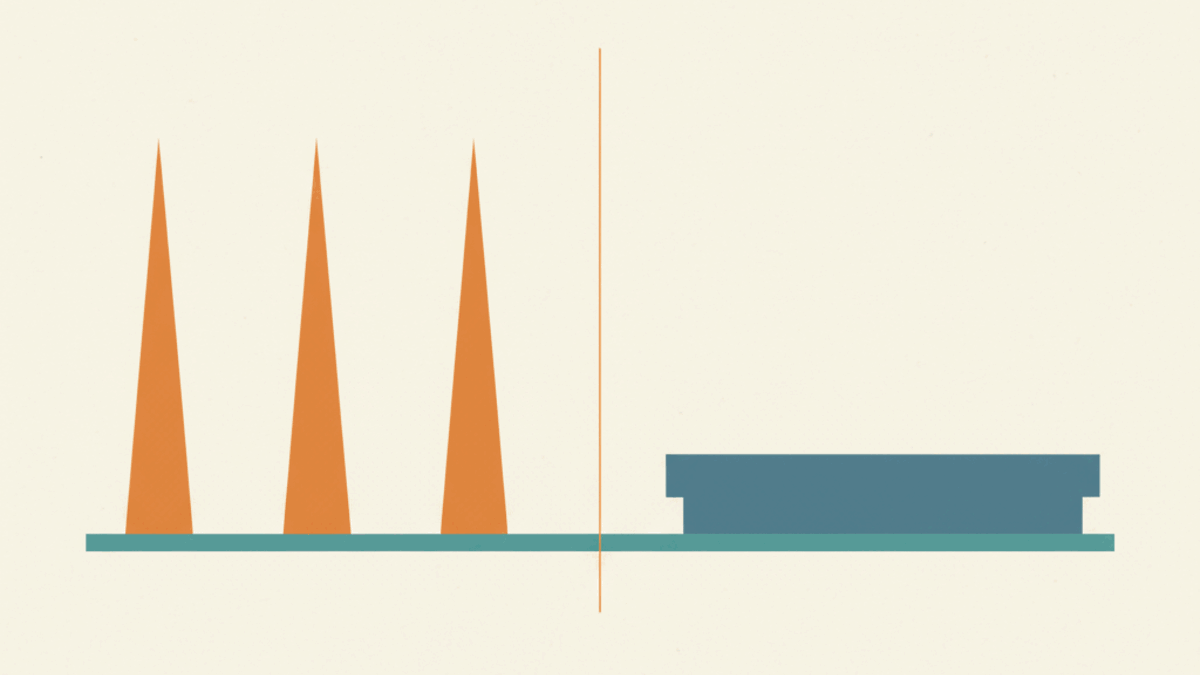
The whole drug rests on one observation: parathyroid hormone builds bone when it arrives in short bursts and dissolves bone when it stays high. Teriparatide was designed to deliver the burst [4], [2].
- It binds the same receptor as the natural hormone. Teriparatide attaches to PTH1R, found on bone-building cells and kidney cells, with the same affinity as the full-length hormone [4].
- The timing decides the direction. An injection produces a brief peak, then a fall back towards the starting level. That intermittent pattern favours the bone-building cells (osteoblasts) over the bone-dissolving ones (osteoclasts), so new bone is laid down on the spongy inner and dense outer surfaces [4], [2].
- Constant exposure does the opposite. Where parathyroid hormone stays raised, as in an overactive gland, bone is lost instead [4].
- Blood calcium rises briefly after each dose. It peaks 4 to 6 hours later, by a median of about 0.4 mg/dl, and is back to baseline within 16 to 24 hours. High urinary calcium was no more common than on placebo [4], [2].
- It disappears fast. Around 95 per cent reaches the blood, the peak comes about 30 minutes after injection, and the half-life is roughly an hour [4].
- The two labels disagree on one number. The American one gives a volume of distribution of about 0.12 l/kg, the European one about 1.7 l/kg. Neither has been withdrawn [4], [2].
This is the opposite pole from the drugs it is compared with. Bisphosphonates and denosumab slow the removal of old bone; teriparatide adds new bone [13], [3].
What the trials found
The evidence base is unusually solid for a peptide, because this one went through a full regulatory programme. What follows includes the points where the trials came up short.
Spine fractures
Phase 3 RCT The pivotal trial randomised 1,637 postmenopausal women who already had vertebral fractures, average age 69.5 years, mean spine bone density 0.82 g/cm2 [1], [16]. Fractures were assessed in 448 placebo and 444 treated women with both a starting and a follow-up X-ray [2].
At least one new vertebral fracture appeared in 14.3 per cent on placebo and 5.0 per cent on teriparatide. That is a relative risk of 0.35 (95 per cent confidence interval 0.22 to 0.55, p no greater than 0.001). Two or more fractures appeared in 4.9 against 1.1 per cent, a relative risk of 0.23 (0.09 to 0.60) [2]. Two amounts were tested, and the journal publication reports their relative risks separately, as 0.35 and 0.31 (0.22 to 0.55 and 0.19 to 0.50) [1].
Bone density moved with the fractures. After the same median of 19 months it was 9 per cent higher at the lower spine and 4 per cent higher at the whole hip than on placebo (p below 0.001), while at the shaft of the forearm the higher of the two amounts left it 2 percentage points lower [1], [2].
Randomised, double-blind, placebo-controlled trial in 1,637 postmenopausal women with existing vertebral fractures; the fracture analysis covers 448 placebo and 444 treated women with both X-rays. Over a median of 19 months, eleven women had to be treated to prevent one new spine fracture. Sources [1], [2].
The duration is quoted two ways, and both are correct. The European product information gives a median of 19 months of treatment for the fracture analysis; the journal publication reports a median observation of 21 months. The trial was stopped early, so neither reached the three years planned [1], [2].
Non-spine fractures, and the hip
Phase 3 RCT In the same trial, non-vertebral fragility fractures affected 5.5 per cent on placebo and 2.6 per cent on teriparatide, a relative risk of 0.47 (0.25 to 0.87, p no greater than 0.025). Major ones, at hip, wrist, upper arm, ribs or pelvis, affected 3.9 against 1.5 per cent, a relative risk of 0.38 (0.17 to 0.86) [2].
The hip alone is the exception, and the European product information repeats it twice. Both the indication and the footnote to the fracture table state that a significant reduction in the incidence of hip fractures has not been demonstrated [2].
Against other osteoporosis drugs
Phase 4 RCT VERO compared teriparatide with risedronate head to head in 1,360 postmenopausal women with severe osteoporosis, average age 72.1 years, a median of two existing spine fractures, and 57.9 per cent already treated with a bisphosphonate. Of these, 1,013 (74.5 per cent) completed the 24 months [3].
New vertebral fractures occurred in 28 women on teriparatide (5.4 per cent of those whose X-rays could be compared, 516) against 64 on risedronate (12.0 per cent of 533), a relative risk of 0.44 (0.29 to 0.68, p below 0.0001). Clinical fractures, meaning those that caused symptoms, affected 30 women against 61, or 4.8 against 9.8 per cent of the 680 randomised to each group, a hazard ratio of 0.48 (0.32 to 0.74, p = 0.0009) [3].
Double-blind, double-dummy randomised trial in 1,360 postmenopausal women with severe osteoporosis; 1,013 completed. The spine difference was statistically solid, the non-vertebral one was not: hazard ratio 0.66, 95 per cent confidence interval 0.39 to 1.10, p = 0.10. Source [3].
Phase 3 RCT In 428 adults aged 22 to 89 taking long-term glucocorticoids, spine bone density rose 7.2 ± 0.7 per cent over 18 months. On alendronate it rose 3.4 ± 0.7 per cent (p below 0.001).
New spine fractures affected 0.6 against 6.1 per cent (p = 0.004). Non-spine fractures did not differ, at 5.6 against 3.7 per cent (p = 0.36) [17].
Phase 3 RCT An earlier 14-month comparison in 146 women found spine bone density up 12.2 per cent against 5.6 per cent on alendronate (p below 0.001). Density at the outer third of the forearm fell. Non-spine fractures were fewer, in very small numbers (p below 0.05) [18].
Men
Phase 3 RCT In 437 men with low-testosterone or unexplained osteoporosis, average age 58.7 years, spine bone density rose 5.9 per cent on the lower and 9.0 per cent on the higher of the two amounts tested (p below 0.001 against placebo). Hip-neck density rose 1.5 and 2.9 per cent; the forearm did not change [19].
A fracture effect was never shown in men, and the European product information says so [2], [19].
Observational follow-up A 42-month follow-up of 355 of those men found new spine fractures in 11.7 per cent of the former placebo group against 5.4 and 6.0 per cent. Pooled, that is a 51 per cent reduction that missed significance (p = 0.07); for moderate and severe fractures it was 83 per cent (p = 0.01) [20].
Combinations and sequence
Randomised, academic The DATA trial gave 94 postmenopausal women teriparatide, denosumab or both for 12 months. Spine density rose 9.1 per cent (standard deviation 3.9) on the combination against 6.2 (p = 0.0139) and 5.5 per cent (p = 0.0005). Hip-neck density rose 4.2 against 0.8 and 2.1 per cent. Fractures were not measured [21].
Randomised extension DATA-Switch followed 77 of those women for another two years, swapping their treatments. After 48 months spine density was up 18.3 per cent (14.9 to 21.8), 14.0 (10.9 to 17.2) and 16.0 (14.0 to 18.0). No difference between groups was significant (p = 0.13 to 0.41) [22].
The order still mattered. Moving from denosumab to teriparatide produced bone loss or temporary falls at several measurement sites; the reverse did not [22].
Endpoints that were missed
Phase 2 RCT In 102 postmenopausal women aged 45 to 85 with a broken wrist treated without surgery, three groups of 34, the estimated median time to visible healing across three of four bone walls was 9.1 weeks on placebo, and 7.4 and 8.8 weeks on the lower and the higher of the two amounts tested (overall p = 0.015). The trial was built to show that the higher amount shortened healing, and it did not: against placebo that comparison came out at p = 0.523. The shorter time under the lower amount comes from a later, unplanned comparison (p = 0.006) and carries no claim of its own [23].
Phase 3 RCT Two identical trials in people with a surgically fixed hip-neck fracture found no difference after 12 months in the share needing no further operation: 88 per cent on placebo (90 per cent confidence interval 0.79 to 0.93) against 84 per cent on teriparatide (0.75 to 0.90, p = 0.743).
The authors record no benefit on healing signs or pain either: 75 against 73 per cent showed radiographic healing (p = 0.692). Both trials closed early for lack of participants. Between them 159 people were randomised, 81 to placebo and 78 to teriparatide, against the 1,220 per trial originally planned [24].
Where it sits among the alternatives
Network meta-analysis A 2026 Bayesian analysis of 23 randomised trials, sized between 80 and 7,808 women, placed abaloparatide first for bone-density gains at spine and hip neck, with teriparatide next. Teriparatide and oral bisphosphonates carried the lowest overall risk of adverse events [25].
Network meta-analysis For glucocorticoid-induced osteoporosis, an analysis of 31 studies and 5,260 participants put teriparatide ahead on spine bone density. The effect sizes were 3.8 against alendronate (95 per cent confidence interval 2.9 to 4.6) and 4.0 against risedronate (2.9 to 5.1). Against zoledronate it was 2.4 (1.1 to 3.6), against denosumab 1.5 (0.1 to 2.9) [26].
What is still unknown
- Hip fractures. No trial has shown a reduction, and the European text says so outright [2].
- Fractures in men. Only a bone-density effect exists; the fracture programme in men was underpowered [2], [19].
- Liver disease. No data on use with impaired liver function have been produced [4].
- Beyond two years. The American relaxation of the two-year lifetime limit rests on cancer-surveillance data, not on randomised evidence that longer treatment keeps working [5].
- Broken bones. The randomised healing trials are negative or too small to answer the question [23], [24].
- Younger adults. Experience in young adults, including women before the menopause, is described as limited [2].
Side effects and safety
Most of what people notice is mild and passes. The serious material in both labels concerns bone tumours, calcium and the kidney, and the two regulators read the same evidence differently.
- Pain in an arm or leg is very common, meaning at least one person in ten [2].
- Nausea, joint pain, dizziness and headache are common. The American label records nausea in 8.5 per cent against 6.7 on placebo, joint pain in 10.1 against 8.4, dizziness in 8.0 against 5.4 [4], [2].
- Calcium rises briefly after each injection. Raised blood calcium 4 to 6 hours later appeared in 11 per cent of women and 6 per cent of men, against 2 and 0 per cent on placebo [4].
- Injection-site reactions are common and mild: pain, swelling, redness, bruising, itching, slight bleeding [2].
- Less common: blood calcium above 2.76 mmol/l, raised uric acid, fast heartbeat, muscle pain, kidney stones, weight gain, raised alkaline phosphatase [2].
- Rare: anaphylaxis, blood calcium above 3.25 mmol/l, kidney failure or impairment, and allergic reactions shortly after injection with breathlessness, facial swelling or hives [2].
- Blood pressure can drop on standing. Brief episodes occurred, mostly within 4 hours of an injection and mostly at the start; the American label reports 5 per cent in healthy volunteers [4].
- Uric acid rises without consequence. Values above the upper normal limit occurred in 2.8 against 0.7 per cent on placebo, with no increase in gout, joint pain or stones [2].
- Antibodies form in some people. They appeared in 2.8 per cent of treated women, first detected after about 12 months, and receded after stopping, without any effect on calcium or bone density [2].
Contraindications in the European text are the longer list: hypersensitivity, pregnancy and breastfeeding, high blood calcium, severe kidney impairment, other metabolic bone diseases, unexplained raised alkaline phosphatase, past skeletal radiotherapy, and skeletal cancers or bone metastases. The American label treats most of these as warnings [2], [4].
The bone-cancer question
Animal data In female rats given it almost lifelong, bone tumours rose with both amount and duration. At the higher of the two amounts given, over 20 to 24 months, osteoma, osteoblastoma and osteosarcoma increased significantly. At the lower amount, started at six months of age, no tumours appeared over 6 or 20 months, though bone mass still increased [27].
The American label puts osteosarcoma incidence in the highest groups at 40 to 50 per cent, and records none in untreated controls [4]. In ovary-removed monkeys treated for 18 months and watched for three years afterwards, no bone tumours appeared [28].
Observational A fifteen-year surveillance study interviewed 1,173 adults with osteosarcoma identified through American cancer registries between 2003 and 2016, which was 24 per cent of those diagnosed. Three reported prior exposure. Against the background rate of roughly 2.5 cases per million adults a year, 4.17 had been expected, giving a standardised incidence ratio of 0.72 (90 per cent confidence interval 0.20 to 1.86) [29].
Observational The Forteo Patient Registry enrolled 75,247 adults and 361,763 person-years between 2009 and 2019, matched against 42 state cancer registries covering 93 per cent of the American population. It found no case, an incidence of 0 (95 per cent confidence interval 0 to 10.2) per million person-years [6].
On that basis the American label was updated in 2020: observational evidence added, boxed warning removed, two-year lifetime limit revised [5]. The warning survives, listing who should avoid the drug: open growth plates, metabolic bone disease including Paget disease, bone metastases, past skeletal cancer or radiotherapy, and inherited osteosarcoma risk [4].
Europe did not follow. Its text still states that the maximum total duration should be 24 months and that the course should not be repeated in a lifetime. Section 4.4 names the rat findings as the reason [2].
Why this page lists no doses
This page gives no amounts for teriparatide in any unit, and no schedules or injection instructions. It is a prescription medicine in every market checked, so how much and how often follow from the prescribing information and from a doctor, not from a reference page [4], [2].
The safety material is why that matters here. Calcium rises after every dose, severe kidney impairment is a contraindication in Europe, and total lifetime duration is capped there. Where trials compared two amounts, this page calls them the lower and the higher tested [2], [1].
Development and approval status
Teriparatide has been on the market for over two decades and is approved in every market this register checks. All checks below were run on 20 September 2026 [9], [10].
From a stopped trial to generic competition
- 1996-1999The pivotal trial runs1,637 women are randomised; the programme is stopped early when rats develop bone tumours, refs [1], [5]
- 2001The fracture result is publishedNew spine fractures fall from 14.3 to 5.0 per cent, ref [1]
- 2002American approvalApproved on 26 November under application NDA 021318, ref [9]
- 2003European approvalCentrally authorised on 10 June, valid across the Union, ref [10]
- 2004The rat data are published in fullBone tumours depend on both the amount given and how long it is given, ref [27]
- 2017First biosimilarsTwo copies are authorised in Europe in January, ref [30]
- 2018Head to head against a bisphosphonateVERO reports 5.4 against 12.0 per cent new spine fractures, ref [3]
- 2020The boxed warning goesThe American label drops it and revises the two-year lifetime limit, ref [5]
- 2023First American genericsTwo abbreviated applications are approved on 16 November, ref [9]
- 2026The original leaves CanadaForteo is listed as cancelled post market from 24 February, ref [31]
- 1996 to 1999 the pivotal trial runs and is stopped early after the rat findings [1], [5].
- 2001 the fracture result is published [1].
- 26 November 2002 the American regulator approves it; the label has been revised since, most recently on 3 August 2026 [9].
- 10 June 2003 the European Commission authorises it centrally; Switzerland follows on 8 August [10], [32].
- 2004 and 2008 the rat carcinogenicity study and the reassuring monkey study appear [27], [28].
- 2017 to 2022 four biosimilars are authorised in Europe; a fifth is withdrawn in November 2020, unmarketed [30].
- October 2019 a second American application, a follow-on rather than a generic, is approved [9].
- 2020 the boxed warning is removed and the lifetime limit revised [5].
- 2023 and 2025 three American generics are approved [9].
| Market | Status | Since or note |
|---|---|---|
| United States | Approved | 2002 |
| European Union | Approved | 2003 |
| Germany | Approved | Prescription-only |
| United Kingdom | Approved | Prescription-only |
| Australia | Approved | Prescription-only |
| Canada | Approved | First marketed 2004 |
| Switzerland | Approved | 2003 |
Two of those entries rest on second-best evidence. The British product register would not return results, so the status comes from the recognised prescribing-information collection, which shows the licence number and the prescription-only classification [33], [34]. The Australian register was unreachable all day, so the status rests on the regulator's own product-information repository, which holds three teriparatide entries [35], [36].
Germany deserves a separate line. Teriparatide is named directly in annex 1 of the German prescription regulation, between teriflunomide and terizidone, so the prescription requirement attaches to the substance itself [7].
The wider legal picture is under are peptides legal and FDA-approved peptides.
Anti-doping
Teriparatide is not prohibited in sport. A full-text search of the 2026 prohibited list returns no match for teriparatide, parathyroid hormone or PTH, while a control search for tesamorelin in the same file returns two [8].
The class that covers peptide hormones, S2, does reach other substances with similar chemical structure or biological effect. Its listed groups are red-cell stimulants, testosterone-releasing peptides, corticotrophins, growth hormone with its analogues and releasing factors, and growth factors. None describes a parathyroid hormone fragment, though only the agency can rule on its own catch-all wording [8].
The annex to the German anti-doping statute does not name it either, while control terms in the same text, among them somatropin and ipamorelin, are present [37]. None of this loosens the prescription requirement. The full picture is at peptides banned in sport.
Compared with related peptides
| Substance | How it acts | Status | Strongest result in its own trial | Ref |
|---|---|---|---|---|
| Teriparatide | Fragment 1-34 of parathyroid hormone, at PTH1R | Approved since 2002 | New spine fractures 5.0 against 14.3 per cent | [1] |
| Parathyroid hormone | The full 84-amino-acid hormone | Separate approval history | See its own record | — |
| Abaloparatide | Analogue of a related hormone, also at PTH1R | Approved, listed separately in German law | Ranked first for bone density in a 2026 analysis | [25] |
| Palopegteriparatide | Teriparatide with a chemical tail, released slowly | Approved for a different disease | Treats underactive parathyroid glands, not osteoporosis | [32] |
These four share a receptor and little else. Teriparatide and abaloparatide are osteoporosis drugs that act through brief pulses of exposure; palopegteriparatide does the opposite, holding a steady level to replace a missing hormone [32].
The comparison that matters clinically is with the drugs that slow bone breakdown. In the VERO trial, new spine fractures over 24 months were less than half as frequent on teriparatide as on risedronate [3]. In the glucocorticoid trial, spine density on teriparatide rose roughly twice as much as on alendronate [17].
The order is not interchangeable either: switching from denosumab to teriparatide cost bone density at several sites, while the reverse did not [22].
Common misconceptions
- "Teriparatide lowers hip fracture risk." Not demonstrated. The European indication and the footnote to the fracture table both say a significant reduction in hip fractures has not been shown. Spine and grouped non-spine fractures were [2].
- "Removing the boxed warning means the cancer risk was disproved." It means no signal appeared in observational data. The rat findings stand, the warning remains, and Europe still caps lifetime treatment at 24 months [4], [5], [2].
- "The American generics are biosimilars." They are ordinary generics, because a 34-amino-acid molecule falls below the 40-unit definition of a protein in American regulation. In Europe and Switzerland the copies are biosimilars [15], [9], [30].
- "Teriparatide and parathyroid hormone are the same thing." Teriparatide is the 1-34 fragment of an 84-amino-acid hormone. The shared classification group, parathyroid hormones and analogues, invites the mix-up [2], [13].
- "It speeds up the healing of broken bones." The randomised trials say otherwise. The wrist trial missed its primary hypothesis, and the hip-neck trials found 88 against 84 per cent free of further surgery (p = 0.743) [23], [24].
- "PTH (1-34) bought as a laboratory reagent is legally something else." Same molecule, same registry number. German prescription rules attach to the substance, and a research-use label changes neither that nor the approval requirement [7], [12], [38].
- "The weekly version is the worldwide standard." A weekly formulation is a separate Japanese development line, registered there on the strength of a trial in 578 people aged 65 to 95, in which new spine fractures affected 3.1 against 14.5 per cent on placebo, a relative risk of 0.20 (0.09 to 0.45). It is not the same product as the ones approved in the United States, Europe, Switzerland and the United Kingdom, whose product information does not cover it [39], [4], [2].
Frequently asked questions
What is teriparatide?
It is the first 34 amino acids of human parathyroid hormone, the section that carries the biological activity. The natural hormone has 84. Most products are made by genetically modified Escherichia coli bacteria, some by chemical synthesis. It is a bone-building drug for osteoporosis rather than one that slows bone breakdown.
Is teriparatide an approved medicine, and where?
Yes, and it has been for more than two decades. The American regulator approved it in November 2002 and the European Commission in June 2003. Checks on 20 September 2026 also confirmed it in Germany, the United Kingdom, Switzerland, Canada and Australia, prescription-only in every one; for the United Kingdom and Australia the official register could not be queried, so the status there rests on other official documents.
What did the pivotal teriparatide trial actually show?
In 1,637 postmenopausal women who already had spine fractures, at least one new spine fracture appeared in 14.3 per cent on placebo and 5.0 per cent on teriparatide. That is a relative risk of 0.35, with a 95 per cent confidence interval of 0.22 to 0.55. Over a median of 19 months, eleven women had to be treated to prevent one such fracture.
Does teriparatide prevent hip fractures?
That has never been shown. The European product information says so twice, in the indication and in a footnote: a significant reduction in the incidence of hip fractures has not been demonstrated. What was shown is a fall in spine fractures and in non-hip fragility fractures as a group.
Does teriparatide cause bone cancer?
In rats given it almost lifelong it did, in a way that depended on both amount and duration. In people, no signal has appeared: a fifteen-year surveillance study found three exposed cases against 4.17 expected, and a registry of 75,247 people found none. The warning remains because the rat finding has not gone away.
Why does Europe limit teriparatide to 24 months in a lifetime?
The European product information states that the maximum total duration should be 24 months and that the course should not be repeated. Section 4.4 gives the reason directly: the bone tumours seen in rats. The American label dropped its boxed warning in 2020 and revised the two-year lifetime limit; the European one did not follow.
Is teriparatide the same thing as parathyroid hormone?
No, it is a fragment of it. Teriparatide is the 1-34 section of the 84-amino-acid human hormone. Full-length recombinant parathyroid hormone is a separate drug with its own approval history. The shared classification code H05AA, parathyroid hormones and analogues, makes the two easy to confuse.
Are the American teriparatide generics biosimilars?
No, they are true generics, and the reason is a definition. American regulation defines a protein as any amino-acid chain of more than 40 units. At 34, teriparatide falls below that line, so abbreviated generic applications are possible. In Europe and Switzerland the same substance counts as biological, and its copies are biosimilars.
Is teriparatide banned in sport?
No. The full text of the 2026 World Anti-Doping Agency prohibited list contains no entry for teriparatide, parathyroid hormone or PTH, and the class covering peptide hormones does not reach it. The annex to the German anti-doping statute does not name it either. That changes nothing about its prescription status.
Is the PTH (1-34) sold for laboratory use the same substance as teriparatide?
Chemically, yes. PTH (1-34), hPTH(1-34) and teriparatide all describe one molecule with the registry number 52232-67-4. German prescription rules attach to the substance, not to the wording on the vial, and teriparatide is listed there by name. A research-use label removes neither the prescription requirement nor the approval requirement.
Sources
- Neer RM, Arnaud CD, Zanchetta JR, Prince R, Gaich GA, Reginster JY, et al. (2001). Effect of parathyroid hormone (1-34) on fractures and bone mineral density in postmenopausal women with osteoporosis. New England Journal of Medicine 344(19):1434-1441. PMID 11346808. DOI 10.1056/NEJM200105103441904. The pivotal trial; the abstract reports a median observation of 21 months.
- European Medicines Agency. Forsteo, summary of product characteristics (Annex I of the product information), revision 25, 28 January 2026. Sections 4.1 to 4.9, 5.1 with table 1, 5.2, 5.3 and 6.1 to 6.5. The fracture analysis is described over a median of 19 months. https://www.ema.europa.eu/en/documents/product-information/forsteo-epar-product-information_en.pdf
- Kendler DL, Marin F, Zerbini CAF, et al. (2018). Effects of teriparatide and risedronate on new fractures in post-menopausal women with severe osteoporosis (VERO): a multicentre, double-blind, double-dummy, randomised controlled trial. Lancet 391(10117):230-240. PMID 29129436. DOI 10.1016/S0140-6736(17)32137-2. A correction was published in the same volume (Lancet 391(10117):204, PMID 29198559); the abstract quotes the randomised group size of 680 where the fracture percentages refer to the smaller set of women whose X-rays could be compared.
- Forteo (teriparatide injection), United States prescribing information, Eli Lilly and Company, label revision 3 August 2026. DailyMed set id aae667c5-381f-4f92-93df-2ed6158d07b0. Sections 1, 4, 5.1 to 5.6, 6.1, 8, 11, 12.1 to 12.3, 13.1, 14 and 16. No boxed warning is present. https://dailymed.nlm.nih.gov/dailymed/drugInfo.cfm?setid=aae667c5-381f-4f92-93df-2ed6158d07b0
- Krege JH, Gilsenan AW, Komacko JL, Kellier-Steele N (2022). Teriparatide and osteosarcoma risk: history, science, elimination of boxed warning, and other label updates. JBMR Plus 6(9):e10665. PMID 36111201. Records the early stop of the phase 3 programme and the 2020 label change.
- Gilsenan A, Harris D, Reynolds M, et al. (2021). Long-term cancer surveillance: results from the Forteo Patient Registry Surveillance Study. Osteoporosis International 32(4):645-651. PMID 33151378.
- Germany, Arzneimittelverschreibungsverordnung, annex 1, full text checked 20 September 2026: "Teriparatid" is listed by name, between teriflunomide and terizidone. Parathyroid hormone and abaloparatide appear separately. https://www.gesetze-im-internet.de/amvv/anlage_1.html
- World Anti-Doping Agency. International Standard Prohibited List 2026, in force 1 January 2026. Full text searched 20 September 2026: no match for teriparatide, parathyroid or PTH; a control search for tesamorelin returns two matches in section S2.2.4. https://www.wada-ama.org/en/prohibited-list
- openFDA, Drugs@FDA, queried 20 September 2026 for the generic name teriparatide: NDA 021318 (Lilly) approved 26 November 2002 with supplements to 3 August 2026; NDA 211939 approved 4 October 2019; abbreviated applications 208569 and 211097 approved 16 November 2023 and 213641 approved 12 December 2025. All carry prescription marketing status. https://api.fda.gov/drug/drugsfda.json
- European Medicines Agency, European public assessment report for Forsteo. Marketing authorisation EU/1/03/247/001-002 granted 10 June 2003, last renewed 13 February 2013; classification code H05AA02; status authorised for use in the European Union. https://www.ema.europa.eu/en/medicines/human/EPAR/forsteo
- ChEMBL, molecule CHEMBL525610, queried 20 September 2026. Molecule type protein, maximum phase 4, synonyms human parathyroid hormone 1-34 and LY 333334. Source of the amino-acid sequence through its HELM notation.
- PubChem, compound CID 16133850, queried 20 September 2026 for formula, mass, InChIKey and synonyms: C181H291N55O51S2, molecular weight 4118, InChIKey OGBMKVWORPGQRR-UMXFMPSGSA-N, CAS 52232-67-4, UNII 10T9CSU89I.
- WHO Collaborating Centre for Drug Statistics Methodology, ATC index, code H05AA02: H05 calcium homeostasis, H05A parathyroid hormones and analogues. https://atcddd.fhi.no/atc_ddd_index/?code=H05AA02
- KEGG DRUG, entry D06078, queried 20 September 2026: formula C181H291N55O51S2, molecular weight 4117.72, exact mass 4115.1309, target PTH1R, Japanese therapeutic category 2439.
- United States Code of Federal Regulations, 21 CFR 600.3, retrieved from the electronic register on 20 September 2026: "A protein is any alpha amino acid polymer with a specific, defined sequence that is greater than 40 amino acids in size."
- ClinicalTrials.gov, NCT00670501, "Effects of LY333334 in the Treatment of Postmenopausal Women With Osteoporosis". Sponsor Eli Lilly, phase 3, completed, 1,637 participants, August 1996 to April 1999, no results posted. Queried through API v2 on 20 September 2026.
- Saag KG, Shane E, Boonen S, Marin F, Donley DW, Taylor KA, et al. (2007). Teriparatide or alendronate in glucocorticoid-induced osteoporosis. New England Journal of Medicine 357(20):2028-2039. PMID 18003959. DOI 10.1056/NEJMoa071408.
- Body JJ, Gaich GA, Scheele WH, et al. (2002). A randomized double-blind trial to compare the efficacy of teriparatide with alendronate in postmenopausal women with osteoporosis. Journal of Clinical Endocrinology and Metabolism 87(10):4528-4535. PMID 12364430. DOI 10.1210/jc.2002-020334.
- Orwoll ES, Scheele WH, Paul S, et al. (2003). The effect of teriparatide therapy on bone density in men with osteoporosis. Journal of Bone and Mineral Research 18(1):9-17. PMID 12510800. DOI 10.1359/jbmr.2003.18.1.9.
- Kaufman JM, Orwoll E, Goemaere S, et al. (2005). Teriparatide effects on vertebral fractures and bone mineral density in men with osteoporosis: treatment and discontinuation of therapy. Osteoporosis International 16(5):510-516. PMID 15322742. DOI 10.1007/s00198-004-1713-3.
- Tsai JN, Uihlein AV, Lee H, et al. (2013). Teriparatide and denosumab, alone or combined, in women with postmenopausal osteoporosis: the DATA study randomised trial. Lancet 382(9886):50-56. PMID 23683600. DOI 10.1016/S0140-6736(13)60856-9.
- Leder BZ, Tsai JN, Uihlein AV, et al. (2015). Denosumab and teriparatide transitions in postmenopausal osteoporosis (the DATA-Switch study): extension of a randomised controlled trial. Lancet 386(9999):1147-1155. PMID 26144908. DOI 10.1016/S0140-6736(15)61120-5.
- Aspenberg P, Genant HK, Johansson T, et al. (2010). Teriparatide for acceleration of fracture repair in humans: a prospective, randomized, double-blind study of 102 postmenopausal women with distal radial fractures. Journal of Bone and Mineral Research 25(2):404-414. PMID 19594305. DOI 10.1359/jbmr.090731. Three groups of 34; the primary hypothesis was explicitly not confirmed (p = 0.523 against placebo).
- Bhandari M, Jin L, See K, et al. (2016). Does teriparatide improve femoral neck fracture healing: results from a randomized placebo-controlled trial. Clinical Orthopaedics and Related Research 474(5):1234-1244. PMID 26932738. DOI 10.1007/s11999-015-4669-z. Two identical trials, both closed early for slow recruitment: 159 of the planned 2,440 participants were randomised.
- Wang Y, Wang X, Yu G, et al. (2026). Efficacy and safety of abaloparatide, denosumab, teriparatide, oral bisphosphonates, and intravenous bisphosphonates in the treatment of postmenopausal osteoporosis: a systematic review and Bayesian network meta-analysis. Frontiers in Endocrinology 17:1886136. PMID 42494861. DOI 10.3389/fendo.2026.1886136.
- Yavropoulou MP, Ter Wee MM, Naciu AM, et al. (2026). Effectiveness of anti-osteoporotic medications in the management of glucocorticoid-induced osteoporosis: a systematic review and network meta-analysis on behalf of the ECTS clinical action group. European Journal of Endocrinology 195(2):S1-S21. PMID 42565501. DOI 10.1093/ejendo/lvag147.
- Vahle JL, Long GG, Sandusky G, Westmore M, Ma YL, Sato M (2004). Bone neoplasms in F344 rats given teriparatide are dependent on duration of treatment and dose. Toxicologic Pathology 32(4):426-438. PMID 15204966.
- Vahle JL, Zuehlke U, Schmidt A, Westmore M, Chen P, Sato M (2008). Lack of bone neoplasms and persistence of bone efficacy in cynomolgus macaques after long-term treatment with teriparatide. Journal of Bone and Mineral Research 23(12):2033-2039. PMID 18684088.
- Gilsenan A, Midkiff K, Harris D, Kellier-Steele N, McSorley D, Andrews EB (2021). Teriparatide did not increase adult osteosarcoma incidence in a 15-year US postmarketing surveillance study. Journal of Bone and Mineral Research 36(2):244-251. PMID 32990990. Interviews covered 24 per cent of the osteosarcoma patients identified; the assumed background rate is about 2.5 cases per million adults a year.
- European Medicines Agency, assessment reports for the teriparatide biosimilars Terrosa (4 January 2017), Movymia (11 January 2017), Livogiva (27 August 2020) and Sondelbay (24 March 2022), and for Qutavina, authorised 27 August 2020 and withdrawn at the holder's request on 24 November 2020 without ever being marketed.
- Health Canada Drug Product Database, queried through its interface on 20 September 2026: four teriparatide products, all prescription. The original, first marketed 15 July 2004, is recorded as cancelled post market from 24 February 2026; three others remain marketed, from 2020, 2020 and 2024.
- Swissmedic, extended list of authorised human medicines, status 31 August 2026, downloaded and searched 20 September 2026: six teriparatide authorisations, all dispensing category B, the earliest dated 8 August 2003. The same list holds palopegteriparatide under a separate code, H05AA05, authorised 9 December 2025.
- electronic Medicines Compendium, Forsteo summary of product characteristics, United Kingdom, text revised 27 January 2026: licence number PLGB 14895/0243, legal status prescription only medicine. Used because the regulator's own index could not be queried. https://www.medicines.org.uk/emc/product/2215/smpc
- Products index of the British medicines regulator, https://products.mhra.gov.uk/search/?search=teriparatide — not usable. The page loads its results only through scripts, and neither the fetching service nor a direct request returned a result list on 20 September 2026.
- Therapeutic Goods Administration, product information repository, queried 20 September 2026 for teriparatide: three entries with this active ingredient. A control query for the original brand name returned nothing. The documents themselves sit behind a licence confirmation and were not read.
- Australian Register of Therapeutic Goods — not reachable. The host did not answer on 20 September 2026. The current Poisons Standard, instrument F2026L00633, was confirmed in force through the legislation register interface, but its schedule text could not be extracted, so no statement about scheduling is made here.
- Germany, annex to the anti-doping act, version published in the federal gazette 2023 I no. 67, full text checked 20 September 2026: no entry for teriparatide, parathyroid hormone or parathyroid. Control matches in the same text include somatropin, tesamorelin, sermorelin and ipamorelin.
- Listings for PTH (1-34) by laboratory-chemical and peptide traders, observed through a web search on 20 September 2026. They carry research-use wording throughout. Cited only as evidence of how the substance is traded, never as a source of fact.
- Nakamura T, Sugimoto T, Nakano T, et al. (2012). Randomized Teriparatide Once-Weekly Efficacy Research (TOWER) trial. Journal of Clinical Endocrinology and Metabolism 97(9):3097-3106. PMID 22723322. DOI 10.1210/jc.2011-3479. Japanese registration trial of a weekly formulation, 578 participants over 72 weeks.
Cite this page
The facts on this page were checked on 20 September 2026, and every register behind the status table was queried that day. Two entries rest on second-best evidence, as the status section explains. Storage rules for the approved products are on their own labels; general handling of peptides is covered under peptide storage.
myPeptides Research & Editing. (2026). Teriparatide: what the trials show, status and safety. Version 1.0, 20 September 2026. myPeptides Peptide Register. Retrieved from https://mypep.app/peptides/teriparatide
How pages in this register are compiled and graded is described under methodology; the full register is at peptides.
| Version | Date | Change |
|---|---|---|
| 1.0 | 2026-09-20 | Initial publication |
Last verified: 20 September 2026. Next review: on any change to the European lifetime duration limit, on any new approval or withdrawal in the seven markets, or on any change to the anti-doping classification.