
NAD+: what the studies show, status and safety
Summary
NAD+ is not a peptide but a coenzyme every living cell makes itself. It is listed here only because it is sold as an injection beside peptides. No country has approved it. Almost all human evidence concerns the swallowed building blocks NR and NMN. The one human measurement of an infusion found NAD+ gone from the blood within two hours.
Key findings at a glance
- It is a dinucleotide, not a peptide. The formula is C21H27N7O14P2 and the mass 663.43 g/mol, with no amino acid and no peptide bond anywhere in it [1]. It is listed here because it is sold as an injection through the same shops as research peptides.
- An infusion did not raise blood NAD+ at first. Eleven healthy men took part, eight of them infused over six hours and three of them controls. Neither NAD+ nor its breakdown products rose in the blood during the first two hours [2].
- The good evidence is about a different substance. A review published in 2026 screened the years 2010 to 2025 and found 113 eligible studies, of which 33 were human trials. Nearly all tested swallowed NR or NMN, and none was an outcome trial [3].
- Swallowed NR does raise blood NAD+. Whole blood NAD+ rose by 22, 51 and 142 percent at three ascending dose levels. The rise appeared within two weeks and held for the rest of the eight-week trial [4].
- The route may run through the gut. In 65 healthy adults given NR, NMN or nicotinamide for 14 days, gut bacteria turned NR and NMN into nicotinic acid. In blood tested outside the body, only nicotinic acid raised NAD+ strongly [5].
- The infusion was tolerated poorly. In a provider's own record review, NAD+ drips had to be slowed because of gut symptoms, a faster pulse and chest pressure. They took 97 minutes on average against 37 minutes for NR [6].
- Approved nowhere, and the drip is a banned method in sport. Two searches of the American approval database returned "No matches found" [7]. The 2026 doping list does not name the substance. It does ban infusions above 100 millilitres per 12 hours as a method [8].
What it is
NAD+ stands for nicotinamide adenine dinucleotide. It is a coenzyme: a small helper molecule that enzymes need in order to work. Two nucleotides sit joined by a bridge of two phosphate groups, one carrying adenine and the other nicotinamide, each on a ring of the sugar ribose [1].
Every cell makes it and uses it. The body builds NAD+ along three routes: one from the amino acid tryptophan, one from nicotinic acid, and one that reuses nicotinamide, a form of vitamin B3 [9].
Nobody invented the molecule. It was described in 1906 in yeast extract, under the name cozymase, and its older names still sit in the chemical databases [1].
There is no developer and no medicine behind it. The substance carries an international non-proprietary name, "nadide", granted in the American, international, British and Japanese naming systems [1]. A name of that kind is a naming convention. It is not an approval, and the drug index that assigns codes to medicines returns no match for it [10].
Quick facts
| Field | Value | Ref |
|---|---|---|
| Common name | NAD+, also NAD or beta-NAD; free name nadide | [1] |
| Class | Coenzyme, a dinucleotide. Not a peptide, not a hormone | [1] |
| Amino acid sequence | None. It contains no amino acids | [1] |
| Formula and mass | C21H27N7O14P2, 663.43 g/mol | [1] |
| Water and fat solubility | Very water-loving, practically not fat-soluble; XLogP -6 | [1] |
| What it acts on | Not a receptor. It is the shared helper and raw material of several enzyme families | [9] |
| How long it lasts in the body | Never formally measured; cleared from plasma inside two hours during a continuous drip | [2] |
| Status | Approved nowhere as a medicine; the swallowed building blocks are regulated as food | [7], [11] |
| CAS registry number | 53-84-9 | [1] |
| PubChem CID | 5892 | [1] |
| UNII | 0U46U6E8UK | [1] |
| ATC code | None | [10] |
One property decides most of the argument about injections. The molecule is large, carries two negative charges and is extremely water-loving, so it does not slip through cell membranes on its own [1].
How it works
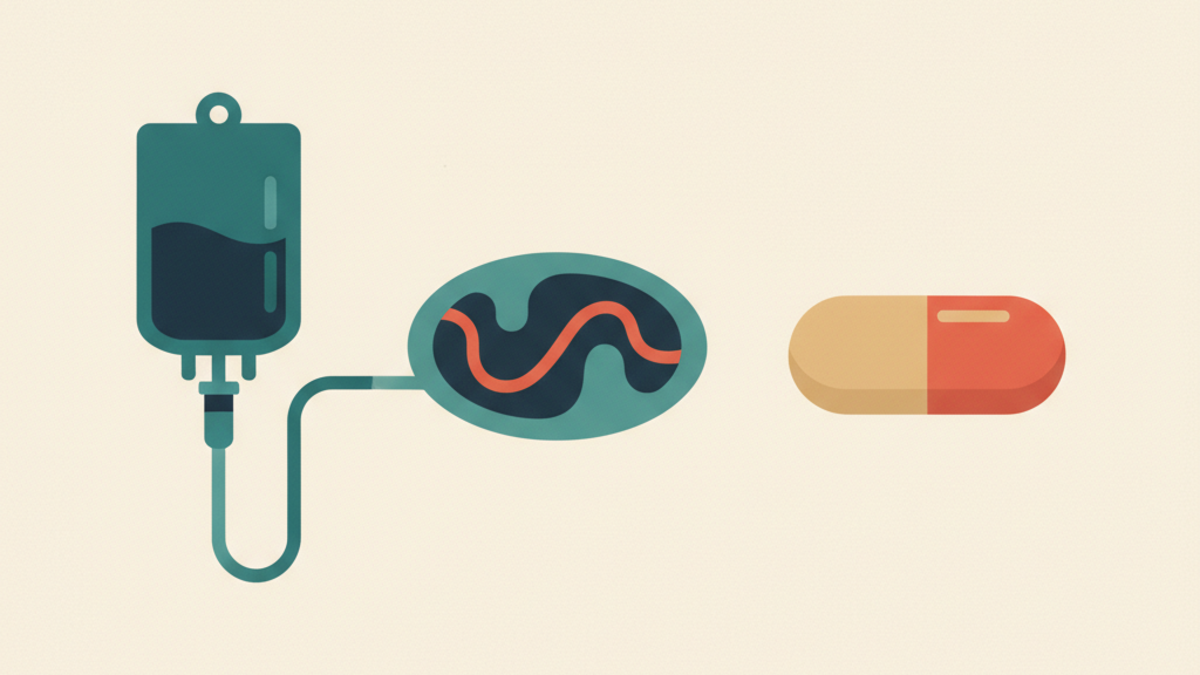
NAD+ has two jobs at once, and both are established biochemistry rather than a hypothesis about a product. It carries electrons back and forth between two states, NAD+ and NADH, in the reactions that release energy from food. It is also eaten up as raw material by several enzyme families [9].
- It is consumed, not just used. Several enzyme families break NAD+ apart as part of their work. Among them are the sirtuins, the DNA-repair enzymes called PARPs, the surface enzymes CD38 and CD157, and the nerve enzyme SARM1 [9].
- Levels fall with age, and the meaning of that is unsettled. Reviews describe the decline in tissue NAD+ as a possible contributor to age-related disease. They say plainly that this is a hypothesis, not a proven cause in people [9], [12].
- Raising it might raise the activity of those enzymes. That is the idea behind every product in this field. Whether it translates into anything a person would notice is exactly what the human studies have not shown [3].
- The swallowed building blocks may work through gut bacteria. A study published in 2026 found that gut microbes turn NR and NMN into nicotinic acid. That acid then feeds one of the three building routes [5].
- Injected NAD+ appears to be taken apart first. During the only human infusion measurement, the pattern of substances appearing in urine matched cleavage by two enzymes that split NAD+ outside cells [2].
What reaches the inside of a cell, on current evidence, are the fragments rather than the whole molecule. This is the point at which NAD+ differs from a peptide medicine, which is designed to dock onto a receptor and trigger a signal.
What the studies found
The evidence splits cleanly in two. Swallowed NR and NMN have been through around three dozen controlled trials; NAD+ given into a vein has one pilot measurement and one record review behind it [3].
Blood levels and what a drip actually does
Human pilot study Eleven healthy men aged 30 to 55 took part: eight in the treated group and three in a control group. Those eight received NAD+ dissolved in salt solution as a slow drip running over six hours. The amount is listed in the table of doses further down.
Through the first two hours, neither NAD+ nor any breakdown product rose in the blood. After six hours, methylnicotinamide and NAD+ appeared in the urine, but nicotinamide did not [2].
The authors read this as complete and rapid removal from the plasma at that infusion rate. The infusion solution itself came from a compounding pharmacy, not from an approved manufacturer [2].
Human pharmacokinetic study A phase I study in 2026 measured NAD+ in blood and, with a scanner, in the brain. Six healthy people and six with Parkinson's disease took NR or NMN daily. Blood NAD+ took about two weeks to plateau. Brain NAD+ rose measurably only after four weeks, and individuals differed widely [13].
Metabolism: the NR and NMN trials
Randomised trial In overweight but otherwise healthy adults, whole blood NAD+ rose by 22, 51 and 142 percent at the three ascending dose levels. The rise appeared within two weeks and held for the remaining six of the eight weeks. That is proof the substance hit its biochemical target, not proof of a health benefit [4].
Randomised, double-blind, placebo-controlled trial in overweight adults, three ascending dose levels over eight weeks. The study was run for the manufacturer of the product. Source [4].
Randomised trial In 40 obese men, twelve weeks of NR did not improve insulin sensitivity, glucose production, glucose uptake or glucose burning. Resting energy use, fat release, fat burning and body composition were unchanged too. The authors concluded that the dose was safe but did not improve glucose metabolism [14].
Randomised trial Twenty-five postmenopausal women with prediabetes took NMN for ten weeks, and muscle glucose uptake under insulin rose. The finding is disputed.
A published comment notes that the 13 women on NMN began with 6.3 percent liver fat against 14.8 percent in the 12 on placebo. That difference is unlikely to be chance (p = 0.003), so the groups were not comparable at the start [15], [16].
Randomised trial Thirty overweight or obese adults aged 45 and over took a crystalline form of NMN for 28 days. Body weight fell by 1.9 kg more than on placebo (p = 0.008), the lower of the two blood pressure readings by 7.0 mmHg (p = 0.034), total cholesterol by 26.9 mg/dl (p = 0.004) and LDL cholesterol by 18.7 mg/dl (p = 0.007).
Muscle strength, muscle fatigability, stair-climbing power, aerobic capacity, insulin sensitivity, liver fat and belly fat did not change [17].
Randomised trial In 13 overweight people, six weeks of NR raised the markers of NAD+ production in muscle and slightly raised lean mass, from 61.32 to 62.65 percent. Insulin sensitivity, mitochondrial function, liver fat, blood pressure and inflammation markers were unaffected [18].
Parkinson's disease
Randomised phase I trial In the NADPARK study, 30 newly diagnosed and untreated patients took NR or placebo for 30 days. Brain NAD+ rose, but unevenly. Only in those whose brain level actually rose did brain glucose handling change, alongside a mild clinical improvement. Inflammation markers in blood and spinal fluid fell [19].
Randomised safety trial The NR-SAFE study gave 20 patients the highest daily amount tested in people to date, over four weeks. No moderate or severe side effects occurred, and blood NAD+ rose up to fivefold. Serum homocysteine rose slightly at first.
The apparent improvement in symptom scores coincided with a shorter gap since the last levodopa dose. The authors name that confounder themselves [20].
Muscle, walking and ageing
Randomised trial In healthy older men, daily NMN raised blood NAD+ significantly. Walking speed and left-hand grip strength improved, but the authors describe the result as only nominally significant and in need of confirmation. Body composition did not change [21].
Randomised trial In 90 people with poor leg circulation, six months of NR changed the six-minute walking distance by +7.0 metres, against -10.6 metres on placebo. The difference was 17.6 metres, and 31.0 metres among those who took at least 75 percent of their capsules. Adding resveratrol gave 26.9 metres in that group, so it brought no advantage over NR alone.
The main result was reported with a one-sided 90 percent confidence interval whose lower bound was 1.8 metres, and the authors call for a larger confirmatory trial [22].
Randomised trial In 80 healthy middle-aged adults, blood NAD+ rose at all three dose levels against placebo and against the starting value (p ≤ 0.001 throughout), most strongly at the two higher levels. Six-minute walking distance improved more than on placebo, while insulin resistance did not differ.
Biological age was estimated with a free online calculator rather than a validated marker [23].
Missed and negative endpoints
Randomised trial In 20 older adults with mild cognitive problems, ten weeks of NR raised blood NAD+ 2.6-fold and left the cognitive score unchanged. Blood flow in one brain network fell under NR, a finding the authors say would not have survived correction for multiple testing. Walking speed improved in the placebo group, not the NR group [24].
Randomised trial One primary endpoint was met. In 40 people with COPD, sputum levels of the inflammation signal interleukin-8 were 52.6 percent lower on NR than on placebo, and the gap persisted 12 weeks after treatment ended. This is an inflammation marker, not a clinical outcome [25].
Open-label trial In 30 people with heart failure, NR roughly doubled whole-blood NAD+ and appeared safe. The individual rise correlated with respiration in blood cells and with lower activity of an inflammation switch. These are mechanistic correlations rather than clinical results [26].
Randomised trial In healthy middle-aged and older adults, NR was taken for two six-week periods in a crossover design. It was well tolerated and measurably stimulated NAD+ metabolism.
For blood pressure and arterial stiffness the authors claim nothing. They write only that future trials should assess whether NR might reduce them, which is a question rather than a finding [27].
Systematic review The overall picture from 33 human trials is consistent. Swallowed NR and NMN reliably hit their biochemical target and were generally well tolerated over weeks to months. Effects on function, metabolism, blood vessels and other health-relevant endpoints were mixed, and often absent or confined to a single measure [3].
Safety findings that point the other way
Observational study One discovery group of 1,162 people and two validation groups of 2,331 and 832 were studied. Higher blood levels of 2PY and 4PY, the final breakdown products of surplus niacin, went with a higher risk of serious cardiac events within three years.
For 4PY the adjusted risk was 89 and 99 percent higher in the two validation groups (hazard ratios 1.89 and 1.99) [28].
That study looked at heart patients and at niacin, not at NAD+ products. It matters here because 2PY and 4PY are also the final breakdown products of NR and NMN [28].
Human pharmacokinetic study In 14 healthy men, a dose of NMN placed under the tongue produced significantly more of those same breakdown products than the swallowed dose. Blood levels of NMN, nicotinamide and NAD+ did not differ between the two routes [29].
Animal data In a mouse model of triple-negative breast cancer, giving NR significantly increased both the frequency of tumours and their spread to the brain. The authors conclude that use of such supplements needs weighing up in particular patient groups [30].
Preclinical review The direction of cancer research runs the opposite way. Tumour cells turn NAD+ over quickly and depend on one enzyme that recovers it. Blockers of that enzyme, which lower NAD+, are being developed as cancer drugs [31].
What is still unknown
- Whether infused NAD+ does anything. No randomised, placebo-controlled trial of intravenous NAD+ exists, in any condition [32], [33].
- What amount would be right. The quantities used in clinics do not come from a dose-finding study [2].
- Whether swallowed NAD+ is absorbed intact. There are no human data either way, and the size, charge and water-loving character of the molecule argue against it [1].
- Whether a blood level says anything about tissue. Brain NAD+ rose only after four weeks, and individual differences were large [13].
- What happens beyond a year. The longest treatment period in the literature is 26 weeks per arm, in a rare inherited disease [34].
- Nasal sprays, patches and injections under the skin. Nothing has been published on any of them [3].
Side effects and safety
There is no side-effect profile for NAD+ infusions in the sense a licensed medicine has one, because the studies that would produce it have not been done.
- Drip symptoms were common enough to slow the infusion. A provider's review of its own records describes moderate to severe gut symptoms, a rising heart rate and chest pressure during NAD+ infusions. All faded when the drip ended. NR infusions caused mild tingling in tongue, jaw and arm, and mild cramps [6].
- That report is weak evidence in both directions. It was retrospective, had no control group, no blinding, and was written by employees of the company selling the infusions. Liver values, kidney values, thyroid stimulating hormone and the inflammation marker hsCRP did not change [6].
- The six-hour infusion study saw nothing. No side effects were observed in eight healthy men. One infusion in eight people, with no follow-up beyond eight hours, is not a safety result [2].
- The swallowed forms were well tolerated. Across 33 human trials, NR and NMN were generally well tolerated over weeks to months, at the doses and durations tested [3].
- High-dose NR nudged one blood value. At the highest daily amount tested in people, serum homocysteine rose slightly at the start. Breaking down nicotinamide consumes methyl groups, so a steady high intake draws on that budget [20].
- Reports are accumulating in the American side-effect database. Under the product name "NAD" there were 44 reports, 28 of them classed as serious. Nicotinamide riboside had 36, of which 21 were serious. They concentrate in 2025 and 2026 [35].
Those reports prove nothing on their own. They are voluntary, carry no proof of cause and have no known denominator. The reverse also holds: substances sold outside the regulated medicines system rarely generate reports at all [35].
Two further concerns come from the regulators' own files. The European food safety assessors wrote in 2021 that experimental data suggest several routes by which nicotinamide or its building blocks could have unwanted effects at intakes well above what the body needs [36].
In the rat study underlying the 2026 NMN opinion, effects on the reproductive organs were seen. Pregnant and breastfeeding women are excluded from both positive European assessments [37], [11].
Finally, a drip carries risks that have nothing to do with what is in it: infection at the puncture site, vein inflammation, fluid load, and errors in preparing and sterilising the solution [33].
Doses used in studies
The doses below are simply what the cited studies gave, listed so that the results can be understood. They are not advice on how to use anything.
The column naming the substance is the important one. Almost every line is NR or NMN taken by mouth, and only two lines concern NAD+ itself.
| Study | Substance (NAD+, NR or NMN) | Dose | Route | Duration | n | Ref |
|---|---|---|---|---|---|---|
| Grant 2019, infusion pharmacokinetics | NAD+ | 750 mg in total, about 2 mg a minute | Into a vein | 6 hours, once | 11 | [2] |
| Reyna 2026, provider record review | NAD+, and NR for comparison | 500 mg per infusion | Into a vein | 4 consecutive days | Not stated | [6] |
| Trammell 2016, first NR pharmacokinetics | NR | 100, 300 and 1000 mg | By mouth | Single dose | Not stated | [38] |
| Conze 2019, dose response | NR | 100, 300 or 1000 mg a day | By mouth | 8 weeks | Not stated | [4] |
| Dollerup 2018, obese men | NR | 2000 mg a day | By mouth | 12 weeks | 40 | [14] |
| Martens 2018, blood vessels in older adults | NR | 1000 mg a day | By mouth | 2 x 6 weeks, crossover | Not stated | [27] |
| Brakedal 2022, NADPARK | NR | 1000 mg a day | By mouth | 30 days | 30 | [19] |
| Berven 2023, NR-SAFE, highest tested | NR | 3000 mg a day | By mouth | 4 weeks | 20 | [20] |
| Yoshino 2021, prediabetes | NMN | 250 mg a day | By mouth | 10 weeks | 25 | [15] |
| Igarashi 2022, older men | NMN | 250 mg a day | By mouth | 6 or 12 weeks | Not stated | [21] |
| Yi 2023, dose finding | NMN | 300, 600 or 900 mg a day | By mouth | 60 days | 80 | [23] |
| Fukamizu 2022, safety study | NMN | 1250 mg a day | By mouth | Up to 4 weeks | 31 | [39] |
| Pencina 2023, crystalline NMN | NMN | 2000 mg a day | By mouth | 28 days | 30 | [17] |
| Berven 2026, brain measurement | NR or NMN | 1200 mg a day | By mouth | Several weeks | 12 | [13] |
| European legal ceiling, not a study | NR chloride | Up to 300 mg a day, 230 mg in pregnancy and breastfeeding | By mouth | Open-ended | Not applicable | [11] |
| European assessment 2026, not a study | Beta-NMN | Up to 300 mg a day for adults | By mouth | Open-ended | Not applicable | [37] |
The gap between the last two rows and the rest is worth noticing. The amounts used in trials, 1000 to 3000 mg a day, run three to ten times above the ceiling European law sets for a food supplement [11], [20].
For NAD+ into a vein there is no dose from a controlled study at all. The 750 mg in the pharmacokinetic study was a scheme the researchers took over from clinics, and they describe it as such [2].
Development and approval status
From cozymase to the 2026 review
- 1906Described in yeast extract as cozymaseThe historical names still sit in the chemical databases, ref [1]
- 2016First human pharmacokinetics of swallowed NRThree ascending single doses, ref [38]
- 2018Twelve weeks of NR fail to improve insulin sensitivity in 40 obese menThe clearest negative result in the field, ref [14]
- 2019The only human measurement of an NAD+ drip is publishedNo rise in blood NAD+ in the first two hours, ref [2]
- 2020Europe authorises NR chloride as a novel foodSupplements only, up to 300 mg a day, ref [11]
- 2021-2023The NMN trials appear, with mixed and disputed resultsRefs [15], [16], [21], [23], [17]
- 2026A systematic review, a positive European opinion on NMN, and the gut-bacteria findingRefs [3], [37], [5]
- 1906 — the molecule is described in yeast extract as cozymase [1].
- 2016 to 2020 — the first controlled trials of swallowed NR are published, including the negative insulin result [38], [14].
- 2019 — the single human pharmacokinetic study of an NAD+ infusion appears [2].
- 2020 — the European Union authorises NR chloride as a novel food, for supplements only [11].
- 2021 to 2023 — the NMN trials arrive, one of them publicly disputed on the grounds that its groups were not comparable [15], [16].
- 2026 — three landmarks: a systematic review of 113 studies, a positive European opinion on NMN, and evidence that the swallowed forms work through gut bacteria [3], [37], [5].
| Market | Swallowed NR and NMN | NAD+ injection | Ref |
|---|---|---|---|
| United States | Sold as supplements | Not approved | [7], [40] |
| European Union | NR authorised, NMN assessed | Not approved | [11], [37] |
| Germany | Food law applies | Medicine, unauthorised | [11] |
| United Kingdom | On sale | Not approved | [7] |
| Australia | Not scheduled | Not scheduled | [41] |
| Canada | Not checked | Not checked | [7] |
| Japan | Widely sold | Not checked | [39] |
All of this was checked on 7 September 2026. Where the table says not checked, no national register was searched and no claim is made. The American position is the firmest point: two searches of the approval database returned "No matches found" [7].
The 44 American labels that list "nadide" as an ingredient are homeopathic over-the-counter preparations. Each carries the notice that its claims have not been evaluated [40].
One more point belongs here, because it is often presented the wrong way round. NAD+ is not on the American list of bulk substances that may pose a significant safety risk. It is not on the list of substances permitted for compounding either [42], [43].
Being absent from both means it was never assessed, not that it was assessed and cleared.
Anti-doping
The substance is not named on the 2026 Prohibited List. A full-text search for nicotinamide, NAD, riboside, mononucleotide, niacin and dinucleotide returns nothing [8].
The method is another matter. Section M2.2 bans, at all times, "intravenous infusions and/or injections of more than a total of 100 mL per 12-hour period except for those legitimately received in the course of hospital treatments, surgical procedures or clinical diagnostic investigations" [8].
Ordinary NAD+ drips are far larger than that, and a wellness infusion is not covered by the exception.
Whether NAD+ also falls under class S0, which covers substances no authority has approved, is an open question of interpretation and is not decided here. For swallowed NR and NMN the question does not arise: a tablet is not a method [8]. More detail sits under peptides banned in sport.
Compared with related peptides
| Substance | What it is | Point of attack | Human evidence | Status |
|---|---|---|---|---|
| NAD+ | Dinucleotide coenzyme, 663.43 g/mol [1] | Shared helper and raw material of several enzyme families [9] | One infusion pilot study; the rest concerns NR and NMN [2], [3] | Approved nowhere [7] |
| Glutathione | Tripeptide of three amino acids, 307.33 g/mol [44] | Not comparable; assessed on its own page | Assessed on its own page | Assessed on its own page |
| 5-Amino-1MQ | Small synthetic molecule, 159.21 g/mol [45] | Blocks NNMT, the enzyme that methylates nicotinamide [46] | None at all; assessed on its own page | Approved nowhere; assessed on its own page |
| MOTS-c | Peptide of 16 amino acids, 2174.6 g/mol [47] | Not the same target | Assessed on its own page | Named on the American safety-risk list [43] |
Glutathione is the closest neighbour in practice. It is the other body-made substance sold as a cosmetic or wellness drip beside research peptides, and like NAD+ it is a molecule the body already makes in every cell.
5-Amino-1MQ is the interesting opposite. It sits on the same vitamin B3 pathway, but works from the other end: it blocks the enzyme that methylates nicotinamide, rather than adding a building block [46].
MOTS-c is the neighbour NAD+ is most often shelved beside, and the two have little in common. One is a chain of 16 amino acids the body encodes in its mitochondria [47]; the other has no amino acids at all [1].
Common misconceptions
- "NAD+ is a peptide." It contains no amino acid and no peptide bond. It is two nucleotides joined by a phosphate bridge, 663.43 g/mol. The confusion comes purely from the sales channel: it is offered in the same catalogues as research peptides, and the label travels with it [1].
- "NAD+, NMN, NR and niacin are much the same." They form a chain, but differ in size, route and legal standing, at 663, 334, 255 and 122 g/mol. NADH, the reduced form, is a fifth substance. Almost all the human evidence concerns NR and NMN, so a trial of those proves nothing about a drip [48], [3].
- "A drip fills the cells with NAD+." The one human measurement says otherwise. Blood NAD+ did not rise at all during the first two hours of a six-hour infusion, and the substances appearing in urine matched the molecule being cut apart [2].
- "A drip beats a tablet because it skips the gut." The data pull the other way. Gut bacteria turn NR and NMN into nicotinic acid, and only nicotinic acid raised NAD+ strongly in blood tested outside the body. If that holds, skipping the gut skips the mechanism [5].
- "More NAD+ must be better." Biology says not necessarily. Tumour cells depend on the enzyme that recovers NAD+, and blockers of it are being developed as cancer drugs. In one mouse model, NR increased tumour frequency and spread to the brain. None of this proves harm in people, but it undercuts the assumption [31], [30].
- "It is not on the doping list, so it is fine in sport." The substance is not listed. The method is. Infusions above 100 millilitres per 12 hours are banned at all times outside hospital treatment, surgery and clinical diagnosis, whatever is dissolved in them [8].
Frequently asked questions
Is NAD+ a peptide?
No. NAD+ is a dinucleotide, a coenzyme built from two nucleotides joined by a phosphate bridge, weighing 663.43 g/mol. It contains no amino acids and no peptide bonds. It appears beside peptides because it is sold as an injection through the same channels, not because it belongs to the same chemical class.
What happens to NAD+ when it is infused into a vein?
In the only human measurement, eight healthy men were given NAD+ as a drip running over six hours. Neither NAD+ nor its breakdown products rose in the blood during the first two hours. After six hours, methylnicotinamide and NAD+ turned up in the urine. The pattern matched the molecule being cut apart by enzymes before it could accumulate.
Is there a trial showing that NAD+ infusions work?
No. There is no randomised, placebo-controlled trial of intravenous NAD+ for any condition. What exists is one pharmacokinetic pilot study in eleven men and one retrospective record review from a company that sells the infusions. A 2026 review classes intravenous longevity therapy as experimental rather than evidence-based practice.
Are NAD+, NMN and NR the same thing?
No. They are links in one chain but differ in size, route and legal status: NAD+ at 663 g/mol, NMN at 334 and NR at 255. Nicotinamide, a form of vitamin B3, is smaller still at 122. Almost all the controlled human evidence concerns NR and NMN taken by mouth.
Do NAD+ precursors raise NAD+ levels in the body?
Yes, the swallowed ones do. Whole-blood NAD+ rose by 22, 51 and 142 percent at three ascending NR dose levels during an eight-week trial. The rise is slow: blood levels take about two weeks to plateau, and brain levels only rose measurably after four weeks, with wide differences between individuals.
Did the NAD+ precursor trials improve anything people would notice?
Rarely and inconsistently. A review of 33 human trials found reliable biochemical effects but mixed results on function, metabolism and blood vessels, often with no effect at all. Twelve weeks of NR did not improve insulin sensitivity in 40 obese men, and ten weeks did not improve cognition in 20 older adults.
What side effects have been reported with NAD+ infusions?
A provider's review of its own records describes moderate to severe gut symptoms, a rising heart rate and chest pressure during the drip, which faded when it ended. The infusions had to be slowed, taking 97 minutes on average against 37 for NR. That report was retrospective, uncontrolled and written by employees of the seller.
Is NAD+ approved as a medicine anywhere?
No. Searches of the American approval database for both "nadide" and "nicotinamide adenine dinucleotide" returned "No matches found" on 7 September 2026. The substance does carry an international non-proprietary name, "nadide", but a name is a naming convention rather than an approval, and it has no drug classification code.
Can you measure your NAD+ level to see whether it is working?
What such a test measures is NAD+ in blood. Whether that reflects the amount in muscle, brain or liver is unresolved. In one study brain levels rose only after four weeks while blood levels plateaued after two, and in the Parkinson's trial brain metabolism changed only in those whose brain level actually rose.
Is NAD+ banned in sport?
The substance is not named on the 2026 Prohibited List. The method is caught: infusions and injections of more than 100 millilitres per 12 hours are banned at all times, except when legitimately received during hospital treatment, surgery or clinical diagnosis. Ordinary NAD+ drips exceed that volume. Tablets of NR or NMN are unaffected.
Sources
- PubChem. Compound CID 5892, nadide (nicotinamide adenine dinucleotide). Formula C21H27N7O14P2, 663.43 g/mol, exact mass 663.10912256, XLogP -6, CAS 53-84-9, UNII 0U46U6E8UK, InChIKey BAWFJGJZGIEFAR-NNYOXOHSSA-N; 199 synonyms including the historical names cozymase I, codehydrase I and diphosphopyridine nucleotide, and the free names nadide (USAN, INN, BAN, JAN) and nadidum (homeopathic pharmacopoeia). Retrieved 7 September 2026. https://pubchem.ncbi.nlm.nih.gov/compound/5892
- Grant R, Berg J, Mestayer R, Braidy N, Bennett J, Broom S, Watson J (2019). A pilot study investigating changes in the human plasma and urine NAD+ metabolome during a 6 hour intravenous infusion of NAD+. Frontiers in Aging Neuroscience 11:257. PMID 31572171. PMC6751327. DOI 10.3389/fnagi.2019.00257. Full text checked on 7 September 2026 for group size, dose and infusion rate.
- Gallagher C, Emmanuel OO (2026). NAD+ supplementation for anti-aging and wellness: a PRISMA-guided systematic review of preclinical and clinical evidence. Ageing Research Reviews 116:103057. PMID 41655607. DOI 10.1016/j.arr.2026.103057. January 2010 to October 2025, 113 eligible studies, of which 33 human intervention studies (28 randomised) and 80 rodent studies; no eligible outcome trial.
- Conze D, Brenner C, Kruger CL (2019). Safety and metabolism of long-term administration of NIAGEN (nicotinamide riboside chloride) in a randomized, double-blind, placebo-controlled clinical trial of healthy overweight adults. Scientific Reports 9(1):9772. PMID 31278280. DOI 10.1038/s41598-019-46120-z. Run for the manufacturer of the product.
- Christen S et al. (2026). The differential impact of three different NAD+ boosters on circulatory NAD and microbial metabolism in humans. Nature Metabolism 8(1):62-73. PMID 41540253. DOI 10.1038/s42255-025-01421-8. Registered as NCT05517122; 65 healthy adults, 14 days.
- Reyna K, Heinzen G, Patel N, Ritter M, Siojo A, Legere H, Pojednic R (2026). Intravenous infusion of nicotinamide adenine dinucleotide (NAD+) versus nicotinamide riboside (NR): a retrospective tolerability pilot study in a real-world setting. Frontiers in Aging 7:1652582. PMID 41704678. DOI 10.3389/fragi.2026.1652582. Seven of the authors were employed by the company providing the infusions.
- openFDA, Drugs@FDA endpoint. Queried on 7 September 2026 for the active ingredients "nadide" and "nicotinamide adenine dinucleotide"; both queries returned "No matches found". https://api.fda.gov/drug/drugsfda.json
- World Anti-Doping Agency. The 2026 Prohibited List, in force from 1 January 2026, sections S0 and M2. Full text searched on 7 September 2026 for "nicotinamid", "NAD", "riboside", "mononucleotide", "dinucleotide" and "niacin", with no match. M2.2 is classed as a specified method. https://www.wada-ama.org/en/prohibited-list
- Covarrubias AJ, Perrone R, Grozio A, Verdin E (2021). NAD+ metabolism and its roles in cellular processes during ageing. Nature Reviews Molecular Cell Biology 22(2):119-141. PMID 33353981. DOI 10.1038/s41580-020-00313-x
- WHO Collaborating Centre for Drug Statistics Methodology. ATC/DDD Index 2026, index status 20 January 2026. Queried on 7 September 2026 for "nadide" and for "nicotinamide riboside"; both returned "No match found". Nicotinamide itself is coded A11HA01 with a defined daily dose of 0.15 g by mouth. https://atcddd.fhi.no/atc_ddd_index/
- Commission Implementing Regulation (EU) 2020/16 of 10 January 2020 authorising the placing on the market of nicotinamide riboside chloride as a novel food. In force from 20 February 2020. Food supplements only; maximum 300 mg a day for the general adult population and 230 mg a day for pregnant and breastfeeding women. Applicant ChromaDex Inc. Full text checked on 7 September 2026. https://eur-lex.europa.eu/eli/reg_impl/2020/16/oj
- Bhasin S, Seals D, Migaud M, Musi N, Baur JA (2023). Nicotinamide adenine dinucleotide in aging biology: potential applications and many unknowns. Endocrine Reviews 44(6):1047-1073. PMID 37364580. DOI 10.1210/endrev/bnad019
- Berven H et al. (2026). The NAD-brain pharmacokinetic study of NAD augmentation in blood and brain using oral precursor supplementation. iScience 29(3):114764. PMID 41858901. DOI 10.1016/j.isci.2026.114764. Two authors are named on pending patent applications.
- Dollerup OL et al. (2018). A randomized placebo-controlled clinical trial of nicotinamide riboside in obese men: safety, insulin-sensitivity, and lipid-mobilizing effects. American Journal of Clinical Nutrition 108(2):343-353. PMID 29992272. DOI 10.1093/ajcn/nqy132. Registered as NCT02303483.
- Yoshino M, Yoshino J, Klein S et al. (2021). Nicotinamide mononucleotide increases muscle insulin sensitivity in prediabetic women. Science 372(6547):1224-1229. PMID 33888596. DOI 10.1126/science.abe9985. Registered as NCT03151239. One author receives a share of patent licence income; another is named on an NMN patent application.
- Brenner C (2021). Comment on "Nicotinamide mononucleotide increases muscle insulin sensitivity in prediabetic women". Science 373(6554):eabj1696. PMID 34326206. DOI 10.1126/science.abj1696. The authors' reply is PMID 34326209.
- Pencina KM et al. (2023). Nicotinamide adenine dinucleotide augmentation in overweight or obese middle-aged and older adults: a physiologic study. Journal of Clinical Endocrinology and Metabolism 108(8):1968-1980. PMID 36740954. DOI 10.1210/clinem/dgad027
- Remie CME et al. (2020). Nicotinamide riboside supplementation alters body composition and skeletal muscle acetylcarnitine concentrations in healthy obese humans. American Journal of Clinical Nutrition 112(2):413-426. PMID 32320006. Registered as NCT02835664.
- Brakedal B et al. (2022). The NADPARK study: a randomized phase I trial of nicotinamide riboside supplementation in Parkinson's disease. Cell Metabolism 34(3):396-407.e6. PMID 35235774. DOI 10.1016/j.cmet.2022.02.001. Registered as NCT03816020. Two authors have filed a patent application on the use of NR in Parkinson's disease.
- Berven H et al. (2023). NR-SAFE: a randomized, double-blind safety trial of high dose nicotinamide riboside in Parkinson's disease. Nature Communications 14(1):7793. PMID 38016950. DOI 10.1038/s41467-023-43514-6. Registered as NCT05344404.
- Igarashi M et al. (2022). Chronic nicotinamide mononucleotide supplementation elevates blood nicotinamide adenine dinucleotide levels and alters muscle function in healthy older men. npj Aging 8(1):5. PMID 35927255. DOI 10.1038/s41514-022-00084-z. Three authors are employees of Mitsubishi Corporation Life Sciences.
- McDermott MM et al. (2024). Nicotinamide riboside for peripheral artery disease: the NICE randomized clinical trial. Nature Communications 15(1):5046. PMID 38871717. DOI 10.1038/s41467-024-49092-5. Erratum: Nature Communications 15(1):6890.
- Yi L, Maier AB et al. (2023). The efficacy and safety of beta-nicotinamide mononucleotide (NMN) supplementation in healthy middle-aged adults: a randomised, multicentre, double-blind, placebo-controlled, parallel-group, dose-dependent clinical trial. GeroScience 45(1):29-43. PMID 36482258. DOI 10.1007/s11357-022-00705-1. Biological age was estimated with the free online calculator Aging.Ai 3.0.
- Orr ME et al. (2024). A randomized placebo-controlled trial of nicotinamide riboside in older adults with mild cognitive impairment. GeroScience 46(1):665-682. PMID 37994989. DOI 10.1007/s11357-023-00999-9
- Norheim KL et al. (2024). Effect of nicotinamide riboside on airway inflammation in COPD: a randomized, placebo-controlled trial. Nature Aging 4(12):1772-1781. PMID 39548320. DOI 10.1038/s43587-024-00758-1
- Wang DD et al. (2022). Safety and tolerability of nicotinamide riboside in heart failure with reduced ejection fraction. JACC: Basic to Translational Science 7(12):1183-1196. PMID 36644285. DOI 10.1016/j.jacbts.2022.06.012. Registered as NCT03423342.
- Martens CR, Denman BA, Mazzo MR, Armstrong ML, Reisdorph N, McQueen MB, Chonchol M, Seals DR (2018). Chronic nicotinamide riboside supplementation is well-tolerated and elevates NAD+ in healthy middle-aged and older adults. Nature Communications 9(1):1286. PMID 29599478. DOI 10.1038/s41467-018-03421-7. Abstract checked on 7 September 2026: blood pressure and arterial stiffness are named as a question for future trials, not as a result.
- Ferrell M, Hazen SL et al. (2024). A terminal metabolite of niacin promotes vascular inflammation and contributes to cardiovascular disease risk. Nature Medicine 30(2):424-434. PMID 38374343. DOI 10.1038/s41591-023-02793-8. Erratum: Nature Medicine 30(6):1791. Discovery cohort n = 1,162; validation cohorts n = 2,331 (United States) and n = 832 (Europe).
- Wakabayashi J, Higashi S, Morifuji M (2026). Sublingual NMN administration increases early circulating terminal catabolites 2PY and 4PY compared with oral administration in healthy adult men. Scientific Reports 16(1):27464. PMID 42304075. DOI 10.1038/s41598-026-57552-9
- Maric T et al. (2023). A bioluminescent-based probe for in vivo non-invasive monitoring of nicotinamide riboside uptake reveals a link between metastasis and NAD+ metabolism. Biosensors and Bioelectronics 220:114826. PMID 36371959. DOI 10.1016/j.bios.2022.114826
- Sampath D, Zabka TS, Misner DL, O'Brien T, Dragovich PS (2015). Inhibition of nicotinamide phosphoribosyltransferase (NAMPT) as a therapeutic strategy in cancer. Pharmacology and Therapeutics 151:16-31. PMID 25709099. DOI 10.1016/j.pharmthera.2015.02.004
- ClinicalTrials.gov. The search key "nad" returned 263 studies; of the first 100 records read, 36 concern NAD+ or its precursors and the remainder use the same letters for unrelated substances. No randomised placebo-controlled efficacy trial of intravenous NAD+ was identified. Retrieved 7 September 2026. https://clinicaltrials.gov/
- Godic A, Townsend J (2026). Intravenous longevity therapy: a critical review of evidence, mechanisms, and clinical utility. Acta Dermatovenerologica Alpina, Pannonica et Adriatica 35(1):39-43. PMID 41915584. Concludes that intravenous longevity therapy should be regarded as experimental rather than evidence-based practice.
- Shoji M et al. (2025). Nicotinamide riboside supplementation benefits in patients with Werner syndrome: a double-blind randomized crossover placebo-controlled trial. Aging Cell 24(8):e70093. PMID 40459998. DOI 10.1111/acel.70093. Longest treatment period in the field: 26 weeks per arm.
- openFDA, adverse event endpoint (FAERS). Queried on 7 September 2026: 44 reports under the product name "NAD", 28 of them classed as serious; 30 under "Nadide"; 36 under "Nicotinamide Riboside", 21 of them serious; 5 each under "Nicotinamide Mononucleotide" and "Nicotinamide Adenine Dinucleotide". Most frequent reactions under "NAD": fatigue (8), headache (6), nausea (6), anxiety (5), flushing (5), insomnia (5). Reports concentrate in 2025 and 2026. https://api.fda.gov/drug/event.json
- EFSA Panel on Nutrition, Novel Foods and Food Allergens (2021). Safety of an extension of use of nicotinamide riboside chloride as a novel food. EFSA Journal 19(11):6843. PMID 34804232. States that experimental data suggest several routes by which nicotinamide or its precursors, at intakes well above physiological need, could have unwanted effects.
- EFSA Panel on Nutrition, Novel Foods and Food Allergens (2026). Safety of beta-nicotinamide mononucleotide as a novel food. EFSA Journal 24(5):e10007. PMID 42125559. Safe as a food supplement up to 300 mg a day for adults, excluding pregnant and breastfeeding women; NOAEL 400 mg per kg body weight a day from a 90-day rat study with effects on the reproductive organs, margin of safety 93.
- Trammell SA et al. (2016). Nicotinamide riboside is uniquely and orally bioavailable in mice and humans. Nature Communications 7:12948. PMID 27721479. DOI 10.1038/ncomms12948. Three authors hold shares in the company supplying and sponsoring the product.
- Fukamizu Y et al. (2022). Safety evaluation of beta-nicotinamide mononucleotide oral administration in healthy adult men and women. Scientific Reports 12(1):14442. PMID 36002548. DOI 10.1038/s41598-022-18272-y. Registered as UMIN000043084. Five authors are employees of the funding company.
- openFDA, drug label endpoint. Queried on 7 September 2026: 44 American labels list "nadide" as a substance. Sample check: all are homeopathic over-the-counter preparations in which nadidum appears as one of several ingredients in homeopathic dilution, carrying the notice that the claims have not been evaluated by the FDA. https://api.fda.gov/drug/label.json
- Therapeutic Goods (Poisons Standard), Australia, June 2026 edition. Full text searched on 7 September 2026 for "nicotinamid", "dinucleotide", "riboside" and "mononucleotide" with no entry found. The neighbouring entry regulates nicotinic acid by dose in Schedules 2 and 4 and expressly excludes nicotinamide.
- Electronic Code of Federal Regulations, 21 CFR 216.23, list of bulk drug substances that may be used in compounding under section 503A. Full text retrieved on 7 September 2026: six substances are listed, and nicotinamide adenine dinucleotide is not among them. https://www.ecfr.gov/current/title-21/part-216/section-216.23
- US Food and Drug Administration. Certain bulk drug substances for use in compounding that may present significant safety risks. Page content current as of 22 April 2026, full text retrieved on 7 September 2026 and searched for "nicotinamid", "dinucleotide", "ribosid" and "mononucleotide" with no match; MOTS-c is recorded on the page. https://www.fda.gov/drugs/human-drug-compounding/certain-bulk-drug-substances-use-compounding-may-present-significant-safety-risks
- PubChem. Compound CID 124886, glutathione. Formula C10H17N3O6S, 307.33 g/mol, CAS 70-18-8, UNII GAN16C9B8O. Retrieved 7 September 2026. https://pubchem.ncbi.nlm.nih.gov/compound/124886
- PubChem. Compound CID 950107, 5-amino-1-methylquinolin-1-ium. Formula C10H11N2+, 159.21 g/mol, CAS 685079-15-6. Retrieved 7 September 2026. https://pubchem.ncbi.nlm.nih.gov/compound/950107
- Neelakantan H, Wang HY, Vance V, Hommel JD et al. (2017). Structure-activity relationship for small molecule inhibitors of nicotinamide N-methyltransferase. Journal of Medicinal Chemistry 60(12):5015-5028. PMID 28548833. DOI 10.1021/acs.jmedchem.7b00389
- PubChem. Compound CID 146675088, MOTS-c. Sequence MRWQEMGYIFYPRKLR, 16 amino acids, C101H152N28O22S2, 2174.6 g/mol, CAS 1627580-64-6. Retrieved 7 September 2026. https://pubchem.ncbi.nlm.nih.gov/compound/146675088
- PubChem. Comparison compounds, all retrieved 7 September 2026: CID 439153 (NADH, C21H29N7O14P2, 665.4 g/mol), CID 14180 (nicotinamide mononucleotide, 334.22 g/mol), CID 439924 (nicotinamide riboside cation, 255.25 g/mol), CID 936 (nicotinamide, 122.12 g/mol), CID 938 (nicotinic acid). https://pubchem.ncbi.nlm.nih.gov/
Cite this page
Every fact on this page was checked on 7 September 2026, and each register search behind the status table was run on that date. For a substance sold outside the approved medicines system, the date of the check matters as much as the text.
myPeptides Research & Editing. (2026). NAD+: what the studies show, status and safety. Version 1.0, 7 September 2026. myPeptides Peptide Register. Retrieved from https://mypep.app/peptides/nad
How pages in this register are compiled and graded is described under methodology; the full register is at peptides.
| Version | Date | Note |
|---|---|---|
| 1.0 | 7 September 2026 | Initial publication |