
Peptides vs GLP-1: are GLP-1 medicines peptides?
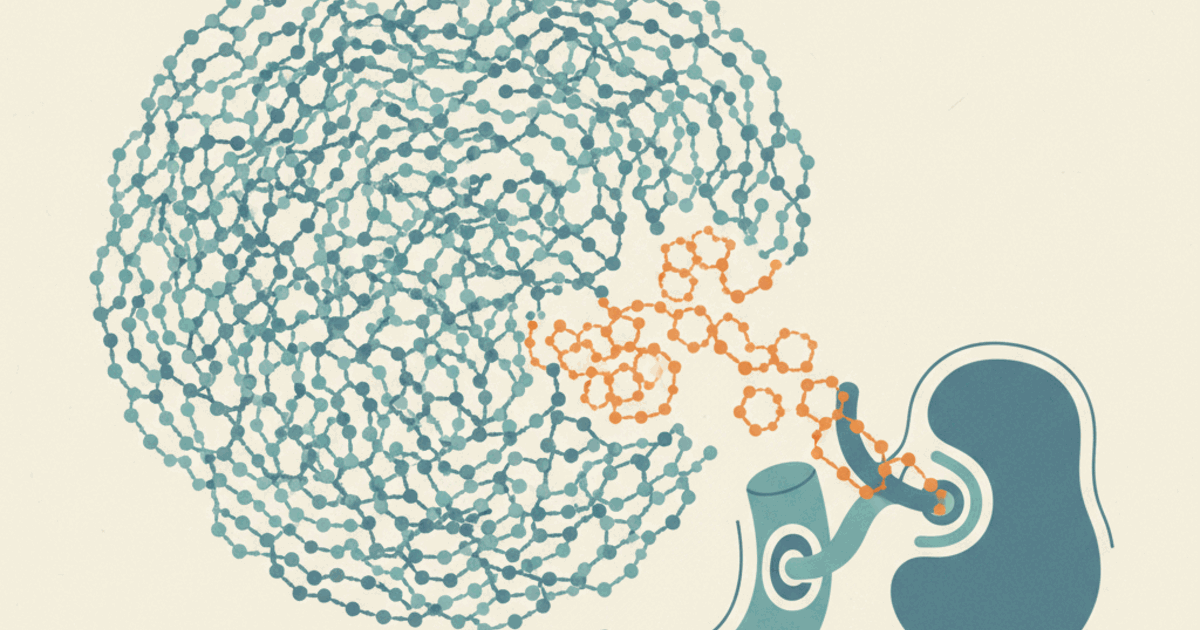
GLP-1 medicines are not an alternative to peptides; almost all of them are peptides. Semaglutide, liraglutide, exenatide and tirzepatide are laboratory-made chains of amino acids, licensed as prescription medicines. What "peptides" usually means in online talk is something else: compounds without any approval, sold as research chemicals. The real difference is regulatory status, not chemistry.
What a peptide is, and where GLP-1 fits in
A peptide is a chain of amino acids, the same building blocks that make up every protein in the body. The Medical Subject Headings of the US National Library of Medicine describe peptides as compounds of amino acids joined by peptide bonds, with oligopeptides of roughly 2 to 12 building blocks and polypeptides of roughly 13 or more. Proteins are treated there as larger versions of peptides that fold into complex structures such as enzymes and receptors. A longer introduction is at what peptides are.
Where a peptide stops and a protein begins is a convention rather than a law of nature. For regulatory purposes the FDA draws the line in its biologics rules: a protein is "any alpha amino acid polymer with a specific, defined sequence that is greater than 40 amino acids in size". Chains of 40 amino acids or fewer fall outside that definition.
GLP-1 itself is one of these small chains. It stands for glucagon-like peptide-1, a hormone released mainly by cells in the lining of the gut after a meal. The same catalogue describes it as a peptide of 36 or 37 amino acids that is trimmed at one end into its active forms. It prompts the pancreas to release insulin when blood sugar is high, holds back glucagon, the hormone that raises blood sugar, and slows the emptying of the stomach. The body breaks the natural hormone down within minutes, which is why the medicines built on it are modified copies rather than the hormone itself.
GLP-1 medicines are peptides
Of the approved medicines in the table below, all are peptides except dulaglutide, which counts as a protein. The table sets out the main substances side by side, together with one unapproved research peptide for contrast.
| Substance | Chain | Receptors switched on | Approval status | WADA 2026 | Lawful route |
|---|---|---|---|---|---|
| Exenatide | 39 amino acids, copied from a peptide in lizard venom | GLP-1 | United States since 28 April 2005 | Not on the prohibited list | Prescription only |
| Liraglutide | 31 amino acids, 97% match to human GLP-1 | GLP-1 | European Union since 30 June 2009, United States since 25 January 2010 | Not on the list, not monitored | Prescription only |
| Dulaglutide | Two linked chains fused to part of an antibody, about 63 kilodaltons; a protein | GLP-1 | United States since 18 September 2014 | Not on the list, not monitored | Prescription only |
| Semaglutide | 31 amino acids, 94% match to human GLP-1 | GLP-1 | United States since 5 December 2017 | Not on the list; markers monitored | Prescription only |
| Tirzepatide | 39 amino acids, built on the GIP template | GIP and GLP-1 | United States since 13 May 2022 | Not on the list; markers monitored | Prescription only |
| Retatrutide | 39 amino acids | GIP, GLP-1 and glucagon | Approved nowhere; late-stage trials | Prohibited at all times (S0) | Trials and one registered expanded access programme |
| BPC-157 (research peptide, for contrast) | 15 amino acids | Not established | Approved nowhere | Prohibited at all times (S0), named | None; sold as a "research chemical" |
Sources: US prescribing information and approval records for each medicine, the FDA substance register and development paper for retatrutide, the WADA 2026 Prohibited List and Monitoring Program, and the BPC-157 records listed below.
Two details in that table matter for the chemistry. Semaglutide, liraglutide and tirzepatide carry a fatty acid chain that makes them cling to a carrier protein in the blood, which keeps them in circulation for days instead of minutes. Dulaglutide takes another route: its hormone portion is fused to the tail of a human antibody, which pushes it past the 40-amino-acid line and makes it a protein product, licensed in the United States under a biologics application.
Not every drug that acts on the GLP-1 receptor is a peptide either. Orforglipron, tested in the ATTAIN-1 trial, is a small molecule taken as a tablet, so it shares the target but not the chemistry.
Tirzepatide belongs to a group of its own: single peptides that act on the receptors for two gut hormones, GIP and GLP-1. What GIP does and which other substances of this kind are in trials is covered on GIP/GLP-1 dual agonists.
Two meanings of "peptides"
In chemistry, "peptide" is a neutral word that covers insulin, oxytocin and the GLP-1 medicines alike. In online forums and shop listings the same word has narrowed to mean something much more specific: compounds such as BPC-157 or TB-500 that no medicines authority has approved, sold with a label saying "for research purposes" or "not for human consumption". The overlap in wording hides a gap in regulatory position.
An approved peptide medicine has been through a marketing authorisation. A regulator has reviewed its manufacturing, its trial data and its risks, the product carries an official label with warnings and contraindications, and side effects continue to be collected after launch. A research peptide has been through none of that. BPC-157 is a case in point: it is approved in no market, the FDA placed it in category 2 of its interim compounding rules, the category for identified safety risks, on 29 September 2023, and the phase 1 study registered for it in 2015 has posted no result.
The two meanings collide when GLP-1 substances themselves turn up in the research-chemical market. The FDA reports that it has warned companies that illegally sold unapproved drugs containing semaglutide, tirzepatide, retatrutide, survodutide or mazdutide, "falsely labeled 'for research purposes' or 'not for human consumption'". A molecule with the same name as an approved medicine is, in that setting, an unapproved product whose contents nobody has verified. A 2026 case report describes a severe metabolic emergency in a person with type 1 diabetes who had used retatrutide bought online.
| Approved peptide medicine | Research peptide | |
|---|---|---|
| Regulator's review of quality, safety and effect | Yes, before marketing | None |
| Official label with warnings and contraindications | Yes | No |
| Lawful supply to patients | On prescription | None for human use |
| Status in the FDA's words | Approved drug | Illegal when sold for human use under a "research" label |
Sources: FDA statement on unapproved GLP-1 drugs; FDA compounding questions and answers; individual approval records below.
Compounded, counterfeit and research-labelled products
Three kinds of unapproved GLP-1 product are regularly confused with the approved medicines. The FDA separates them clearly.
- Compounded products. These are mixed by a pharmacy rather than made by a licensed manufacturer. The FDA states that "compounded drugs are not FDA approved" and that the agency does not review them for safety, effectiveness or quality before they are marketed. It declared the semaglutide shortage over on 21 February 2025, and the grace periods for compounders ended on 22 April and 22 May 2025. Dulaglutide cannot be compounded at all, because the FDA treats biological products as ineligible for those exemptions.
- Different salt forms. The FDA notes that semaglutide sodium and semaglutide acetate "are different active ingredients than are used in the approved drugs", and that it lacks information on their safety.
- Counterfeits. Fake products "could contain the wrong ingredients, contain too little, too much or no active ingredient at all or other harmful ingredients", in the FDA's words. In Europe the medicines agency reported on 18 October 2023 that falsely labelled semaglutide pens had been found at wholesalers in the EU and the United Kingdom.
By 31 May 2026 the FDA had received 990 adverse event reports linked to compounded semaglutide and more than 730 linked to compounded tirzepatide. It also reported cases, some requiring hospital treatment, that may be related to dosing errors with compounded injectable semaglutide products. How approval works in general is set out on which peptides are FDA approved, and the legal side on are peptides legal.
What the studies show, in brief
The approved GLP-1 medicines rest on large randomised trials, which is the main thing that sets them apart from the research-peptide market. Several were built to measure hard outcomes such as heart attacks and strokes.
- Liraglutide. In LEADER, 9,340 adults with type 2 diabetes and a high heart risk were followed for a median of 3.8 years. A serious heart event occurred in 13.0% on liraglutide and 14.9% on placebo.
- Dulaglutide. In REWIND, 9,901 adults with type 2 diabetes were followed for a median of 5.4 years. The figures were 12.0% against 13.4%.
- Semaglutide. In SELECT, 17,604 adults with obesity and existing heart disease but no diabetes had a 20% lower risk of a serious heart event than on placebo (hazard ratio 0.80).
- Tirzepatide. In SURPASS-CVOT, among 13,299 adults with type 2 diabetes, it proved no worse than dulaglutide; being better was tested and not shown.
Not every question was answered positively. Two trials of oral semaglutide in early Alzheimer's disease, with 3,808 participants, found no difference in thinking and memory. For retatrutide the late-stage results so far come from company press releases rather than peer-reviewed papers. For BPC-157, no published result of a controlled trial in people could be found in the sources reviewed for this page. The detail for each medicine is in the monographs for semaglutide, tirzepatide, liraglutide, dulaglutide, exenatide and retatrutide, and in the comparison of tirzepatide and semaglutide.
Safety profile
The side-effect picture of the approved medicines is documented in their labels. Stomach and bowel complaints dominate: in the pooled weight trials of semaglutide in the US label, nausea affected 44% of people on the drug against 16% on placebo, and diarrhoea, vomiting and constipation were also more frequent. The labels also warn about inflammation of the pancreas, gallbladder problems and low blood sugar when combined with insulin. On 29 January 2026 the British regulator strengthened the pancreas warning for the whole GLP-1 and dual GLP-1/GIP class, pointing to cases in which tissue died and cases that ended in death.
- Boxed warning. The US labels of semaglutide, tirzepatide, liraglutide and dulaglutide carry a framed warning about thyroid C-cell tumours seen in rodents. Whether this finding applies to people is unknown.
- Contraindication. People with medullary thyroid cancer, personally or in the family, or with the inherited condition multiple endocrine neoplasia type 2 must not use these medicines according to the US labels.
For research-labelled products none of this information exists, because no label exists. Their risks depend on what is actually in the vial, and that is exactly what nobody has checked.
Status in sport
Approval also decides the anti-doping position. The approved GLP-1 medicines do not appear on the WADA 2026 Prohibited List. Section 6 of the 2026 Monitoring Program names "Markers of Semaglutide and Tirzepatide", and being monitored carries no penalty. Retatrutide sits on the other side of the line: because no authority has approved it, it falls under section S0, which prohibits unapproved substances at all times. The same section names BPC-157 outright. The wider picture is at peptides banned in sport.
Common questions
Is semaglutide a peptide?
Yes. Semaglutide is a chain of 31 amino acids made in the laboratory, a slightly altered copy of the human gut hormone GLP-1 that matches it in 94% of its sequence. A fatty acid chain is attached to it so that it stays in the body for about a week. It is an approved medicine and is available on prescription only.
Are GLP-1 drugs peptides?
Almost all of them. Semaglutide and liraglutide have 31 amino acids, and exenatide, tirzepatide and retatrutide have 39. Dulaglutide is a much larger fusion with part of an antibody, so it counts as a protein. Orforglipron, which also acts on the GLP-1 receptor, is a small molecule and not a peptide at all.
What is the difference between peptides and GLP-1 drugs?
Peptide is a chemical category: a chain of amino acids. GLP-1 drug is a category by effect: a substance that switches on the receptor for the gut hormone GLP-1. Most GLP-1 drugs belong to both categories. When people contrast the two, they usually mean approved GLP-1 medicines on one side and unapproved research peptides on the other, which is a difference in regulatory status, not in chemistry.
Is tirzepatide a peptide?
Yes. Tirzepatide is a laboratory-made chain of 39 amino acids built on the template of the gut hormone GIP, and it switches on the receptors for both GIP and GLP-1. It has been an approved prescription medicine in the United States since 13 May 2022.
Are research peptides the same as GLP-1 medicines?
No. Both are chains of amino acids, but an approved GLP-1 medicine has been assessed by a regulator for quality, safety and effect and comes with an official label. A research peptide such as BPC-157 is approved nowhere, and the FDA has warned companies that sold GLP-1 substances labelled 'for research purposes' or 'not for human consumption'.
Is compounded semaglutide the same as the approved medicine?
No. The FDA states that compounded drugs are not FDA approved and are not reviewed for safety, effectiveness or quality before marketing. It adds that semaglutide sodium and semaglutide acetate are different active ingredients from the one in the approved drugs. By 31 May 2026 it had received 990 adverse event reports linked to compounded semaglutide.
Is retatrutide approved?
No. Retatrutide is a laboratory-made peptide of 39 amino acids still in late-stage trials, and no medicines authority had approved it by September 2026. The FDA names it among the substances it has warned companies about for selling them as research chemicals. In sport it falls under section S0 of the 2026 prohibited list.
Are GLP-1 drugs banned in sport?
The approved ones are not. Semaglutide, tirzepatide, liraglutide, dulaglutide and exenatide do not appear on the 2026 WADA prohibited list, and markers of semaglutide and tirzepatide sit in the penalty-free monitoring programme. Retatrutide is different: because no authority has approved it, it falls under section S0 and is prohibited at all times.
Sources
- US National Library of Medicine (2026). Medical Subject Headings, descriptor D010455, Peptides, scope note. MeSH. https://www.ncbi.nlm.nih.gov/mesh/68010455
- US National Library of Medicine (2026). Medical Subject Headings, descriptor D052216, Glucagon-Like Peptide 1, scope note. MeSH. https://www.ncbi.nlm.nih.gov/mesh/68052216
- US Code of Federal Regulations (2026). 21 CFR 600.3(h)(6), definition of protein. Electronic Code of Federal Regulations. https://www.ecfr.gov/current/title-21/chapter-I/subchapter-F/part-600/subpart-A/section-600.3
- Novo Nordisk (2025). Semaglutide injection (type 2 diabetes product), US Prescribing Information, revision 01/2025. DailyMed. https://dailymed.nlm.nih.gov/dailymed/drugInfo.cfm?setid=adec4fd2-6858-4c99-91d4-531f5f2a2d79
- Novo Nordisk (2026). Semaglutide injection and tablets (weight-management product), US Prescribing Information, revision 06/2026. DailyMed. https://dailymed.nlm.nih.gov/dailymed/drugInfo.cfm?setid=ee06186f-2aa3-4990-a760-757579d8f77b
- Novo Nordisk (2025). Liraglutide injection (type 2 diabetes product), US Prescribing Information, SPL version 31. DailyMed. https://dailymed.nlm.nih.gov/dailymed/drugInfo.cfm?setid=5a9ef4ea-c76a-4d34-a604-27c5b505f5a4
- Eli Lilly and Company (2026). Tirzepatide injection (type 2 diabetes and cardiovascular product), US Prescribing Information, revision 8/2026. DailyMed. https://dailymed.nlm.nih.gov/dailymed/drugInfo.cfm?setid=d2d7da5d-ad07-4228-955f-cf7e355c8cc0
- Eli Lilly and Company (2026). Dulaglutide injection, US Prescribing Information, SPL version 62. DailyMed. https://dailymed.nlm.nih.gov/dailymed/services/v2/spls/463050bd-2b1c-40f5-b3c3-0a04bb433309.xml
- AstraZeneca (2021). Exenatide injection, US Prescribing Information, revision 06/2021. FDA. https://www.accessdata.fda.gov/drugsatfda_docs/label/2021/021773s045lbl.pdf
- US Food and Drug Administration (2026). Drugs@FDA, NDA 021773 (exenatide), original approval 28 April 2005. openFDA. https://api.fda.gov/drug/drugsfda.json?search=application_number:NDA021773
- US Food and Drug Administration (2026). Drugs@FDA, NDA 022341 (liraglutide), original approval 25 January 2010. openFDA. https://api.fda.gov/drug/drugsfda.json?search=application_number:%22NDA022341%22
- European Medicines Agency (2026). European public assessment report, liraglutide (type 2 diabetes product), EMEA/H/C/001026, authorised 30 June 2009. EMA. https://www.ema.europa.eu/en/medicines/human/EPAR/victoza
- US Food and Drug Administration (2026). Drugs@FDA, BLA 125469 (dulaglutide), original approval 18 September 2014. openFDA. https://api.fda.gov/drug/drugsfda.json?search=products.active_ingredients.name:%22DULAGLUTIDE%22&limit=100
- US Food and Drug Administration (2026). Drugs@FDA, NDA 209637 (semaglutide injection), original approval 5 December 2017. openFDA. https://api.fda.gov/drug/drugsfda.json?search=application_number:%22NDA209637%22
- US Food and Drug Administration (2026). Drugs@FDA, NDA 215866 (tirzepatide), original approval 13 May 2022. openFDA. https://api.fda.gov/drug/drugsfda.json?search=application_number:%22NDA215866%22
- US Food and Drug Administration (2026). Global Substance Registration System, substance record retatrutide, UNII NOP2Y096GV. GSRS. https://gsrs.ncats.nih.gov/api/v1/substances(52f7c547-14ed-454d-9bc2-c9137d0b5922)?view=full
- Coskun T, Urva S, Roell WC et al. (2022). LY3437943, a novel triple glucagon, GIP, and GLP-1 receptor agonist for glycemic control and weight loss: from discovery to clinical proof of concept. Cell Metabolism 34(9):1234-1247. https://pubmed.ncbi.nlm.nih.gov/35985340/
- ClinicalTrials.gov (2026). NCT07629401, Pre-approval Expanded Access of Retatrutide (LY3437943). ClinicalTrials.gov. https://clinicaltrials.gov/study/NCT07629401
- Eli Lilly and Company (2026). Press release, 23 July 2026, TRIUMPH-2 and TRIUMPH-3 topline results and announced regulatory submission. PR Newswire. https://www.prnewswire.com/news-releases/lillys-triple-agonist-retatrutide-successful-in-two-additional-phase-3-obesity-trials-delivering-significant-improvements-in-weight-and-a1c-302832674.html
- Wharton S, Aronne LJ, Stefanski A et al. (2025). Orforglipron, an oral small-molecule GLP-1 receptor agonist for obesity treatment (ATTAIN-1). New England Journal of Medicine 393(18):1796-1806. https://pubmed.ncbi.nlm.nih.gov/40960239/
- US Food and Drug Administration (2026). FDA's concerns with unapproved GLP-1 drugs used for weight loss, content current as of 1 September 2026. FDA. https://www.fda.gov/drugs/drug-alerts-and-statements/fdas-concerns-unapproved-glp-1-drugs-used-weight-loss
- US Food and Drug Administration (2025). FDA clarifies policies for compounders as national GLP-1 supply begins to stabilize. FDA. https://www.fda.gov/drugs/drug-alerts-and-statements/fda-clarifies-policies-compounders-national-glp-1-supply-begins-stabilize
- US Food and Drug Administration (2025). Compounding and the FDA: questions and answers. FDA. https://www.fda.gov/drugs/human-drug-compounding/compounding-and-fda-questions-and-answers
- European Medicines Agency (2023). EMA alerts EU patients and healthcare professionals to reports of falsified semaglutide pens, 18 October 2023. EMA. https://www.ema.europa.eu/en/news/ema-alerts-eu-patients-healthcare-professionals-reports-falsified-ozempic-pens
- US Food and Drug Administration (2026). Certain bulk drug substances for use in compounding that may present significant safety risks. FDA. https://www.fda.gov/drugs/human-drug-compounding/certain-bulk-drug-substances-use-compounding-may-present-significant-safety-risks
- Alliance for Pharmacy Compounding (2023). 503A categories update for September 2023, secondary rendering of the FDA category listing. APC. https://join.a4pc.org/hubfs/PDFs/503A-Categories-Update-for-September-2023-FINAL.docx.pdf
- ClinicalTrials.gov (2015). NCT02637284, PCO-02 safety and pharmacokinetics trial of BPC-157, last update 17 December 2015. ClinicalTrials.gov. https://clinicaltrials.gov/study/NCT02637284
- Branine N (2026). Online-sourced retatrutide complicating impending diabetic ketoacidosis in a patient with type 1 diabetes and concurrent Shigella gastroenteritis. Cureus 18(8):e115260. https://pubmed.ncbi.nlm.nih.gov/42669023/
- Marso SP, Daniels GH, Brown-Frandsen K et al. (2016). Liraglutide and cardiovascular outcomes in type 2 diabetes (LEADER). New England Journal of Medicine 375(4):311-322. https://pubmed.ncbi.nlm.nih.gov/27295427/
- Gerstein HC, Colhoun HM, Dagenais GR et al. (2019). Dulaglutide and cardiovascular outcomes in type 2 diabetes (REWIND). The Lancet 394(10193):121-130. https://pubmed.ncbi.nlm.nih.gov/31189511/
- Lincoff AM, Brown-Frandsen K, Colhoun HM et al. (2023). Semaglutide and cardiovascular outcomes in obesity without diabetes (SELECT). New England Journal of Medicine 389(24):2221-2232. https://pubmed.ncbi.nlm.nih.gov/37952131/
- Nicholls SJ, Pavo I, Bhatt DL et al. (2025). Cardiovascular outcomes with tirzepatide versus dulaglutide in type 2 diabetes (SURPASS-CVOT). New England Journal of Medicine 393(24):2409-2420. https://pubmed.ncbi.nlm.nih.gov/41406444/
- Cummings JL, Atri A, Sano M et al. (2026). Efficacy and safety of oral semaglutide in early-stage symptomatic Alzheimer's disease (evoke and evoke+): two phase 3, randomised, placebo-controlled trials. The Lancet 407(10544):2167-2179. https://pubmed.ncbi.nlm.nih.gov/41865758/
- Medicines and Healthcare products Regulatory Agency (2026). GLP-1 receptor agonists and dual GLP-1/GIP receptor agonists: strengthened warnings on acute pancreatitis, including necrotising and fatal cases. Drug Safety Update, 29 January 2026. https://www.gov.uk/drug-safety-update/glp-1-receptor-agonists-and-dual-glp-1-slash-gip-receptor-agonists-strengthened-warnings-on-acute-pancreatitis-including-necrotising-and-fatal-cases
- World Anti-Doping Agency (2025). The 2026 Prohibited List, in force 1 January 2026, sections S0 and S2. WADA. https://www.wada-ama.org/sites/default/files/2025-09/2026list_en_final_clean_september_2025.pdf
- World Anti-Doping Agency (2025). The 2026 Monitoring Program, section 6. WADA. https://www.wada-ama.org/sites/default/files/2025-09/2026_list_monitoring_program_en_final_clean_september_2025.pdf
These pages describe the status as of September 2026, and labels, approvals and lists change. For any approved medicine the authoritative text is the current product label in the reader's own market, and questions about an individual treatment belong with a doctor or pharmacist, who can also tell a licensed product apart from an unlicensed one.