
TB-4 (thymosin beta-4): trials, status and safety
Summary
TB-4 is full-length thymosin beta-4, a naturally occurring peptide with 43 amino acids. Human studies have tested defined eye drops, skin gels and intravenous preparations. Results are mixed: important eye trials missed their primary endpoints. These findings do not establish a treatment for sports injuries and cannot be assigned to the seven-amino-acid TB-500 fragment.
Key findings at a glance
- 43 amino acids: the mature molecule; the seven-amino-acid TB-500 fragment has a different sequence and identity. [1], [2]
- 18 patients: SEER-1 found healing of the corneal defect in 6 of 10 treated patients versus 1 of 8 controls at day 29. The primary analysis was not statistically significant (p = 0.0656). [3]
- 601 and 700 participants: ARISE-2 and ARISE-3 tested dry-eye formulations; their designated primary endpoints were not met. [4], [5], [6]
- 40 healthy volunteers: the published intravenous study assessed short-term tolerability, including a 14-day repeat-dose period, rather than injury recovery. [7]
- 72 participants per trial: two skin-gel trials provide human wound data, but their pooled closure counts do not establish superiority. [8], [9]
- S2.3: WADA prohibits thymosin beta-4 and its derivatives at all times. [10]
What TB-4 is
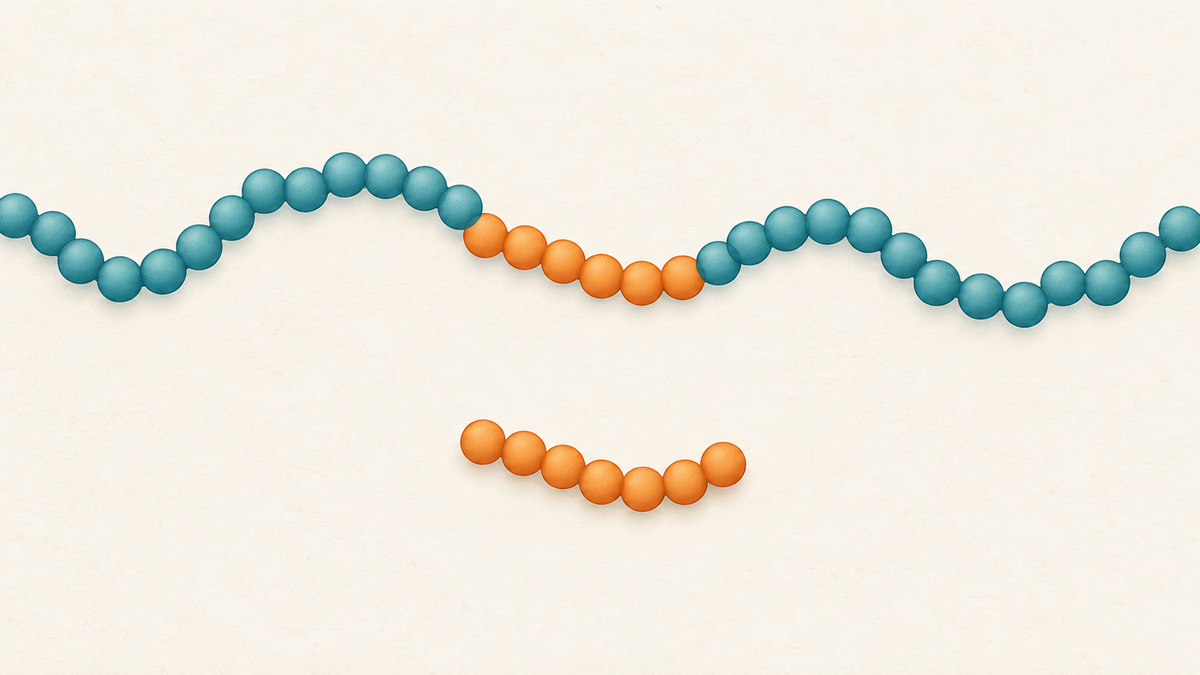
TB-4, TB4 and Tβ4 refer here to full-length thymosin beta-4. Human cells make a 44-amino-acid precursor, then remove its first amino acid. The mature chain has 43 residues and a naturally acetylated starting serine. These lengths describe different stages of processing the same protein. [1]
RegeneRx development codes distinguish formulations: RGN-259 is an ophthalmic preparation, RGN-137 a skin gel and RGN-352 an injectable formulation. They are investigational products with their own manufacturing specifications. A vial labelled “TB-500” does not establish equivalence to any of them. [6], [12]
| Property | TB-4 | Ref |
|---|---|---|
| Full name | Thymosin beta-4 | [1] |
| Mature chain | 43 amino acids; N-terminal acetylation | [1] |
| Gene / protein entry | TMSB4X / UniProt P62328 | [1] |
| CAS / UNII | 77642-24-1 / 549LM7U24W | [11] |
| Clinical formulations | Eye drops, skin gel, intravenous preparation | [7], [12] |
| Highest development stage | Phase 3; this does not mean efficacy was established | [3] |
The mature sequence is Ac-SDKPDMAEIEKFDKSKLKKTETQEKNPLPSKETIEQEKQAGES. An isolated Ac-LKKTETQ fragment contains only part of this sequence. Different molecular structures require separate evidence. [1], [2]
How TB-4 works
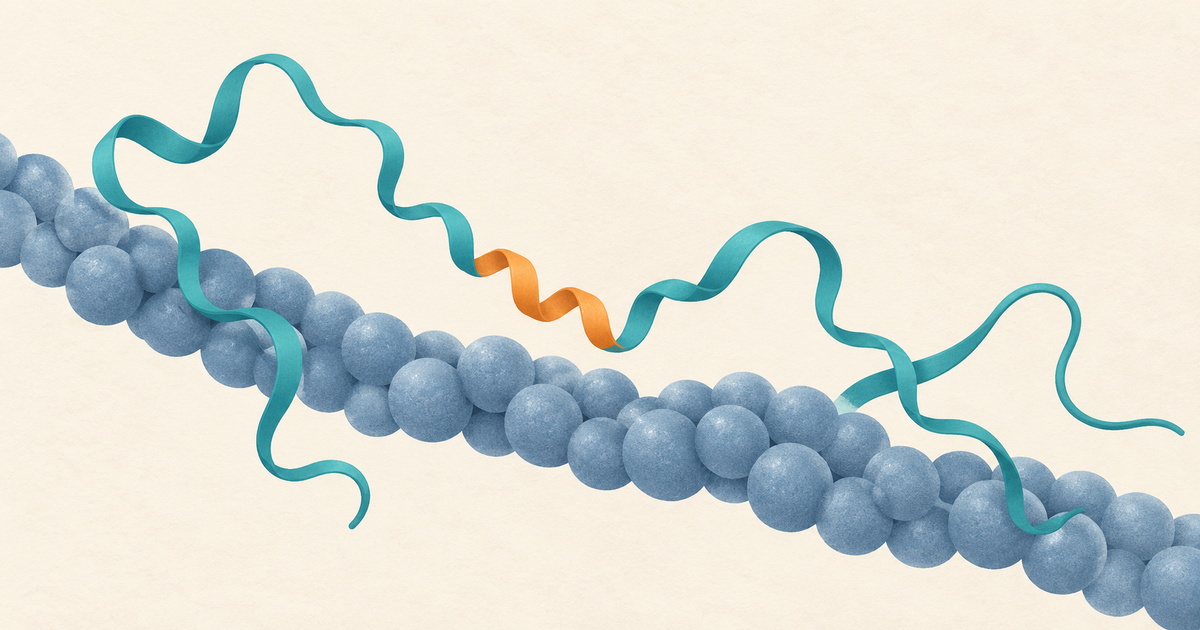
TB-4 binds free actin, a protein that cells use to build their internal framework. This is an established biochemical function; a clinical benefit from administering TB-4 is a separate question. [1]
- Cell structure: binding actin monomers changes their availability for assembly into filaments. This can influence how cells organise themselves. [1]
- Cell movement and survival: laboratory and mouse experiments investigated signalling involving ILK and Akt, proteins involved in cell responses to injury. [13]
- Local tissue repair: eye and skin studies examine specific formulations at damaged surfaces. Such observations cannot establish the effects of a systemic injection. [3], [8], [9]
The heart-repair work frequently quoted online used full-length thymosin beta-4 in mice. It is neither a human recovery trial nor evidence for the TB-500 fragment. [13]
What the trials found
Dry eye: the main endpoints were missed
Phase 3 randomised trials ARISE-2 enrolled 601 participants. At day 29, average discomfort changed by +0.07 points with active treatment and −0.04 with placebo. The designated co-primary endpoints were not met. [4], [6]
ARISE-3 enrolled 700 participants. At day 15, discomfort changed by −0.4 points in both groups; inferior corneal staining changed by −0.41 versus −0.46. Lower scores indicated improvement. The primary outcomes again failed to establish superiority. [5], [6]
Some secondary measurements or selected patient groups favoured treatment. Those findings can guide further research, but do not replace the study questions set in advance. The two studies also used different assessment times, so their numbers are not a direct comparison. [4], [5], [6]
Neurotrophic keratopathy: a small, inconclusive trial
Phase 3 randomised trial SEER-1 studied persistent corneal defects associated with impaired nerve function. Recruitment stopped early: 18 patients completed the study instead of the planned 46. At day 29, complete closure occurred in 6/10 treated eyes and 1/8 placebo eyes: 60% versus 12.5%. [3]
The planned primary analysis gave p = 0.0656. That did not meet the statistical significance threshold. A later, secondary assessment at day 43 favoured treatment (p = 0.0359), but cannot turn the missed primary endpoint into a positive confirmatory trial. [3]
Skin wounds: results depend on the denominator
Phase 2 randomised trials The pressure-ulcer study enrolled 72 people. By day 84, closure was reported in 8/54 participants across the active groups and 3/18 on placebo. The venous-ulcer study also enrolled 72: closure occurred in 12/55 versus 4/17. [8], [9]
These are pooled active groups of unequal size, not comparable raw event totals. More closures in the larger group do not mean a higher chance of closure. The registry data do not establish a general wound-healing benefit. [8], [9]
Intravenous exposure: safety research
Phase 1 randomised trial Ruff and colleagues described four cohorts of 10 healthy volunteers. The study examined single and repeated intravenous exposure, including 14 days of repeat administration. It measured tolerability and how the substance moved through the body, not recovery from tendon or muscle injuries. [7]
What remains unknown
- Whether a defined formulation gives reproducible clinical benefit in the condition studied.
- Whether findings from eye drops or skin gel apply to another administration route.
- Long-term safety, rare adverse effects and use in pregnancy.
- A proven benefit for sports injuries or exercise recovery; the trials described here do not answer that question.
18 patients; primary analysis p = 0.0656. The difference was not statistically significant. [3]
Side effects and safety
Short studies provide some reassurance about the tested preparations, but cannot establish broad or long-term safety. In the intravenous study, adverse events were described as infrequent and mild or moderate. No serious adverse events or dose-limiting toxicity were reported. [7]
- Formulation matters: a sterile ophthalmic trial product is not interchangeable with an injectable product or an unverified vial. [6], [12]
- Duration matters: a 14-day exposure study cannot exclude complications from months of use. [7]
- Population matters: results in selected healthy volunteers do not establish safety in people with underlying disease. [7]
The FDA warning about missing human exposure data specifically names the LKKTETQ fragment. It must not be quoted as if no human studies of full-length TB-4 exist. Conversely, TB-4 trials do not fill the fragment’s safety gap. [14]
Why this page lists no doses
TB-4 is an investigational substance. There is no established self-treatment regimen to derive from these trials. This page therefore lists no doses: the study preparations and routes differ, and their parameters cannot be converted into instructions for an unspecified product. [3], [7], [12]
Development and approval status
TB-4 has reached phase 3 development, but reaching a study phase is not regulatory approval. The FDA granted an orphan designation for neurotrophic keratopathy on 31 December 2013. Its current entry explicitly says that this indication is not FDA approved. [15]
Selected development milestones
- 2010Intravenous phase 1Short-term safety publication
- 2013Orphan designationDevelopment status, not approval
- 2023SEER-1 publicationPrimary analysis p = 0.0656
| Market | Verified status | Basis |
|---|---|---|
| US | Investigational | FDA: no approval for designated eye indication [15] |
| EU | Not independently verified | No exhaustive authorisation check in this review |
| Germany | Not independently verified | No exhaustive authorisation check in this review |
| UK | Not independently verified | No exhaustive authorisation check in this review |
| Australia | Schedule 4; Appendix D | June 2026 Poisons Standard [16] |
| Canada | Not independently verified | No exhaustive authorisation check in this review |
| Switzerland | Not independently verified | No exhaustive authorisation check in this review |
Australian scheduling controls access; it does not establish product approval. Entries for thymosin beta-4 and TB-500 appear separately. Other national approval fields remain unverified rather than implying worldwide approval or prohibition. [16]
SEER-2 (NCT05555589) has a phase 3 entry. Its last posted update, dated 23 December 2025, says “recruiting” and gives estimated completion dates in 2026. No results were posted when checked on 30 September 2026. This is the register’s reported status, not confirmation that recruitment remains open. [17]
Anti-doping
TB-4 is prohibited at all times under WADA section S2.3, which names thymosin beta-4 and derivatives including TB-500. Its natural occurrence in the body does not exempt administration from anti-doping rules. More context: peptides banned in sport. [10]
Compared with related peptides
| Substance | Identity | Evidence relevant here |
|---|---|---|
| TB-4 | Full-length, 43 amino acids | Human trials of specific formulations, including failed primary endpoints [1], [3] |
| TB-500 | In this monograph: Ac-LKKTETQ, 7 amino acids | Fragment identity verified analytically; FDA found no assessable clinical studies [2], [14] |
| TB-500 fragment 17–23 | Unacetylated LKKTETQ (fequesetide) | A distinct molecule; findings for TB-4 or Ac-LKKTETQ do not transfer directly [14] |
The shared sequence does not make these products interchangeable. The decisive details are the molecule, formulation, route and indication actually studied. The TB-500 vs. TB-4 comparison explains how to assign the evidence.
Common misconceptions
- “TB-500 is just another name for the clinical drug.” The name is used inconsistently; the seven-residue fragment is chemically distinct from full-length TB-4. [1], [2]
- “Phase 3 means it works.” Phase identifies a stage of testing. ARISE-2, ARISE-3 and SEER-1 did not meet their designated primary efficacy criteria. [3], [6]
- “Orphan designation is approval.” It supports development for a rare disease; the FDA entry explicitly distinguishes it from approval. [15]
- “Natural means safe.” A substance made inside cells is not automatically safe when supplied as a medicine by a different route. [7]
- “Eye studies prove faster tendon recovery.” They measured eye outcomes with local formulations, not tendon recovery after injections. [3], [5]
Frequently asked questions
Is TB-4 the same as TB-500?
Not when TB-500 denotes Ac-LKKTETQ. TB-4 is the full-length 43-amino-acid molecule; the fragment has 7 amino acids. A product name alone does not verify its contents.
Has TB-4 been studied in humans?
Yes. Human studies have tested eye drops, skin gels and intravenous preparations. The findings apply to the particular formulations and conditions studied.
Did TB-4 succeed in phase 3 trials?
ARISE-2 and ARISE-3 did not meet their primary endpoints. SEER-1 also missed statistical significance for its primary analysis.
What did the small TB-4 corneal trial find?
At day 29, complete closure occurred in 6/10 treated eyes versus 1/8 placebo eyes. The primary analysis was not statistically significant (p = 0.0656).
Is TB-4 FDA approved?
The verified FDA orphan entry for neurotrophic keratopathy explicitly states that it is not approved for that indication. Orphan designation is not marketing approval.
Does TB-4 repair tendons in people?
The human trials described here do not establish that claim. Animal experiments and studies of eye drops or skin gels do not establish tendon recovery after an injection.
Is TB-4 safe over the long term?
That has not been established by the trials described here. Short studies with selected participants cannot rule out uncommon or delayed adverse effects.
Is TB-4 prohibited in sport?
Yes. WADA section S2.3 prohibits thymosin beta-4 and its derivatives at all times, including outside competition.
Sources
- UniProtKB. P62328: human thymosin beta-4; mature chain, N-terminal processing and actin binding.
- Esposito S et al. Identification of acetylated thymosin beta-4 fragment 17–23 in TB-500. Drug Test Anal. 2012. PMID 22962027.
- SEER-1: randomised phase III trial of thymosin beta-4 in neurotrophic keratopathy. Int J Mol Sci. 2023;24:554.
- ClinicalTrials.gov. NCT02974907: ARISE-2, posted results.
- ClinicalTrials.gov. NCT03937882: ARISE-3, posted results.
- RegeneRx. RGN-259 development summary; ARISE-2 and ARISE-3 primary endpoints. Developer statement.
- Ruff D et al. Intravenous thymosin beta-4 in healthy volunteers. Ann N Y Acad Sci. 2010. PMID 20536472.
- ClinicalTrials.gov. NCT00382174: thymosin beta-4 in pressure ulcers, posted results.
- ClinicalTrials.gov. NCT00832091: thymosin beta-4 in venous stasis ulcers, posted results.
- WADA. Prohibited List 2026, S2.3: thymosin-beta4 and derivatives.
- FDA GSRS. Thymosin beta-4, UNII 549LM7U24W: identity and CAS 77642-24-1.
- RegeneRx. RGN-137 topical gel and RGN-352 injectable solution: product identities.
- Bock-Marquette I et al. Thymosin beta-4, integrin-linked kinase and cardiac repair in mice. Nature. 2004;432:466–472.
- FDA. Certain bulk drug substances for use in compounding that may present significant safety risks: thymosin beta-4 fragment (LKKTETQ). Also: FDA 2026 TB-500 evaluation: chemical identity and clinical evidence.
- FDA. Orphan designation 416613: thymosin beta 4 for neurotrophic keratopathy, 31 December 2013; not FDA approved for this indication.
- Australian Government. Therapeutic Goods (Poisons Standard—June 2026) Instrument 2026, Schedule 4 and Appendix D.
- ClinicalTrials.gov. NCT05555589: SEER-2; last posted update 23 December 2025.
Cite this page
myPeptides Research & Editing. TB-4 (thymosin beta-4). Version 1.0. Updated 30 September 2026.
https://mypep.app/peptides/tb-4
| Version | Date | Change |
|---|---|---|
| 1.0 | 2026-09-30 | Initial publication; full-length TB-4 separated from the TB-500 fragment. |