
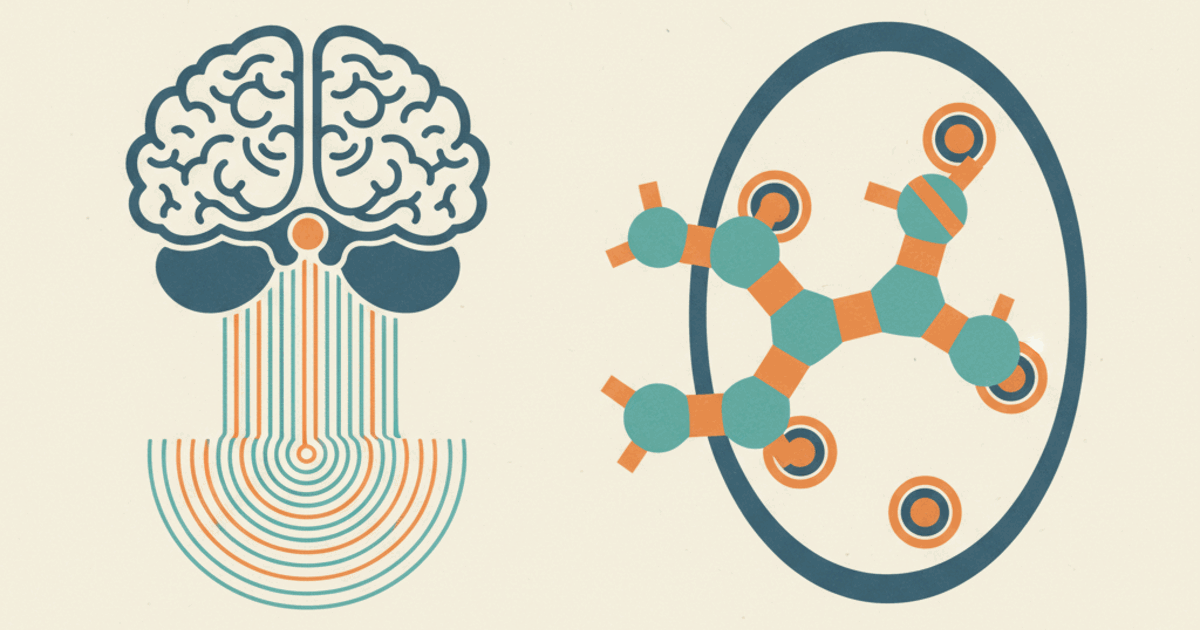
Kisspeptin vs hCG: differences, evidence and safety
Answer first
Kisspeptin and hCG can both raise sex hormones, but they act at opposite ends of the same chain. Kisspeptin-10 works in the brain, one step above GnRH, and is approved in none of the seven markets covered here. hCG acts directly on the ovaries and testicles and is prescription-only in all seven. No study comparing them directly could be found.
At a glance
How they work
Both substances feed into the hormone chain that runs from the brain through the pituitary gland to the ovaries or testicles.
Kisspeptin is a family of natural fragments cut from the product of the human KISS1 gene. This page compares kisspeptin-10, the shortest fragment that still switches the receptor on fully. It says so where a study used the longer kisspeptin-54 instead [1], [2].
Kisspeptin-10
- It binds to a receptor called KISS1R on nerve cells in the hypothalamus. Those cells then release GnRH, the brain hormone that controls the pituitary gland [3], [4].
- GnRH tells the pituitary to release luteinising hormone and FSH, and these two in turn drive the ovaries or testicles [3].
- It does not touch the pituitary directly. It fails entirely when the GnRH-producing nerve cells themselves are damaged [5], [6].
- The receptor stops responding under a constant signal. Given without a break, kisspeptin-10 switches the chain off instead of on [7].
hCG
- hCG is the hormone a pregnancy produces. It docks onto the receptor that luteinising hormone normally uses and behaves like a long-acting copy of that hormone [8], [9].
- In women it takes the place of the natural surge of luteinising hormone. That completes the ripening of the egg, releases it, and turns the emptied follicle into a hormone-producing corpus luteum [9].
- In men it stimulates the Leydig cells in the testicles to produce androgens. It raises the testosterone the body makes itself rather than supplying it from outside [8].
The core difference is the level of attack. Kisspeptin-10 sits above the pituitary and depends on everything below it working. hCG skips the brain and the pituitary and acts on the gonads themselves [3], [8].
Timing differs just as much. The half-life of kisspeptin-10 in people is about 3 minutes [2]. After an injection under the skin, recombinant hCG lasts about 29 to 30 hours, with 29 ± 6 hours in the American label [10], [9].
What the studies show
No study that compares kisspeptin and hCG directly could be found in the published record reviewed for this page. The two were studied for different questions: kisspeptin-10 mostly in short hormone experiments, hCG in licensing trials and reviews of fertility treatment.
Luteinising hormone and testosterone in men
Physiological study In six healthy men, kisspeptin-10 injected into a vein at the middle dose level raised luteinising hormone from 4.1 ± 0.4 to 12.4 ± 1.7 IU/L after 30 minutes (p < 0.001). The highest dose level gave a smaller rise than the middle one (p < 0.05) [11].
Physiological study Infusions lasting up to 22.5 hours in four men raised testosterone from 16.6 ± 2.4 to 24.0 ± 2.5 nmol/L (p < 0.001) [11]. In men with type 2 diabetes and low testosterone, an 11-hour infusion raised it from 8.5 ± 1.0 to 11.4 ± 0.9 nmol/L (p = 0.002). That study had no dummy arm [12].
Randomised, single-blind, placebo-controlled study The longest human exposure involved 15 healthy men and 12 controls. Under five days of continuous infusion, gonadotropin levels fell back to those of the dummy arm.
With intermittent infusions over 12 days, the response held. The average luteinising hormone change was +1.68 ± 0.25 on day 1 and +1.14 ± 0.33 on day 12. On the dummy it was −0.16 ± 0.19 (p = 0.003) [7].
Terminated Two company phase 2a trials tried to raise testosterone with TAK-448, a longer-acting analogue of kisspeptin-10. Both were stopped, one because it "did not meet the primary endpoint" [13]. Under 14 days of continuous infusion, the same analogue pushed testosterone into the castration range from day 8 [14].
Randomised mechanism study For hCG, the key study gave 29 healthy men testosterone for three weeks, which shuts the testicles down. They also received either hCG or a dummy treatment, and testosterone inside the testicle was measured directly by needle sampling [15].
On the dummy, testosterone inside the testicle fell by 94 per cent. With hCG it rose in step with the amount given. The study measured a mechanism; it tested neither the safety nor the benefit of any wider use [15].
Observational In men whose low testosterone comes from a pituitary defect, hCG alone maintained sperm production in a case series. That is the setting the American licence describes [16].
Triggering egg maturation and ovulation
Cochrane review For hCG, the reviews compared forms and triggers with each other. Recombinant and urinary hCG did not differ in ongoing pregnancy or live birth. The odds ratio was 1.15, with a range from 0.89 to 1.49, in 7 trials with 1,136 women [17].
Cochrane review A second review set hCG against a GnRH agonist as the trigger. In fresh treatments using a woman's own eggs, the agonist produced fewer ongoing pregnancies (odds ratio 0.70, range 0.54 to 0.91; 11 trials, 1,198 women).
In egg donation, severe overstimulation of the ovaries was far rarer with the agonist (odds ratio 0.05, range 0.01 to 0.28; 3 trials, 374 women) [18].
Clinical study The IVF trigger study used the longer fragment. A single injection of kisspeptin-54 triggered egg maturation in women undergoing IVF, under medical supervision [19]. That molecule is not kisspeptin-10.
Phase 2a trial MVT-602, a stabilised analogue of kisspeptin-10, was tested in 75 women during minimal ovarian stimulation. Across its four dose levels, ovulation within five days occurred in 100 per cent, 88 per cent, 82 per cent and 75 per cent of women [4], [20].
On the GnRH agonist triptorelin the figure was 100 per cent, and on placebo 60 per cent. hCG was not part of that trial [20].
Women: timing decides for kisspeptin
Physiological study In women, the response to kisspeptin-10 depends on timing. In healthy women in the first half of their cycles, gonadotropins did not move at all, across three routes of administration. Just before ovulation the same injection did raise luteinising hormone and FSH [21].
Physiological study A second study measured 24 women. Luteinising hormone rose in the first half of their cycles (2.3 ± 0.8 IU/L per hour, p = 0.009) and after the menopause (5.3 ± 0.9, p = 0.002). On the combined pill it did not (0.9 ± 0.4, p = 0.13) [22].
For hCG, no comparable dependence is described in the sources reviewed here.
Studies in children
Cohort study Kisspeptin has advanced furthest as a diagnostic test. In 16 children with delayed puberty, all eight with a luteinising hormone rise of at least 0.8 mIU/mL went through puberty. All eight with a rise of 0.4 mIU/mL or less reached 18 without physical signs of puberty (p = 0.0002) [23].
Meta-analysis hCG is licensed in the United States for undescended testicles in boys. Pooled randomised trials in 872 boys gave a success rate of 19 per cent on hCG against 4 per cent on a dummy treatment [24], [25].
What the studies did not measure
No study of kisspeptin-10 that measured a clinical outcome such as pregnancy, symptoms or quality of life could be found, apart from the course of puberty. The longest human exposure found is 12 days, in seven men [7], [23].
For hCG, the use best known outside medicine has the clearest negative answer. A 1995 meta-analysis of 24 studies found no scientific evidence of any effect in obesity. The American package inserts say the same in capital letters [26], [25].
These results come from different people, doses, measurements and study lengths. The figures for kisspeptin and hCG therefore cannot be set against each other.
Safety
The two safety records differ mainly in how much is known. hCG has official product information going back to its first American approval in 1973 [27], [9]. For kisspeptin-10, the studies found are short, closely monitored and small [7], [11].
Kisspeptin-10, from the published studies:
- The tolerability quotes concern related molecules. Eight weeks of kisspeptin-54 recorded "no adverse effects were observed", and the MVT-602 work reported "no serious adverse effects" [28], [4].
- The kisspeptin-10 studies ran under study conditions. Participants were healthy or carefully selected, monitored throughout, and given material of known content [7], [11].
- In the analogue programme, 26 per cent had grade 1 to 2 adverse events under TAK-448, the longer-acting relative [14].
- Continuous dosing turns stimulation into suppression. In men, five days without a break flattened gonadotropins to dummy level [7].
- Animals lost testicular tissue under continuous dosing. Thirteen days of continuous kisspeptin-54 degenerated the sperm-producing tubules in adult rats [29].
- The FDA names immunogenicity and impurities. It entered kisspeptin-10 in category 2 of its list of compounding ingredients that may present significant safety risks [30].
- Black-market material has been analysed. One vial showed clearly more advanced degradation than the purchased reference standard [31].
Because no market checked has approved kisspeptin-10, no product information with official contraindications could be found [30].
hCG, from the product information and registries:
- Ovarian hyperstimulation syndrome is the dominant risk. Blood vessels leak fluid into the abdomen and chest, and a severe case can become life-threatening within days [8], [9].
- How often. In the licensing studies of recombinant hCG, roughly 4 per cent of women developed the syndrome and fewer than 0.5 per cent a severe form [9].
- In practice. Among 186,168 stimulated cycles in Denmark, 2,261 women, or 1.2 per cent, were admitted to hospital with the syndrome [32].
- Blood clots, allergic reactions and multiple pregnancy are listed as further risks [25], [9].
- In men and boys. Breast tissue growth in men is documented. In boys, hCG can trigger puberty too early [25], [8].
- Injection-site reactions occurred in 14.6 per cent on the recombinant form, against 28 per cent on the licensed urinary form [10].
- Situations that rule it out include a tumour of the hypothalamus or pituitary, and cancer of the ovary, breast, womb or prostate [25], [8].
- A false positive pregnancy test can occur for up to ten days after hCG is given [9].
Why this page lists no doses. Kisspeptin-10 is an investigational substance approved in none of the markets checked, and hCG is prescription-only in every market covered here. Choosing an amount belongs in a study plan or a prescription, so this page reports what the studies measured without the amounts they used.
Legal status
Kisspeptin-10 is approved in none of the seven markets checked. Since 29 September 2023 the FDA has listed it in category 2 of compounding ingredients that may present significant safety risks [30]. hCG is prescription-only in all seven markets. The first American approval dates from 5 March 1973, and recombinant hCG gained central European approval on 2 February 2001 [27], [33]. Both are banned in sport for men at all times. The 2026 prohibited list names chorionic gonadotrophin and "kisspeptin and its agonist analogues" in the same section, S2.2.1 [34]. Status: 7 and 10 September 2026.
Used together?
The blend directory lists no product that combines kisspeptin and hCG. The full list of mixtures is under blends.
No study of kisspeptin and hCG given together could be found in the sources reviewed for this page. Both appear in the same line of the prohibited list, as testosterone-stimulating peptides in males [34].
Details are in the monographs on kisspeptin-10 and hCG and under peptides banned in sport.
Frequently asked questions
Which is better, kisspeptin or hCG?
Neither can be ranked, because no study comparing the two could be found in the sources reviewed for this page. In six healthy men, kisspeptin-10 at the middle dose level raised luteinising hormone from 4.1 to 12.4 IU/L after 30 minutes. For hCG, the strongest evidence comes from fertility treatment, where the recombinant and urinary forms did not differ in ongoing pregnancy or live birth in 7 trials with 1,136 women. The people, measurements and designs differ too much for a verdict.
Is kisspeptin or hCG safer?
No study comparing their safety could be found, so no ranking is possible. hCG has official product information with measured frequencies, for example ovarian hyperstimulation syndrome in roughly 4 per cent of women in the licensing studies of the recombinant form. The kisspeptin-10 studies found are short and small, and the FDA lists it as a compounding ingredient that may present significant safety risks.
What is the difference between kisspeptin and hCG?
Kisspeptin-10 is a fragment of ten building blocks that acts in the hypothalamus, above GnRH and the pituitary gland. hCG is a sugar-coated protein of two chains that acts directly on the ovaries and testicles, through the receptor of luteinising hormone. Kisspeptin-10 lasts about 3 minutes in the blood, recombinant hCG about 29 to 30 hours after an injection under the skin. Legally, hCG is a prescription medicine in seven markets, while kisspeptin-10 is approved in none of them.
Can kisspeptin and hCG be taken together?
No study of kisspeptin and hCG given together could be found in the sources reviewed for this page, so the effect and safety of the combination are undocumented there. The blend directory lists no product that contains both. They appear together only on the prohibited list, in the same section for male athletes.
Does kisspeptin raise testosterone like hCG does?
Both raised the body's own testosterone in studies, by different routes. Kisspeptin-10 infusions lasting up to 22.5 hours raised it from 16.6 to 24.0 nmol/L in four healthy men, working through the brain and pituitary. hCG stimulates the Leydig cells in the testicles directly; in 29 men it maintained testosterone inside the testicle, which fell by 94 per cent on a dummy treatment. Two company trials of a longer-acting kisspeptin analogue aimed at raising testosterone were both stopped for missing their main measurement.
Are kisspeptin and hCG banned in sport?
Yes, for male athletes, at all times. The 2026 prohibited list names chorionic gonadotrophin and kisspeptin with its agonist analogues in the same section, S2.2.1, headed testosterone-stimulating peptides in males. Urine testing methods have been published for both.
Is kisspeptin a prescription medicine like hCG?
No. Kisspeptin-10 is approved in none of the seven markets checked for this page, and the human data found all come from clinical studies. hCG is prescription-only in all seven, with a first American approval on 5 March 1973. The FDA lists kisspeptin-10 in category 2 of compounding ingredients that may present significant safety risks.
How long do kisspeptin and hCG last in the body?
Kisspeptin-10 has a half-life of about 3 minutes in people, against about 28 minutes for the longer fragment kisspeptin-54. Recombinant hCG lasts about 29 to 30 hours after an injection under the skin. That long action is the reason hCG serves as a trigger in fertility treatment, and it also drives its main risk, overstimulation of the ovaries.
Is kisspeptin used instead of hCG in IVF?
Not as an approved option. The IVF work used kisspeptin-54, not kisspeptin-10, given as a single injection under medical supervision to trigger egg maturation. hCG is approved for that final ripening of egg cells. No trial comparing kisspeptin with hCG as a trigger could be found in the sources reviewed for this page.
Sources
Note on titles: where an original title names a brand or a patient group outside the scope of this page, it is replaced by a neutral description. This applies to the two American labels for urinary hCG, the American label for recombinant hCG, the two European documents and the TAK-448 study. Authors, journal, year, volume, PMID, DOI and web address are unchanged.
- PubChem. Compound CID 25240297, kisspeptin-10. PUG-REST queries for molecular formula, molecular weight, InChIKey, IUPAC name and synonyms, retrieved 10 September 2026. https://pubchem.ncbi.nlm.nih.gov/compound/25240297
- Patel B, Koysombat K, Mills EG, et al. (2024). The emerging therapeutic potential of kisspeptin and neurokinin B. Endocrine Reviews 45(1). PMID 37467734. PMCID PMC10765167. DOI 10.1210/endrev/bnad023. Full text read via PMC on 10 September 2026.
- Colledge WH (2008). GPR54 and kisspeptins. Results and Problems in Cell Differentiation 46. PMID 18193176. DOI 10.1007/400_2007_050
- Abbara A, Eng PC, Phylactou M, et al. (2020). Kisspeptin receptor agonist has therapeutic potential for female reproductive disorders. Journal of Clinical Investigation 130(12). PMID 33196464. PMCID PMC7685751. DOI 10.1172/JCI139681. Full text read via PMC on 10 September 2026.
- Chan YM, Lippincott MF, Butler JP, et al. (2014). Exogenous kisspeptin administration as a probe of GnRH neuronal function in patients with idiopathic hypogonadotropic hypogonadism. Journal of Clinical Endocrinology and Metabolism 99(12). PMID 25226293. DOI 10.1210/jc.2014-2233
- Jayasena CN, Abbara A, Narayanaswamy S, et al. (2015). Direct comparison of the effects of intravenous kisspeptin-10, kisspeptin-54 and GnRH on gonadotrophin secretion in healthy men. Human Reproduction 30(8). PMID 26089302. DOI 10.1093/humrep/dev143
- Yeung SY, Phylactou M, Koysombat K, et al. (2026). Chronic subcutaneous kisspeptin-10 stimulates gonadotropin secretion for 12 days in healthy men. European Journal of Endocrinology. PMID 42549827. DOI 10.1093/ejendo/lvag134. Figures taken from the structured abstract; full text not openly available.
- Chorionic gonadotropin for injection (urinary) — US Prescribing Information, Organon. DailyMed set id 1e94155f-19be-4944-b197-be4edbb4faf9, effective 2 December 2025.
- European Medicines Agency, product information for recombinant choriogonadotropin alfa, sections 4.1, 4.3, 4.4, 4.6, 4.8, 5.1 and 5.2. https://www.ema.europa.eu/en/documents/product-information/ovitrelle-epar-product-information_en.pdf
- Choriogonadotropin alfa injection, pre-filled syringe — US Prescribing Information, EMD Serono. DailyMed set id a683e58a-63ea-44b8-a326-1a99a537bcf2.
- George JT, Veldhuis JD, Roseweir AK, et al. (2011). Kisspeptin-10 is a potent stimulator of LH and increases pulse frequency in men. Journal of Clinical Endocrinology and Metabolism 96(8). PMID 21632807. DOI 10.1210/jc.2011-0089
- George JT, Veldhuis JD, Tena-Sempere M, et al. (2013). Exploring the pathophysiology of hypogonadism in men with type 2 diabetes: kisspeptin-10 stimulates serum testosterone and LH secretion in men with type 2 diabetes and mild biochemical hypogonadism. Clinical Endocrinology (Oxford) 79(1). PMID 23153270. DOI 10.1111/cen.12103
- ClinicalTrials.gov. NCT02369796 and NCT02381288, phase 2a trials of TAK-448 sponsored by Takeda, both terminated. Termination reasons and posted results read via the API on 10 September 2026.
- MacLean DB, Matsui H, Suri A, et al. (2014). Sustained exposure to the investigational kisspeptin analogue TAK-448 and testosterone in healthy men and in patients (neutral description of the original title). Journal of Clinical Endocrinology and Metabolism 99(8). PMID 24762108. DOI 10.1210/jc.2013-4236
- Coviello AD, Matsumoto AM, Bremner WJ, et al. Low-dose human chorionic gonadotropin maintains intratesticular testosterone in normal men with testosterone-induced gonadotropin suppression. J Clin Endocrinol Metab 2005;90:2595-602. PMID 15713727.
- Depenbusch M, von Eckardstein S, Simoni M, Nieschlag E. Maintenance of spermatogenesis in hypogonadotropic hypogonadal men with human chorionic gonadotropin alone. Eur J Endocrinol 2002;147:617-24. PMID 12444893.
- Youssef MA, Abou-Setta AM, Lam WS. Recombinant versus urinary human chorionic gonadotrophin for final oocyte maturation triggering in IVF and ICSI cycles. Cochrane Database Syst Rev 2016;4:CD003719. PMID 27106604.
- Youssef MA, Van der Veen F, Al-Inany HG, et al. Gonadotropin-releasing hormone agonist versus HCG for oocyte triggering in antagonist-assisted reproductive technology. Cochrane Database Syst Rev 2014;(10):CD008046. PMID 25358904.
- Jayasena CN, Abbara A, Comninos AN, et al. (2014). Kisspeptin-54 triggers egg maturation in women undergoing in vitro fertilization. Journal of Clinical Investigation 124(8). PMID 25036713. DOI 10.1172/JCI75730
- Abbara A, Ufer M, Voors-Pette C, et al. (2024). Endocrine profile of the kisspeptin receptor agonist MVT-602 in healthy premenopausal women with and without ovarian stimulation. Fertility and Sterility 121(3). PMID 37925096. DOI 10.1016/j.fertnstert.2023.10.031
- Jayasena CN, Nijher GMK, Comninos AN, et al. (2011). The effects of kisspeptin-10 on reproductive hormone release show sexual dimorphism in humans. Journal of Clinical Endocrinology and Metabolism 96(12). PMID 21976724. DOI 10.1210/jc.2011-1408
- George JT, Anderson RA, Millar RP (2012). Kisspeptin-10 stimulation of gonadotrophin secretion in women is modulated by sex steroid feedback. Human Reproduction 27(12). PMID 22956346. DOI 10.1093/humrep/des326
- Chan YM, Lippincott MF, Sales Barroso P, et al. (2020). Using kisspeptin to predict pubertal outcomes for youth with pubertal delay. Journal of Clinical Endocrinology and Metabolism 105(8). PMID 32232399. DOI 10.1210/clinem/dgaa162
- Pyörälä S, Huttunen NP, Uhari M. A review and meta-analysis of hormonal treatment of cryptorchidism. J Clin Endocrinol Metab 1995;80:2795-9. PMID 7673426.
- Chorionic gonadotropin for injection (urinary) — US Prescribing Information, Ferring Pharmaceuticals. DailyMed set id ac6918ff-9dc3-40d9-8619-54b26e4bdfc8, effective 27 August 2025.
- Lijesen GK, Theeuwen I, Assendelft WJ, Van Der Wal G. The effect of human chorionic gonadotropin (HCG) in the treatment of obesity by means of the Simeons therapy: a criteria-based meta-analysis. Br J Clin Pharmacol 1995;40:237-43. PMID 8527285.
- Drugs@FDA, application 017067, Chorionic Gonadotropin for Injection USP, status date 5 March 1973. https://api.fda.gov/drug/drugsfda.json
- Jayasena CN, Nijher GMK, Abbara A, et al. (2010). Twice-weekly administration of kisspeptin-54 for 8 weeks stimulates release of reproductive hormones in women with hypothalamic amenorrhea. Clinical Pharmacology and Therapeutics 88(6). PMID 20980998. DOI 10.1038/clpt.2010.204
- Thompson EL, Murphy KG, Patterson M, et al. (2006). Chronic subcutaneous administration of kisspeptin-54 causes testicular degeneration in adult male rats. American Journal of Physiology: Endocrinology and Metabolism 291(5). PMID 16787965. DOI 10.1152/ajpendo.00040.2006
- US Food and Drug Administration. Certain Bulk Drug Substances for Use in Compounding that May Present Significant Safety Risks; category 2, entry "Kisspeptin-10", nominated under section 503A, dated 29 September 2023. Full text reviewed 10 September 2026. https://www.fda.gov/drugs/human-drug-compounding/certain-bulk-drug-substances-use-compounding-may-present-significant-safety-risks
- Colpaert R, Risseeuw M, Deventer K, et al. (2024). Kisspeptin-10 in urine: screening and confirmation by LC-MS. Biomedical Chromatography 38(10). PMID 38978171. DOI 10.1002/bmc.5946. Includes the analysis of a black-market vial of kisspeptin-10.
- Annual incidence of severe ovarian hyperstimulation syndrome. Dan Med J 2021;68(2). PMID 33543701.
- European Medicines Agency, European public assessment report for recombinant choriogonadotropin alfa, EMEA/H/C/000320, first authorised 2 February 2001, revision 23 of 23 May 2025.
- World Anti-Doping Agency. The 2026 Prohibited List, class S2, item S2.2.1. Full text read 10 September 2026 in the official promulgation, BGBl. III No. 219 of 30 December 2025, page 4.