
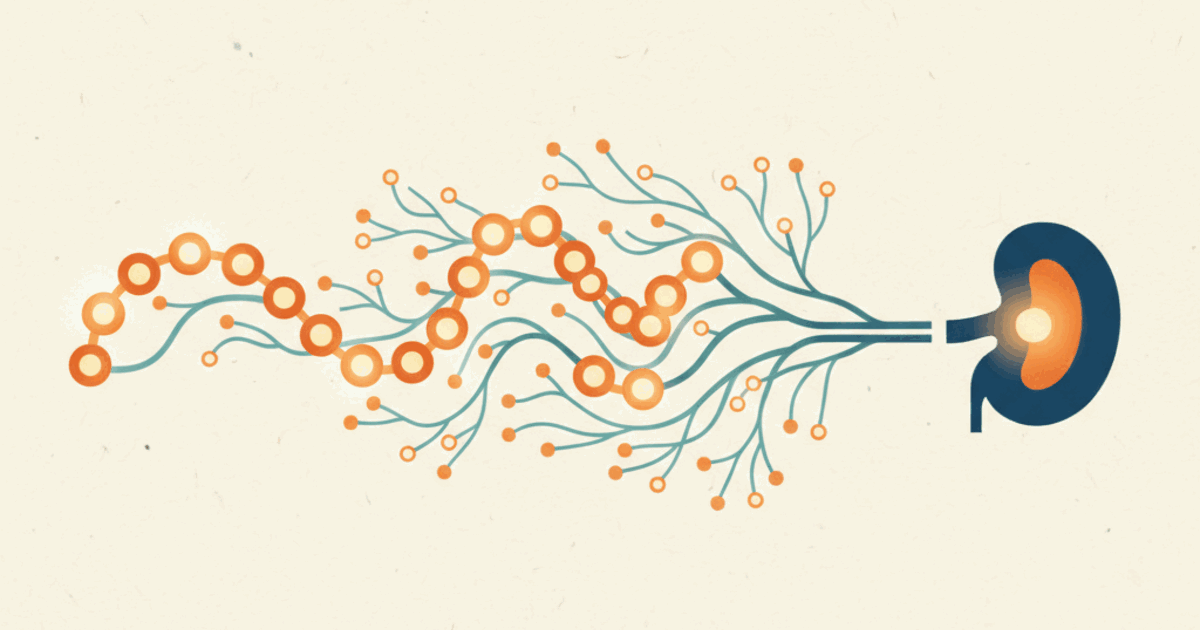
Kisspeptin-10: what the studies show, status and safety
Summary
Kisspeptin-10 is a short piece of a peptide the human body makes itself. It acts in the hypothalamus, one step above the hormone GnRH, and briefly raises luteinising hormone and testosterone in men. No country has approved it, and the American medicines authority lists it as a compounding ingredient that may present significant safety risks. Its central finding is that the effect reverses: given continuously instead of in pulses, it suppresses the hormone axis rather than stimulating it.
Key findings at a glance
- Approved nowhere, and named as a compounding risk. On 29 September 2023 the FDA placed kisspeptin-10 in category 2 of its list of bulk substances that may present significant safety risks. It cited immunogenicity and impurity concerns [1].
- It disappears within minutes. The half-life in people is about 3 minutes, against about 28 minutes for the longer natural fragment kisspeptin-54 [2].
- Continuous dosing reverses the effect. After five days of continuous infusion in men, gonadotropin levels matched the dummy arm. Intermittent dosing over 12 days kept the rise. Mean luteinising hormone change was −0.16 ± 0.19 on the dummy, +1.68 ± 0.25 on day 1 and +1.14 ± 0.33 on day 12 (p = 0.003) [3].
- A longer-acting analogue drove testosterone below the castration threshold. Under 14 days of continuous TAK-448 infusion, testosterone fell below the starting value within 60 hours. From day 8 it stayed under the castration range [4].
- More is not stronger. In healthy men the highest tested dose level produced a smaller luteinising hormone response than the middle one (p < 0.05). The dose-response curve is bell-shaped [5].
- It does nothing in two important groups. Healthy women in the first half of the menstrual cycle showed no gonadotropin change at all. People with idiopathic hypogonadotropic hypogonadism showed no response either [6], [7].
- Named on the prohibited list for male athletes. Class S2.2.1 of the 2026 list covers "kisspeptin and its agonist analogues", banned at all times [8].
- A black-market vial has been analysed. A Belgian doping control laboratory examined one and found no unexpected impurities, but clearly more advanced degradation than in the purchased reference standard [9].
What it is
Kisspeptin-10 is a chain of ten amino acid building blocks with the sequence YNWNSFGLRF-NH2, amidated at the tail end. It is not a designer molecule. It is a natural fragment of the product of the human KISS1 gene, and the shortest piece of the kisspeptin family that still switches the receptor on fully [10], [11].
The naming is the single most common source of confusion around it. Metastin 45-54 counts positions inside the 54-building-block fragment kisspeptin-54. Kisspeptin 112-121 counts inside the 145-building-block precursor protein. Both names mean this same ten-building-block peptide [10], [11].
That matters when reading the literature. The Boston group at Massachusetts General Hospital writes kisspeptin 112-121 throughout, while the London group writes kisspeptin-10 [11].
The older name metastin comes from cancer research, where the KISS1 gene product was first described as a suppressor of metastasis. The name says nothing about any cancer effect of the peptide given from outside, and no human evidence for one exists [12].
Quick facts
| Field | Value | Ref |
|---|---|---|
| Names in use | Kisspeptin-10, KP-10, metastin 45-54, kisspeptin 112-121, NSC 741805 | [10], [11] |
| Class | Natural neuropeptide fragment; agonist at the receptor KISS1R, formerly GPR54 | [12], [13] |
| Sequence | YNWNSFGLRF-NH2, ten building blocks | [11], [10] |
| Formula and mass | C63H83N17O14, 1,302.4 g/mol | [10] |
| Half-life in people | About 3 minutes, against about 28 minutes for kisspeptin-54 | [2] |
| Routes used in studies | Into a vein and under the skin. Never by mouth | [3], [5] |
| Status | Investigational, approved nowhere; longest human exposure 12 days | [1], [3] |
| Studied by | Massachusetts General Hospital, Edinburgh, Imperial College London | [14], [15] |
| CAS registry number | 374675-21-5 | [10] |
| PubChem CID | 25240297 | [10] |
| UNII | FS1N52VS3S | [10] |
| ChEMBL | CHEMBL376756 | [10] |
| ATC code | None. A WHO index query returned no match | [16] |
No pharmacopoeia anywhere carries a monograph for it, so no official purity or storage standard exists. It is traded as a laboratory reagent, and two registered human studies used reagent-grade material rather than a pharmaceutical product [17].
How it works
Kisspeptin-10 works one storey above the hormone system it influences. It does not touch the pituitary gland directly.
- It acts on GnRH neurons in the hypothalamus. Binding to the receptor KISS1R makes those nerve cells release GnRH. GnRH then tells the pituitary to release luteinising hormone and FSH, which in turn drive the gonads [12], [13].
- The receptor signals through calcium. KISS1R is coupled to the Gq/11 pathway, which runs through phospholipase C and ends in calcium release inside the cell [13].
- A single injection resets the pulse generator. In healthy men one injection into a vein triggered a luteinising hormone pulse whenever it was given. It also pushed the next natural pulse back by roughly one normal interval [18].
- The induced pulses were larger than natural ones. Amplitude was 5.0 ± 1.0 against 2.1 ± 0.3 mIU/mL (p = 0.02). The GnRH release behind them lasted about 17 minutes [18].
- The receptor stops responding under a constant signal. This is the property that decides everything else on this page, and the next section covers it in detail [19].
One boundary is worth drawing clearly. GnRH acts directly on the pituitary, kisspeptin one step earlier. So kisspeptin is weaker at the same molar amount, and it fails entirely when the GnRH neurons themselves are damaged [7], [14].
What the trials found
Every human study of kisspeptin-10 is small, short and physiological. They measure hormone levels, not health outcomes.
Luteinising hormone in healthy men
Physiological study In six healthy men, injections into a vein raised serum luteinising hormone quickly and in proportion to the amount given, up to a point. The middle dose level produced the largest response, from 4.1 ± 0.4 to 12.4 ± 1.7 IU/L after 30 minutes (p < 0.001). The highest level gave a smaller rise than the middle one (p < 0.05) [5].
Physiological study Infusions lasting up to 22.5 hours in four men raised luteinising hormone from 5.4 ± 0.7 to 20.8 ± 4.9 IU/L at the higher rate (p < 0.05). Testosterone rose from 16.6 ± 2.4 to 24.0 ± 2.5 nmol/L (p < 0.001).
At the lower rate, average luteinising hormone rose from 5.2 ± 0.8 to 14.1 ± 1.7 IU/L (p < 0.01). Pulse frequency rose from 0.7 ± 0.1 to 1.0 ± 0.2 pulses per hour (p < 0.05), and the size of each burst from 3.9 ± 0.4 to 12.8 ± 2.6 IU/L (p < 0.05) [5].
Kisspeptin-10 against kisspeptin-54 and GnRH
Single-blind, placebo-controlled study The only head-to-head comparison in people used three-hour infusions in healthy men, five per dose group. At the highest level tested, the average area under the luteinising hormone curve was 10.81 ± 1.73 h·IU/L on kisspeptin-10, 14.43 ± 1.27 on kisspeptin-54 and 34.06 ± 5.18 on GnRH. The value for GnRH was higher than for kisspeptin-10 (p < 0.001) and than for kisspeptin-54 (p < 0.01). The two kisspeptin fragments did not differ significantly from each other [14].
Single-blind, placebo-controlled comparison in healthy men, five per dose group, at the highest dose level tested. Average area under the luteinising hormone curve. Source [14].
Twelve days of dosing, and what happened when the pause was removed
Randomised, single-blind, placebo-controlled study This is the most informative study of longer kisspeptin-10 use in people, in 15 healthy men across three parts with 12 controls. Eight-hour infusions under the skin raised luteinising hormone, FSH and testosterone in proportion to the amount given (p < 0.0001) [3].
Then the pause was removed. Under five days of continuous infusion, testosterone stayed up but gonadotropin levels matched the dummy arm. The response had been lost.
Under intermittent dosing it survived. Eight hours on and 16 hours off for 12 days gave a mean luteinising hormone change of +1.68 ± 0.25 on day 1 and +1.14 ± 0.33 on day 12. On the dummy it was −0.16 ± 0.19 (p = 0.003) [3].
After 12 days the receptor still worked, since a further injection still produced a gonadotropin rise [3].
Physiological study A separate 24-hour continuous infusion in three men showed the same curve in miniature. Luteinising hormone climbed from 2.8 to 3.8 mIU/mL up to peaks of 17.5 to 30.6 mIU/mL, five to eight times the starting value. Those peaks came 12 to 20 hours in.
It then fell back by 13% to 47%, to 10.7 to 22.8 mIU/mL by the end of the infusion. Unlike the monkey work, the response in these three men did not collapse completely [20].
Women, and why the cycle decides
Physiological study In healthy women in the first half of the cycle, gonadotropins did not move. That held across an injection into a vein, an injection under the skin and an infusion, up to very high amounts. Just before ovulation the same injection into a vein did raise luteinising hormone and FSH [6].
Physiological study A second study in 24 women measured the rise over 60 minutes. Luteinising hormone rose in the first half of the cycle (2.3 ± 0.8 IU/L per hour, p = 0.009) and after the menopause (5.3 ± 0.9, p = 0.002). It also rose under a progestogen implant (2.6 ± 0.8, p = 0.05).
On the combined pill it did not (0.9 ± 0.4, p = 0.13). FSH rose significantly only after the menopause (2.6 ± 0.8, p = 0.03), with changes below 0.5 IU/L per hour in the other three groups [21].
Testosterone in men with type 2 diabetes
Proof-of-concept study Five men with type 2 diabetes and low testosterone were compared with seven healthy men of the same age. After an injection into a vein, luteinising hormone rose from 5.5 ± 0.8 to 13.9 ± 1.7 IU/L in the healthy group (p < 0.001) and from 4.7 ± 0.7 to 10.7 ± 1.2 IU/L in the diabetes group (p = 0.02), with no difference between the two changes (p = 0.18) [22].
An 11-hour infusion in four of them raised luteinising hormone from 3.9 ± 0.1 to 20.7 ± 1.1 IU/L (p = 0.03). Testosterone rose from 8.5 ± 1.0 to 11.4 ± 0.9 nmol/L (p = 0.002).
Pulse frequency rose from 0.6 ± 0.1 to 0.9 ± 0 per hour (p = 0.05). There was no dummy arm and no clinical measurement [22].
The use that has advanced furthest is diagnosis
Cohort study In 16 children with delayed or stalled puberty, the response to a single kisspeptin test predicted what happened next. All eight with a luteinising hormone rise of at least 0.8 mIU/mL went through puberty. All eight with a rise of 0.4 mIU/mL or less reached 18 without physical signs of puberty (p = 0.0002). The test outperformed the GnRH-stimulated value, inhibin B and genetic testing [23].
Physiological study The same logic separates a hypothalamic problem from a pituitary one. Of 12 people studied, the 11 whose idiopathic hypogonadotropic hypogonadism persisted showed no luteinising hormone response to kisspeptin, although the same amount produces a strong response in healthy people. The twelfth, a man whose condition had reversed, responded strongly [7].
Findings outside the reproductive axis
Physiological study In 15 healthy men, kisspeptin increased insulin release after a glucose load and shifted blood metabolites. It explicitly did not change gut hormones, appetite or food intake. The abstract does not state which fragment was used [24].
Randomised, double-blind, crossover trial In 26 healthy men, the bone formation marker osteocalcin rose by up to 20.3% (p = 0.021). Its carboxylated form rose by up to 24.3% (p = 0.014). Breakdown markers did not rise, and there was no bone density or fracture data [25].
Randomised, double-blind, crossover trial In 95 people, a 75-minute infusion of kisspeptin-54 raised luteinising hormone strongly (p < 0.001) but changed nothing else. State anxiety (p = 0.13), cortisol (p = 0.73), systolic (p = 0.74) and diastolic blood pressure (p = 0.90) and heart rate (p = 0.52) were all unaffected [26].
The analogues, and why they matter here
Phase 1 studies TAK-448 is a stabilised, longer-acting version of kisspeptin-10, tested in 82 healthy men aged 50 and over against 30 on placebo. A single dose raised testosterone about 1.3 to 2-fold within 48 hours. Fourteen days of continuous infusion did the opposite: testosterone fell below the starting value within 60 hours and stayed under the castration range from day 8 [4].
In men with prostate cancer, four of five fell below 20 ng/dL after a depot injection, and PSA fell by more than half in everyone on the higher depot level. Grade 1 to 2 adverse events occurred in 26% of those treated. Median terminal half-life was 1.4 to 5.3 hours [4].
Phase 2a trial MVT-602, the same molecule under its later name, was tested in 75 women undergoing minimal ovarian stimulation. At the highest dose level the mean peak luteinising hormone rise was 82.4 IU/L after 24.8 hours, and it stayed above 15 IU/L for 33 hours.
Ovulation within five days occurred in 100%, 88%, 82% and 75% across the four dose levels. On triptorelin it was 100% and on placebo 60% [13], [27].
Terminated Both Takeda phase 2a trials that set out to raise testosterone were stopped. For one the registry records a "sponsor decision to terminate the study because the study did not achieve the primary efficacy objective". For the other it records that "the study did not meet the primary endpoint" [28].
The second enrolled 17 men averaging 67.1 years. Testosterone changed by 7.1% to 15.8% across groups. Trough testosterone was 285.4 ng/dL on placebo, against 255.5, 135.3 and 244.4 ng/dL across the three dose levels [28].
Animal work on dosing without a break
Animal data In three juvenile male rhesus monkeys, a single injection produced a strong luteinising hormone response lasting about three hours, then a steep fall despite the infusion continuing. On day four, GnRH and NMDA still produced pulses; a further kisspeptin injection did not. The fault therefore sits at the kisspeptin receptor, not at the GnRH neuron or the pituitary [19].
Animal data In adult male rats, 13 days of continuous kisspeptin-54 under the skin lowered testicular weight, degenerated the seminiferous tubules and cut inhibin B significantly. One day of dosing raised luteinising hormone and testosterone; after two days of continuous dosing that effect was already gone [29].
What is still unknown
- No study of kisspeptin-10 has measured a clinical outcome such as pregnancy, symptoms, quality of life or survival. The one exception measured the actual course of puberty [23].
- No complete pharmacokinetic profile has been published for the route under the skin in people, including bioavailability and peak levels [2].
- The longest human exposure on record is 12 days, in seven men [3].
- No immunogenicity has been measured in people, although the FDA names it as a specific concern [1].
- Nothing is known about pregnancy, breastfeeding or interactions with other medicines [1].
- The claimed effect on libido has never been tested with kisspeptin-10 at all [30], [31].
Side effects and safety
No safety base exists that would support repeated use outside a study. The human data comes from short, closely monitored sessions with single-digit to low double-digit numbers of participants.
- Almost no adverse events were reported in the studies. Eight weeks of twice-weekly kisspeptin-54 recorded "no adverse effects were observed". The analogue work reported "no serious adverse effects" [32], [13].
- That is a statement about study conditions, not about self-use. Participants were healthy or carefully selected, monitored throughout, and given material of known content [3], [5].
- Circulation and stress markers did not move. In 95 people, cortisol, blood pressure and heart rate were all unchanged [26].
- In the analogue programme, 26% had grade 1 to 2 adverse events. In the terminated phase 2a trial, nose and throat, gut and airway complaints appeared in every group, placebo included [4], [28].
Four signals matter more than the tolerability record.
- Continuous dosing turns stimulation into suppression. This is the most important safety finding on the page. It is documented in monkeys, in men and in the analogue programme [19], [3], [4].
- Animals lost testicular tissue under continuous dosing. Thirteen days of continuous kisspeptin-54 degenerated the seminiferous tubules in adult rats [29].
- The response curve is bell-shaped. More substance produced less effect above the middle dose level (p < 0.05) [5].
- The FDA names immunogenicity and impurities. Its entry records a risk of immune reactions for certain routes, and difficulty characterising the substance and its peptide-related impurities at all [1].
There are no official contraindications, because no approved product exists. The material also degrades fast once in solution, with decay half-lives of 6.8 minutes at 4 °C, 2.9 minutes at 25 °C and 1.7 minutes at 37 °C [11].
Why this page lists no doses
Kisspeptin-10 is an investigational substance that no authority has approved and that the FDA names as a compounding ingredient which may present significant safety risks [1]. Amounts belong in a study plan, in the hands of the investigators working under it.
The amounts used in the studies above are also not transferable in principle. The same substance stimulates or suppresses depending only on the interval between doses, and the response curve turns downwards above a middle level [3], [5].
Development and approval status
Kisspeptin-10 timeline
- 1996The KISS1 gene is described as a suppressor of metastasis in melanomaOrigin of the name metastin, ref [33]
- 2001The gene product turns out to be the natural partner of the receptor GPR54Metastin identified in Nature, ref [34]
- 2003Loss of that receptor is shown to block puberty in peopleTwo independent family studies, refs [35], [36]
- 2006Continuous infusion is shown to switch the response off in monkeysThree juvenile rhesus monkeys, ref [19]
- 2011The first human studies of kisspeptin-10 are publishedEdinburgh and Boston, refs [5], [18]
- 2014The analogue TAK-448 drives testosterone into the castration rangeTwo phase 1 studies, ref [4]
- 2015Both Takeda phase 2a trials on raising testosterone are terminatedPrimary endpoint missed, ref [28]
- 2015The only head-to-head comparison with kisspeptin-54 and GnRH is publishedHealthy men, ref [14]
- 2020A single kisspeptin test predicts the course of puberty exactly16 children, ref [23]
- 29 September 2023FDA enters kisspeptin-10 in category 2 of the compounding risk listNominated under 503A, ref [1]
- 2024Kisspeptin is added to the prohibited list in sportRefs [9], [37]
- 2026Twelve-day intermittent dosing keeps the response; the 2026 prohibited list names itRefs [3], [8]
- 1996 — the KISS1 gene is described in melanoma research as a suppressor of metastasis, which is where the name metastin comes from [33].
- 2001 — the product of that gene turns out to be the natural partner of the receptor GPR54, later renamed KISS1R [34].
- 2003 — two family studies show that people who lack a working GPR54 do not go through puberty, which is how the peptide reached reproductive medicine [35], [36].
- 2006 — continuous infusion is shown to switch the receptor off in monkeys, while GnRH keeps working [19].
- 2011 — the first human studies of kisspeptin-10 appear, from Edinburgh and Boston [5], [18].
- 2014 and 2015 — a longer-acting analogue reaches castration-range testosterone, and both company trials aimed at raising testosterone are stopped [4], [28].
- 2020 — the focus shifts to diagnosis, with a test that predicted the course of puberty exactly [23].
- 2023 — the FDA enters kisspeptin-10 in category 2 of its compounding risk list [1].
- 2026 — twelve-day intermittent dosing is published, and the prohibited list names kisspeptin again [3], [8].
| Market | Status | Note | Ref |
|---|---|---|---|
| United States | Investigational | Category 2 compounding risk | [1], [38] |
| European Union | Investigational | No authorisation identified | [39] |
| Germany | Investigational | Not in the narcotics schedules | [40] |
| United Kingdom | Investigational | Studies under ethics approval only | [39] |
| Australia | Investigational | Not named in the Poisons Standard | [41] |
| Canada | Investigational | Not in the drug product database | [42] |
| Switzerland | Investigational | No authorisation identified | [39] |
Status was checked on 10 September 2026. For the United States, Canada, Australia and Germany the finding rests on full-text or database checks with working control queries [1], [38], [42], [41], [40].
For the European Union, the United Kingdom and Switzerland it rests on the missing ATC code and on the investigational status stated throughout the literature. That is weaker evidence [16], [39].
Two register details are worth knowing. Three entries are labelled phase 3. They are physiological studies with 30, 14 and 15 participants run with a laboratory reagent, and the phase field is set by whoever files the entry [17]. Two entries on insulin release were withdrawn without enrolling anyone, so they count as no evidence at all [15].
The active programme now runs at Massachusetts General Hospital, where several studies test the peptide as a measure of hypothalamic function and as an intermittent regimen in defined conditions [15].
Anti-doping
Kisspeptin is named on the 2026 prohibited list, which sets it apart from research peptides caught only by the catch-all class. Class S2.2.1 covers "testosterone-stimulating peptides in males including, but not limited to" chorionic gonadotrophin, luteinising hormone, GnRH and its agonist analogues, and "kisspeptin and its agonist analogues" [8].
Everything in class S2 is prohibited at all times, in and out of competition, and none of it is a specified substance. The wording limits this entry to male athletes; whether another class applies to women was not assessed here [8]. Wider context sits under peptides banned in sport.
Detection is not hypothetical. One validated method screens and confirms kisspeptin-10 in urine and adds the fragments y9, y8, y7 and y5 [9]. A second reached identification limits from 0.8 ng/mL for kisspeptin-54 down to 10 pg/mL for TAK-448. It found no natural kisspeptin signal in 20 blood and 100 urine samples from a reference group [37].
German law is a separate question. The schedule to the German anti-doping act does not name kisspeptin, although it lists the GnRH analogues alongside which the prohibited list places it [43]. That schedule and the prohibited list are two different instruments, and the second applies to anyone under sporting rules.
Compared with related peptides
An honest comparison here can only use axes the same documents cover. The table below rests on the prohibited list, the regulatory records and the studies cited on this page.
| Peptide | Where it acts | Named in class S2.2.1 (2026) | Status | Half-life |
|---|---|---|---|---|
| Kisspeptin-10 | Hypothalamus, on GnRH neurons [12] | Yes, with its agonist analogues [8] | Approved nowhere; FDA compounding risk [1] | About 3 minutes [2] |
| Gonadorelin | Pituitary, directly [14] | Yes, as GnRH with its agonist analogues [8] | Approved in the United Kingdom as a diagnostic injection [44] | About 4 minutes [44] |
| hCG | Gonads, below the pituitary [8] | Yes, as chorionic gonadotrophin [8] | Approved prescription medicine in the United States [45] | About 29 ± 6 hours for the recombinant form under the skin [45] |
| Oxytocin | Uterus and milk ducts, outside this hormone axis [46] | No [8] | Approved prescription medicine in the United States [46] | 1 to 6 minutes on the American label, 3 to 20 minutes on the British one [46], [47] |
| MVT-602 | Same receptor as kisspeptin-10 [13] | Yes, as an agonist analogue [8] | Phase 2a completed, approved nowhere [13], [27] | 1.5 to 3.5 hours in men [13] |
Terminal half-life in people, as reported in a review of the kisspeptin literature. The underlying human measurements used immunoassays, which detect fragments as well as intact peptide. Source [2].
Three points follow from that table. Kisspeptin-10 is the only one of the five that acts above the pituitary, which is exactly why it fails when the GnRH neurons are damaged [7]. It is also the weakest of the chain at the same molar amount, roughly a third of what GnRH produced [14].
And the longer-acting analogue is not simply a better version. Longer occupancy at this receptor pushed the effect towards suppression, which is how TAK-448 came to be tested as a way of lowering testosterone [4].
Common misconceptions
- "Kisspeptin-10 and kisspeptin-54 are the same thing." They share the same active tail and were similar at the amounts compared head to head. But they do not last the same time: about 3 minutes against about 28 minutes. Dosing schemes therefore do not transfer between them [2], [14].
- "It is the libido peptide." The brain imaging and low-desire trials used kisspeptin-54 into a vein under study conditions, and measured scans and questionnaires rather than everyday behaviour. No equivalent data exists for kisspeptin-10 [30], [31], [48].
- "It is GnRH, only more natural." It sits above GnRH, not beside it. At the same molar amount GnRH produced about three times the gonadotropin response, and in idiopathic hypogonadotropic hypogonadism kisspeptin produced none while GnRH still worked [14], [7].
- "More often is better." The opposite is documented in three species. Continuous dosing switched the response off in monkeys after about three hours. In men it flattened gonadotropins to dummy level after five days. In rats it degenerated testicular tissue after 13 days [19], [3], [29].
- "An analogue would simply be stronger and last longer." That was tested. TAK-448 drove testosterone under the castration threshold from day 8, and both trials aimed at raising testosterone were stopped for missing their main measurement [4], [28].
- "Metastin in the name means it does something to cancer." The name comes from the discovery history of the KISS1 gene as a metastasis suppressor. No effect of the peptide given from outside, in either direction, is established in people [12].
- "It works the same in men and women." In the first half of the menstrual cycle nothing moved at all, across three routes and up to very high amounts. On the combined pill the response was absent. After the menopause it was strongest [6], [21], [49].
- "A phase 3 entry means it is nearly approved." Three entries carry that label for studies of 30, 14 and 15 people run with a laboratory reagent. No approval procedure for kisspeptin-10 is open anywhere [17].
- "German law does not list it, so sport does not care." Two separate instruments. The prohibited list names kisspeptin under S2.2.1 for male athletes, and validated tests for blood and urine exist [8], [43], [9], [37].
- "It helps with infertility, that is the whole point." The furthest that idea got was triggering egg maturation in IVF. That used kisspeptin-54 as a single injection under medical supervision. For kisspeptin-10 the direction of travel has been towards diagnosis instead [50], [23], [15].
Frequently asked questions
Is kisspeptin-10 approved as a medicine anywhere?
No. As of 10 September 2026 no country checked for this page has approved it. Every human use has been inside a clinical study, and no approval application is pending anywhere. In the United States it sits in category 2 of the FDA list of compounding ingredients that may present significant safety risks, entered on 29 September 2023.
What is kisspeptin-10?
It is a chain of ten amino acid building blocks, YNWNSFGLRF-NH2, cut from the product of the human KISS1 gene. It is the shortest piece of the kisspeptin family that still switches the receptor on fully. The same molecule appears in the literature as metastin 45-54 and as kisspeptin 112-121, because two different counting conventions are in use.
What did the studies of kisspeptin-10 find?
In healthy men a single injection into a vein raised luteinising hormone within half an hour, from 4.1 ± 0.4 to 12.4 ± 1.7 IU/L. Infusions lasting several hours also raised testosterone, from 16.6 ± 2.4 to 24.0 ± 2.5 nmol/L. Every study measured hormone levels or scans. None measured a clinical outcome such as fertility, symptoms or quality of life.
Why does continuous kisspeptin-10 stop working?
The receptor becomes unresponsive when it is occupied without a break. In monkeys the luteinising hormone response collapsed after about three hours of continuous infusion, while GnRH still worked. In men, five days of continuous infusion left gonadotropins at the level of the dummy arm. Only intermittent dosing kept the response alive over 12 days.
What is the difference between kisspeptin-10 and kisspeptin-54?
Both are natural pieces of the same gene product and share the same active tail, but they do not last the same time in the body. The half-life is about 3 minutes for kisspeptin-10 against about 28 minutes for kisspeptin-54. Many well-known kisspeptin studies, including the brain imaging and IVF work, used kisspeptin-54 and cannot be read across.
Is kisspeptin-10 the libido peptide?
No, and the studies behind that claim used a different molecule. The randomised trials in men and women with low sexual desire gave kisspeptin-54 into a vein under study conditions. They measured brain activity on scans and psychometric scales, not everyday sexual behaviour. No comparable data exists for kisspeptin-10.
Does kisspeptin-10 work in women the same way as in men?
No. In healthy women in the first half of the cycle, gonadotropins did not move at all, across three routes of administration and up to very high amounts. Just before ovulation they did rise. In women on the combined pill the response was absent, and after the menopause it was strongest.
Is kisspeptin-10 banned in sport?
Yes, for male athletes. The 2026 prohibited list names kisspeptin and its agonist analogues by name in class S2.2.1, under the heading of testosterone-stimulating peptides in males. The ban applies in and out of competition, and validated tests for blood and urine have been published.
Can kisspeptin-10 raise testosterone long term?
There is no evidence for that. The documented rises came from infusions lasting several hours in hospital, and amounted to roughly one and a half times the starting value. Two company studies that set out to raise testosterone with a longer-acting analogue were both stopped because they missed their main measurement.
What is still unknown about kisspeptin-10?
Almost everything beyond short hormone measurements. There is no clinical outcome study, no complete pharmacokinetic profile for the route under the skin, no immunogenicity measurement despite the FDA naming it as a concern, and nothing on pregnancy, breastfeeding or drug interactions. The longest published human exposure is 12 days in seven men.
Sources
- US Food and Drug Administration. Certain Bulk Drug Substances for Use in Compounding that May Present Significant Safety Risks; category 2, entry "Kisspeptin-10", nominated under section 503A, dated 29 September 2023. Full text reviewed 10 September 2026. https://www.fda.gov/drugs/human-drug-compounding/certain-bulk-drug-substances-use-compounding-may-present-significant-safety-risks
- Patel B, Koysombat K, Mills EG, et al. (2024). The emerging therapeutic potential of kisspeptin and neurokinin B. Endocrine Reviews 45(1). PMID 37467734. PMCID PMC10765167. DOI 10.1210/endrev/bnad023. Full text read via PMC on 10 September 2026.
- Yeung SY, Phylactou M, Koysombat K, et al. (2026). Chronic subcutaneous kisspeptin-10 stimulates gonadotropin secretion for 12 days in healthy men. European Journal of Endocrinology. PMID 42549827. DOI 10.1093/ejendo/lvag134. Figures taken from the structured abstract; full text not openly available.
- MacLean DB, Matsui H, Suri A, et al. (2014). Sustained exposure to the investigational kisspeptin analog, TAK-448, down-regulates testosterone into the castration range in healthy males and in patients with prostate cancer. Journal of Clinical Endocrinology and Metabolism 99(8). PMID 24762108. DOI 10.1210/jc.2013-4236
- George JT, Veldhuis JD, Roseweir AK, et al. (2011). Kisspeptin-10 is a potent stimulator of LH and increases pulse frequency in men. Journal of Clinical Endocrinology and Metabolism 96(8). PMID 21632807. DOI 10.1210/jc.2011-0089
- Jayasena CN, Nijher GMK, Comninos AN, et al. (2011). The effects of kisspeptin-10 on reproductive hormone release show sexual dimorphism in humans. Journal of Clinical Endocrinology and Metabolism 96(12). PMID 21976724. DOI 10.1210/jc.2011-1408
- Chan YM, Lippincott MF, Butler JP, et al. (2014). Exogenous kisspeptin administration as a probe of GnRH neuronal function in patients with idiopathic hypogonadotropic hypogonadism. Journal of Clinical Endocrinology and Metabolism 99(12). PMID 25226293. DOI 10.1210/jc.2014-2233
- World Anti-Doping Agency. The 2026 Prohibited List, class S2, item S2.2.1. Full text read 10 September 2026 in the official promulgation, BGBl. III No. 219 of 30 December 2025, page 4.
- Colpaert R, Risseeuw M, Deventer K, et al. (2024). Kisspeptin-10 in urine: screening and confirmation by LC-MS. Biomedical Chromatography 38(10). PMID 38978171. DOI 10.1002/bmc.5946. Includes the analysis of a black-market vial of kisspeptin-10.
- PubChem. Compound CID 25240297, kisspeptin-10. PUG-REST queries for molecular formula, molecular weight, InChIKey, IUPAC name and synonyms, retrieved 10 September 2026. https://pubchem.ncbi.nlm.nih.gov/compound/25240297
- Liu J, Ren Y, Jones J, et al. (2013). LC-MS/MS quantification of a neuropeptide fragment kisspeptin-10 (NSC 741805) and characterization of its decomposition product and pharmacokinetics in rats. Journal of Chromatography B 917-918. PMID 23524040. DOI 10.1016/j.jchromb.2013.02.027
- Colledge WH (2008). GPR54 and kisspeptins. Results and Problems in Cell Differentiation 46. PMID 18193176. DOI 10.1007/400_2007_050
- Abbara A, Eng PC, Phylactou M, et al. (2020). Kisspeptin receptor agonist has therapeutic potential for female reproductive disorders. Journal of Clinical Investigation 130(12). PMID 33196464. PMCID PMC7685751. DOI 10.1172/JCI139681. Full text read via PMC on 10 September 2026.
- Jayasena CN, Abbara A, Narayanaswamy S, et al. (2015). Direct comparison of the effects of intravenous kisspeptin-10, kisspeptin-54 and GnRH on gonadotrophin secretion in healthy men. Human Reproduction 30(8). PMID 26089302. DOI 10.1093/humrep/dev143
- ClinicalTrials.gov. Massachusetts General Hospital studies of kisspeptin 112-121: NCT00914823, NCT01438034, NCT01438073, NCT01952782, NCT04648969, NCT05633966, NCT05971849, NCT05896293, NCT07224438 and NCT07224490. NCT05456854 and NCT04532801 were withdrawn without enrolment. Retrieved 10 September 2026.
- WHO Collaborating Centre for Drug Statistics Methodology, ATC/DDD index. Query "kisspeptin" on 10 September 2026 returned "No match found." https://atcddd.fhi.no/atc_ddd_index/
- ClinicalTrials.gov. NCT03286517, NCT03771326 and NCT03315325, Quaid-e-Azam University, Islamabad; registered as phase 3 with 30, 14 and 15 participants and run with reagent-grade kisspeptin-10. Retrieved 10 September 2026.
- Chan YM, Butler JP, Pinnell NE, et al. (2011). Kisspeptin resets the hypothalamic GnRH clock in men. Journal of Clinical Endocrinology and Metabolism 96(6). PMID 21470997. DOI 10.1210/jc.2010-3046
- Seminara SB, Dipietro MJ, Ramaswamy S, et al. (2006). Continuous human metastin 45-54 infusion desensitizes G protein-coupled receptor 54-induced gonadotropin-releasing hormone release monitored indirectly in the juvenile male rhesus monkey. Endocrinology 147(5). PMID 16469799. DOI 10.1210/en.2005-1550
- Naveed M, Lippincott MF, Stamou MI, et al. (2026). Dynamic modulation of LH secretion by continuous kisspeptin infusion in healthy men. Hormones (Athens). PMID 42230485. DOI 10.1007/s42000-026-00795-y
- George JT, Anderson RA, Millar RP (2012). Kisspeptin-10 stimulation of gonadotrophin secretion in women is modulated by sex steroid feedback. Human Reproduction 27(12). PMID 22956346. DOI 10.1093/humrep/des326
- George JT, Veldhuis JD, Tena-Sempere M, et al. (2013). Exploring the pathophysiology of hypogonadism in men with type 2 diabetes: kisspeptin-10 stimulates serum testosterone and LH secretion in men with type 2 diabetes and mild biochemical hypogonadism. Clinical Endocrinology (Oxford) 79(1). PMID 23153270. DOI 10.1111/cen.12103
- Chan YM, Lippincott MF, Sales Barroso P, et al. (2020). Using kisspeptin to predict pubertal outcomes for youth with pubertal delay. Journal of Clinical Endocrinology and Metabolism 105(8). PMID 32232399. DOI 10.1210/clinem/dgaa162
- Izzi-Engbeaya C, Comninos AN, Clarke SA, et al. (2018). The effects of kisspeptin on beta-cell function, serum metabolites and appetite in humans. Diabetes, Obesity and Metabolism 20(12). PMID 29974637. DOI 10.1111/dom.13460. The abstract does not state which kisspeptin fragment was used.
- Comninos AN, Hansen MS, Courtney A, et al. (2022). Acute effects of kisspeptin administration on bone metabolism in healthy men. Journal of Clinical Endocrinology and Metabolism 107(6). PMID 35244717. DOI 10.1210/clinem/dgac117
- Mills EG, Thurston L, Yang L, et al. (2025). Kisspeptin administration stimulates reproductive hormones but does not affect anxiety in humans. Journal of Clinical Endocrinology and Metabolism 110(9). PMID 40036336. DOI 10.1210/clinem/dgaf128. Kisspeptin-54.
- Abbara A, Ufer M, Voors-Pette C, et al. (2024). Endocrine profile of the kisspeptin receptor agonist MVT-602 in healthy premenopausal women with and without ovarian stimulation. Fertility and Sterility 121(3). PMID 37925096. DOI 10.1016/j.fertnstert.2023.10.031
- ClinicalTrials.gov. NCT02369796 and NCT02381288, phase 2a trials of TAK-448 sponsored by Takeda, both terminated; NCT01132404, phase 1/2 in prostate cancer, terminated. Termination reasons and posted results read via the API on 10 September 2026.
- Thompson EL, Murphy KG, Patterson M, et al. (2006). Chronic subcutaneous administration of kisspeptin-54 causes testicular degeneration in adult male rats. American Journal of Physiology: Endocrinology and Metabolism 291(5). PMID 16787965. DOI 10.1152/ajpendo.00040.2006
- Thurston L, Hunjan T, Ertl N, et al. (2022). Effects of kisspeptin administration in women with hypoactive sexual desire disorder: a randomized clinical trial. JAMA Network Open 5(10). PMID 36287566. DOI 10.1001/jamanetworkopen.2022.36131. Kisspeptin-54.
- Mills EG, Ertl N, Wall MB, et al. (2023). Effects of kisspeptin on sexual brain processing and penile tumescence in men with hypoactive sexual desire disorder: a randomized clinical trial. JAMA Network Open 6(2). PMID 36735255. DOI 10.1001/jamanetworkopen.2022.54313. Kisspeptin-54.
- Jayasena CN, Nijher GMK, Abbara A, et al. (2010). Twice-weekly administration of kisspeptin-54 for 8 weeks stimulates release of reproductive hormones in women with hypothalamic amenorrhea. Clinical Pharmacology and Therapeutics 88(6). PMID 20980998. DOI 10.1038/clpt.2010.204
- Lee JH, Miele ME, Hicks DJ, et al. (1996). KiSS-1, a novel human malignant melanoma metastasis-suppressor gene. Journal of the National Cancer Institute 88(23). PMID 8944003. DOI 10.1093/jnci/88.23.1731. Citation verified via the PubMed E-utilities on 10 September 2026.
- Ohtaki T, Shintani Y, Honda S, et al. (2001). Metastasis suppressor gene KiSS-1 encodes peptide ligand of a G-protein-coupled receptor. Nature 411(6837). PMID 11385580. DOI 10.1038/35079135. Citation verified via the PubMed E-utilities on 10 September 2026.
- de Roux N, Genin E, Carel JC, et al. (2003). Hypogonadotropic hypogonadism due to loss of function of the KiSS1-derived peptide receptor GPR54. Proceedings of the National Academy of Sciences of the USA 100(19). PMID 12944565. DOI 10.1073/pnas.1834399100
- Seminara SB, Messager S, Chatzidaki EE, et al. (2003). The GPR54 gene as a regulator of puberty. New England Journal of Medicine 349(17). PMID 14573733. DOI 10.1056/NEJMoa035322
- Krombholz S, Korsmeier L, Thomas A, et al. (2026). Analysis and characterization of kisspeptin and its analogues in serum and urine samples by liquid chromatography-high-resolution mass spectrometry for doping control purposes. Drug Testing and Analysis. PMID 42057309. DOI 10.1002/dta.70081
- openFDA, drug label endpoint. Query "kisspeptin" on 10 September 2026 returned two records, neither containing kisspeptin as an active ingredient; control query "semaglutide" returned 18. The drugsfda and enforcement endpoints returned no records. https://api.fda.gov/drug/label.json
- Negative regulatory finding for the European Union, the United Kingdom and Switzerland. No marketing authorisation for kisspeptin-10 is known, the European trials ran under EudraCT and ISRCTN numbers rather than authorisation numbers, and no ATC code exists. The EMA full-text search returned HTTP 401 on 10 September 2026 and could not be queried, so this entry is weaker than the others.
- Narcotics Act (BtMG), schedules I, II and III. Full texts searched on 10 September 2026 for kisspeptin and metastin with no match.
- Poisons Standard, Australia, 2026 edition. Full text of 834,676 characters searched on 10 September 2026 for kisspeptin and metastin with no match; control terms gonadorelin and somatropin were found. A missing entry does not make an unregistered therapeutic good freely available.
- Health Canada Drug Product Database, active ingredient endpoint. Query "kisspeptin" on 10 September 2026 returned an empty list; control query "semaglutide" returned 49 records. https://health-products.canada.ca/api/drug/activeingredient/
- Act against Doping in Sport (AntiDopG), schedule to section 2 subsection 3, BGBl. 2023 I No. 67. Full text searched for kisspeptin and metastin on 10 September 2026 with no match; section II.2.1 lists the GnRH analogues. https://www.gesetze-im-internet.de/antidopg/anlage.html
- Medicines and Healthcare products Regulatory Agency. Summary of Product Characteristics, HRF (gonadorelin) powder for solution for injection, PL 17509/0005, Esteve Pharmaceuticals Ltd, text revised 7 October 2022. Source of the diagnostic indication and of the half-life of about 4 minutes.
- OVIDREL PreFilled Syringe (choriogonadotropin alfa injection), US Prescribing Information, EMD Serono. DailyMed setid a683e58a-63ea-44b8-a326-1a99a537bcf2. Clinical Pharmacology, Table 1: terminal half-life 29 ± 6 hours after subcutaneous injection.
- PITOCIN (oxytocin injection, USP), US Prescribing Information, Par Health USA. DailyMed setid 6e5a66fc-e507-497c-b5ce-44a8c95898ad, revised March 2026. Plasma half-life 1 to 6 minutes; prescription-only infusion product.
- Electronic Medicines Compendium. Oxytocin 10 IU/mL Concentrate for Solution for Infusion, hameln pharma ltd, PL 01502/0097, Summary of Product Characteristics. Plasma half-life 3 to 20 minutes.
- Comninos AN, Wall MB, Demetriou L, et al. (2017). Kisspeptin modulates sexual and emotional brain processing in humans. Journal of Clinical Investigation 127(2). PMID 28112678. DOI 10.1172/JCI89519. The abstract does not name the fragment; the infusion setup is the kisspeptin-54 one used by the same group.
- Chan YM, Butler JP, Sidhoum VF, et al. (2012). Kisspeptin administration to women: a window into endogenous kisspeptin secretion and GnRH responsiveness across the menstrual cycle. Journal of Clinical Endocrinology and Metabolism 97(8). PMID 22577171. DOI 10.1210/jc.2012-1282
- Jayasena CN, Abbara A, Comninos AN, et al. (2014). Kisspeptin-54 triggers egg maturation in women undergoing in vitro fertilization. Journal of Clinical Investigation 124(8). PMID 25036713. DOI 10.1172/JCI75730
Cite this page
Facts on this page were verified on 10 September 2026, and the regulatory and anti-doping documents behind the status tables were read in full on that date. Kisspeptin-10 is an unapproved substance under research, so the version and date matter as much as the content.
myPeptides Research & Editing. (2026). Kisspeptin-10: what the studies show, status and safety. Version 1.0, 10 September 2026. myPeptides Peptide Register. Retrieved from https://mypep.app/peptides/kisspeptin-10
How pages in this register are compiled and graded is described under methodology; the full register is at peptides. The legal picture across markets is summarised under are peptides legal.
| Version | Date | Change |
|---|---|---|
| 1.0 | 2026-09-10 | Initial publication |
Last verified: 10 September 2026. Next review: on any new clinical study of kisspeptin-10, on a change to the FDA compounding list, or on any change in the anti-doping classification.