
Tesamorelin: what the trials show, status and safety
Summary
Tesamorelin is a laboratory-made copy of the hormone that tells the pituitary gland to release growth hormone. It is a prescription-only medicine in the United States and nowhere else, approved in November 2010 for one purpose: reducing excess belly fat in adults who have HIV and lipodystrophy. In the main trial the deep belly fat fell by 15.2 per cent, while it rose by 5.0 per cent on placebo. Body weight did not change, and the label states plainly that the drug is not for weight loss. The European application was withdrawn in 2012, the Canadian product has been taken off the market, and the substance is banned in sport at all times.
Key findings at a glance
- Approved in one country, for one group of patients. The American regulator cleared it on 10 November 2010 for excess abdominal fat in adults with HIV and lipodystrophy [1], [2].
- Deep belly fat down 15.2 per cent in 26 weeks. In 412 adults it fell by that much on treatment and rose by 5.0 per cent on placebo. The label puts the difference at 31 square centimetres, or 20 per cent [1], [3].
- Body weight did not move. Weight changed by −0.4 kg in the first trial and +0.5 kg in the second, neither different from placebo. The label states that the drug is not for weight loss [1].
- The effect ends when treatment ends. Participants switched to placebo in the extension phase regained the fat they had lost over six months [4].
- Europe said no. The application was withdrawn on 21 June 2012 after the European committee could not find a favourable balance of benefit and risk [5].
- Canada has lost it too. The marketed product carries the status "cancelled post market" since 30 September 2022, and the last batch expired on 31 January 2023 [6].
- Banned in sport at all times. Tesamorelin is named in section S2.2.4 of the 2026 prohibited list, in and out of competition [7].
What it is
Tesamorelin is a chain of 44 amino acid building blocks, made in the laboratory by the Canadian company Theratechnologies under the code TH9507 [1], [8]. The chain is a full copy of the human growth hormone releasing factor, the hypothalamic hormone that instructs the pituitary gland to release growth hormone.
One deliberate modification separates it from the natural hormone. A short six-carbon chain with a double bond, called a hexenoyl group, is attached to the front end of the molecule [1]. The natural hormone is broken down by enzymes within minutes, and this addition slows that breakdown.
Three successive American formulations have carried the brand names EGRIFTA, EGRIFTA SV and EGRIFTA WR, all under the same application number [2], [9].
Quick facts
| Field | Value | Ref |
|---|---|---|
| INN | tesamorelin | [8] |
| Development code | TH9507 | [8] |
| Class | Growth hormone releasing factor analogue | [1], [10] |
| Structure | 44 amino acids, hexenoyl group at the N-terminus | [1] |
| Formula and mass | C221H366N72O67S, 5,135.9 Da | [1], [8] |
| Half-life | About 11 minutes in healthy adults | [1] |
| Time to peak level | Median 0.15 hours, roughly 9 minutes | [1] |
| Absorbed fraction | Under 4 per cent of what is injected | [1] |
| Given as | Subcutaneous injection | [1] |
| Status | Approved and prescription-only in the United States; approved nowhere else | [2], [5], [6] |
| Developer | Theratechnologies Inc., Montreal | [1] |
| ATC code | H01AC06 | [10] |
| CAS registry number | 218949-48-5 (free base); 804475-66-9 (acetate) | [8] |
| UNII | MQG94M5EEO | [8] |
| PubChem CID | 16137828 | [8] |
| InChIKey | QBEPNUQJQWDYKU-BMGKTWPMSA-N | [8] |
| ChEMBL | CHEMBL1237026 | [11] |
| DrugBank | DB08869 | [11] |
How it works
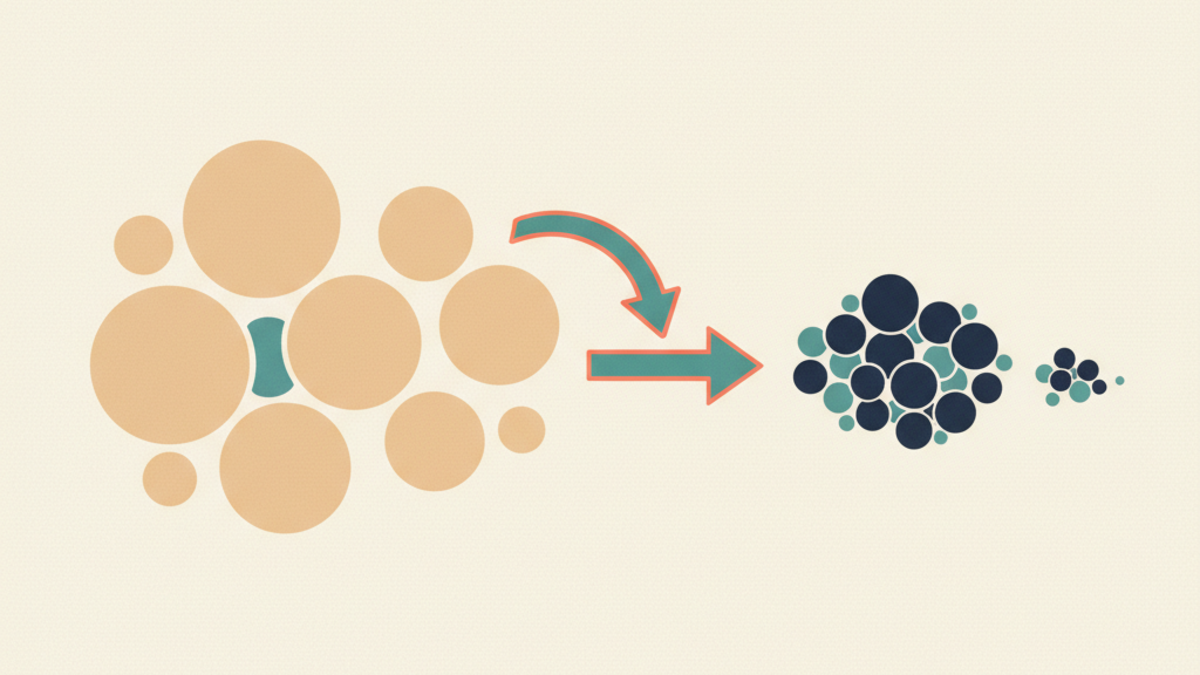
Tesamorelin does not act as growth hormone. It sits one step earlier in the chain and prompts the body to release its own.
- It binds to the docking points for growth hormone releasing factor on the pituitary gland, with roughly the same strength as the natural hormone does in laboratory tests [1].
- Those cells then build and release growth hormone in the pulses that are normal for this system [1].
- Growth hormone acts on cartilage, bone, muscle, liver and fat cells. Some of that happens directly, some through IGF-1, a messenger made mainly in the liver [1].
- Measured in patients, the treatment raises IGF-1 and its carrier protein IGFBP-3. Other pituitary hormones, including thyroid and stress hormones, did not shift meaningfully in the approval trials [1].
This is what separates the substance from injected growth hormone itself, which bypasses the pituitary gland altogether. It also separates it from the growth hormone secretagogues, a different family that works through another receptor [12], [13].
What the trials found
The approved use rests on two trials in the same population, and everything beyond that comes from academic research that has never changed a label.
Belly fat
Phase 3 RCT The first approval trial randomised 412 adults with HIV and lipodystrophy for 26 weeks. Their average age was 48, and 86 per cent were men. The deep fat around the organs, measured by scan, fell by 15.2 per cent on treatment and rose by 5.0 per cent on placebo (p < 0.001).
The label reports the same result as a difference of 31 square centimetres (95 per cent confidence interval −39 to −24), or 20 per cent (−24 to −15) [1], [3].
Blood fats moved with it. Triglycerides fell by 50 mg/dl on treatment and rose by 9 mg/dl on placebo, and IGF-1 rose by 81 per cent against a fall of 5 per cent (p < 0.001 for both). More treated participants than placebo participants left because of a side effect [3].
Phase 3 RCT The second trial followed 404 adults for six months. The deep fat fell by 10.9 per cent, or 21 square centimetres, against 0.6 per cent, or 1 square centimetre, on placebo (p < 0.0001). Waist size and the waist-to-hip ratio improved with it.
Fat on the arms and legs did not change, and neither did the fat just under the skin of the belly [14].
First approval trial, 412 adults with HIV and lipodystrophy, 26 weeks. Change in visceral fat measured by scan. Source [3].
Meta-analysis Pooling five randomised trials, the difference against placebo averaged 27.71 square centimetres of visceral fat (95 per cent confidence interval −38.37 to −17.06; p < 0.001). Trunk fat fell by 1.18 kg, limb fat by 0.22 kg and waist size by 1.61 cm, while lean mass rose by 1.42 kg.
Liver fat fell by 4.28 percentage points (−6.31 to −2.24). Neither body mass index, nor the fat under the skin, nor the CD4 cell count changed significantly [15].
Meta-analysis A second review, covering 909 people in four trials, found 21.47 square centimetres (−34.73 to −8.22; p = 0.002). The trials disagreed with each other here (I² = 74 per cent), unlike for waist size, which again fell by 1.61 cm.
Trunk fat fell by 1.20 kg and total cholesterol by 0.16 mmol/l (p = 0.003). Its authors also counted more dropouts than on placebo (risk ratio 2.25; 0.98 to 5.17; p = 0.06) [16].
Liver fat
RCT This trial enrolled 61 people with HIV whose liver fat was at least 5 per cent. Twelve months of treatment lowered that fraction by 4.1 percentage points more than placebo (95 per cent confidence interval −7.6 to −0.7; p = 0.018). In relative terms that is a fall of 37 per cent (−67 to −7; p = 0.016).
After a year, 35 per cent of the treated group were below the 5 per cent threshold, against 4 per cent on placebo (p = 0.0069). Fasting glucose and long-term blood sugar were no different between the groups [17].
RCT An earlier single-centre trial followed 50 adults for six months. Visceral fat fell by 34 square centimetres (95 per cent confidence interval −53 to −15), against a rise of 8 on placebo. The treatment effect was 42 square centimetres (−71 to −14; p = 0.005).
Liver fat fell by a median, or middle value, of 2.0 per cent, against a rise of 0.9 per cent on placebo. The net difference was 2.9 percentage points (p = 0.003).
Fasting blood sugar rose more than on placebo after two weeks, by 7 mg/dl (1 to 14; p = 0.03). By six months that difference had gone (2 mg/dl; −6 to 10; p = 0.72) [18].
Thinking and memory
Phase 2 RCT An academic trial treated 152 adults aged 55 to 87, average age 68, for 20 weeks. Of these, 66 had mild cognitive impairment and 137 finished the study.
The main analysis found a favourable overall effect on cognition (p = 0.03). It was similar in those with impairment and those without, and stronger among those who finished (p = 0.002).
The gain sat in executive function, meaning planning and mental flexibility (p = 0.005), with only a trend in verbal memory (p = 0.08). Side effects were reported by 68 per cent of the treated group and 36 per cent on placebo [19].
Phase 2 RCT A substudy of 30 participants measured brain chemistry. GABA, a calming messenger substance, was raised in every region examined (p < 0.04), NAAG in one (p = 0.03) and myo-inositol lowered in one (p = 0.002).
Glutamate did not move. Where IGF-1 rose most, GABA rose most as well (r = 0.47; p = 0.001) [20]. No regulator has ever approved the drug for anything to do with memory.
Where the trials fell short
Phase 2 RCT A later trial in 73 people with HIV and abdominal obesity found no cognitive advantage. The treated group drifted towards better scores (mean change 0.146; 95 per cent confidence interval −0.002 to 0.294; p = 0.060).
So did the comparison group (0.103; −0.095 to 0.301; p = 0.295). The gap between them was not significant (p = 0.673).
Waist size did fall further, by a median, or middle value, of 2.7 cm (p = 0.015). The trial was open-label, with no dummy injection, and the authors call it underpowered [21].
Phase 2 RCT In 53 adults who already had type 2 diabetes, twelve weeks of treatment changed nothing measurable. The insulin response, fasting glucose and long-term blood sugar all stayed where they were.
Total and non-HDL cholesterol did fall in the higher-exposure arm, each by 0.3 mmol/l (standard deviations 0.6 and 0.5; p < 0.05 against placebo). Nobody left the trial because their diabetes went out of control [22].
What happens after stopping
Phase 3 RCT In the extension phase, 263 participants were randomised again for a further 26 weeks. Those who stayed on treatment held the reduction at 18 per cent below their starting point at 52 weeks (p < 0.001). Triglycerides stayed 51 mg/dl lower as well.
Those switched to placebo lost the gains of the previous six months, and the deep fat accumulated again. The authors state that the effects do not outlast the treatment [4], [23].
What is still unknown
- Whether removing this fat improves anyone's health in the long run. The trials measured the fat itself, not heart attacks, strokes or survival [1], [5].
- What years of raised IGF-1 do. The label calls the consequences unknown and asks for monitoring [1].
- Whether the drug causes cancer. Lifetime studies in rodents were never carried out, although tests for genetic damage came back negative [1].
- How it behaves in people with kidney or liver problems, in children or in older adults, none of which has been studied [1].
- Whether it helps physical function. A trial in 100 people with HIV and frailty began recruiting on 10 July 2025 and has not reported [24].
Side effects and safety
The safety picture comes from the official American product information, which draws on the approval trials.
- Injection-site reactions in 17 per cent against 6 per cent on placebo over the first 26 weeks, counted elsewhere in the label as 25 per cent against 14 per cent. They include redness, itching, rash, hives, pain, swelling and bleeding [1].
- Joint pain in 13 per cent against 11 per cent on placebo. Pain in an arm or leg affected 6 per cent against 5 per cent, and muscle pain 6 per cent against 2 per cent [1].
- Swelling of the ankles and feet in 6 per cent against 2 per cent. Tingling affected 5 per cent against 2 per cent, and reduced sensation 4 per cent against 2 per cent. The label puts these down to fluid retention caused by growth hormone, and says they either pass or resolve after stopping [1].
- Carpal tunnel syndrome in 1 per cent against none on placebo. An analysis of the American side-effect database, covering October 2003 to September 2024, lists tesamorelin among the ten drugs most over-reported for this problem. Its reporting odds ratio was 20.7 (13.7 to 31.3), which describes a reporting pattern rather than a cause [25].
- Allergic reactions in 4 per cent of those treated, including itching, flushing, hives and rash. The label asks for treatment to stop at once if one is suspected [1].
- Higher blood sugar. By week 26, long-term blood sugar had reached 6.5 per cent or more in 5 per cent of treated participants, against 1 per cent on placebo. The odds of developing diabetes were raised (odds ratio 3.3; 1.4 to 9.6) [1].
- Raised IGF-1. At 26 weeks, 47 per cent of participants were more than two standard deviations above normal and 36 per cent more than three. At 52 weeks the figures were 34 and 23 per cent [1].
- Antibodies in about half of those treated. They appeared in 50 per cent at 26 weeks and 47 per cent at 52 weeks, and in 85 per cent of those with allergic reactions.
- What those antibodies did. Around 60 per cent of them also reacted with the body's own hormone, and neutralising ones were found in 10 per cent at 52 weeks. None of this visibly changed how well the drug worked [1].
Several situations rule the drug out entirely. They are an active cancer, a disrupted link between the hypothalamus and the pituitary gland, a known allergy to the substance, and pregnancy [1].
In pregnant rats given roughly two to four times the human exposure, the offspring developed fluid on the brain. In rabbits nothing of the kind appeared, up to roughly 500 times that exposure [1].
The label also warns against use in children, because open growth plates could mean excessive growth. It asks doctors to consider stopping in critically ill patients [1]. People on replacement steroids may need more of them once treatment starts, because growth hormone interferes with the enzyme that activates cortisone [1].
Why this page lists no doses
Tesamorelin is available on prescription only, in the single market where it is approved, and choosing an amount is a matter for the official product information and the prescribing doctor. This page therefore reports what the trials measured without repeating the amounts they used.
Development and approval status
Approval and evidence timeline
- 2005-2007The first phase 3 trial runs in HIV-associated lipodystrophyn = 412, refs [3], [26]
- 2010United States approval on 10 November as a new molecular entityApplication 022505, ref [2]
- 2012European application withdrawn on 21 JuneApplicant Ferrer Internacional, ref [5]
- 2019Second United States formulation approved on 5 July, marketed from 4 NovemberRefs [2], [27]
- 2020The former application is deemed a biologics licence on 23 MarchRef [2]
- 2022The Canadian product is cancelled after marketing on 30 SeptemberLast batch expired 31 January 2023, ref [6]
- 2025Third United States formulation cleared on 25 March, marketed from 15 JulyRefs [2], [27]
- 2010 — the American regulator approves the drug on 10 November under application 022505 [2].
- 2012 — the European application is withdrawn on 21 June by the Spanish licensee Ferrer Internacional [5].
- 2019 — a second American formulation is cleared on 5 July and reaches the market on 4 November [2], [27].
- 2020 — on 23 March the former application is deemed a biologics licence, making it a biological medicine in American law [2].
- 2022 — the Canadian product is cancelled after marketing on 30 September; a second Canadian presentation was cancelled before ever reaching the market, on 13 July 2023 [6], [28].
- 2025 — a third American formulation is cleared on 25 March and reaches the market on 15 July [2], [27].
| Market | Status | Since |
|---|---|---|
| United States | Approved | 2010-11-10 |
| European Union | Withdrawn | 2012-06-21 |
| Germany | Not approved | — |
| United Kingdom | Not approved | — |
| Australia | Unverified | — |
| Canada | Cancelled | 2022-09-30 |
| Switzerland | Not approved | — |
The European committee gave its reasons. Excess belly fat from lipodystrophy is hard to tell apart from ordinary obesity in daily practice. The proposed cut-off of 130 square centimetres of visceral fat was not well enough supported, and the trials showed the fat shrinking without a resulting health benefit.
The participants also did not resemble European patients with HIV, who tend to be lighter. High IGF-1 levels raised concerns about cancer risk and diabetic eye disease, and long-term safety data were missing [5].
The other entries are searches that came back empty. The British register returned no result for the substance or the brand, checked against control terms that do return results in the same index [29]. The Swiss list of authorised human medicines contains neither [30].
Australia is a different case. The register could not be reached from our working environment on 7 September 2026, so no empty result was confirmed, and the row above says only that [31].
Canada did approve the drug, and its product monograph of 26 March 2015 set a narrower use than the American one. It required a waist of at least 95 cm in men or 94 cm in women, plus more than 130 square centimetres of visceral fat on a scan [32].
Every entry reflects the position on 7 September 2026. The wider framework is set out under are peptides legal and FDA-approved peptides.
Anti-doping
Tesamorelin is banned in sport at all times, in competition and out of it. Everything in its class counts as a non-specified substance.
The 2026 prohibited list names it in section S2.2.4: "growth hormone releasing factors, including, but not limited to: growth hormone-releasing hormone (GHRH) and its analogues (e.g. CJC-1293, CJC-1295, sermorelin and tesamorelin)" [7].
The wording was identical in 2025. German law names the substance separately in section 2.4 of the schedule to the Anti-Doping Act [33].
Detection remains difficult, because a half-life of about 11 minutes leaves a narrow window. A 2021 study noted that these analogues had apparently not been found in accredited laboratories.
Its authors identified 19 breakdown products of this group of substances in the laboratory. From those they built a test sensitive to about 1 nanogram per millilitre [34], [35]. More on this class at peptides banned in sport.
Compared with related peptides
| Peptide | What it is | Status | Named on the 2026 prohibited list |
|---|---|---|---|
| Tesamorelin | Full 44-amino-acid copy of the natural hormone, stabilised at the front end [1] | Approved in the United States only, prescription-only [2] | Yes, S2.2.4 [7] |
| Sermorelin | The shortened fragment, building blocks 1 to 29 [34] | Named in the German prescription-medicines schedule [36] | Yes, S2.2.4 [7] |
| CJC-1295 | Further modified analogue of the same hormone [34] | No approval identified in the registers on this page [12] | Yes, S2.2.4 [7] |
| CJC-1295 DAC | The same analogue with an added carrier complex that lengthens its action [34] | No approval identified in the registers on this page [12] | Covered by the same entry [7] |
| Ipamorelin | A growth hormone secretagogue, not a copy of this hormone [12], [13] | Described in the literature as an unregulated research compound [12], [13] | Not named in that entry [7] |
The first four all push the same button, but they are not interchangeable. Tesamorelin carries the whole natural sequence, and sermorelin is a fragment of it. The two CJC molecules are rebuilt versions, one of them with an attachment that keeps it in the blood far longer [34].
Legally they sit further apart still. Tesamorelin is a licensed medicine in one country, and the others are licensed nowhere [7], [12]. Ipamorelin belongs to a different family, reaching growth hormone through another receptor, which is why the doping list treats it separately [12], [13].
Common misconceptions
- "It is a fat burner." The label says the opposite, in its own words: the drug is not indicated for weight-loss management, as it has a weight-neutral effect. Weight changed by −0.4 kg and +0.5 kg in the two trials, neither different from placebo, and the meta-analyses find no change in body mass index [1], [15].
- "It is approved for belly fat." It is approved for belly fat in adults with HIV and lipodystrophy, and for nothing else. Trials in obesity without HIV and in fatty liver disease stayed academic and led to no approval anywhere [1], [5].
- "Tesamorelin, sermorelin and CJC-1295 are the same thing." All three act on the same receptor and share one line of the doping list, but they differ in structure and in legal standing. Only tesamorelin is an approved medicine [1], [7], [34].
- "The three American formulations are three different drugs." They are the same substance under one application number, differing in strength per vial, in their inactive ingredients and in the liquid used to dissolve them. The later ones were approved on comparable blood levels, not on new efficacy trials [1], [2], [9].
- "It is available in Europe." It is not. The application was withdrawn in 2012, and the British and Swiss registers return nothing [5], [29], [30].
- "A registry entry proves a trial is running." One record for tesamorelin in fatty liver disease carries the words "Mock Study" in its official title. It is a test entry and not a real trial [37].
- "Being an approved medicine means it is allowed in sport." Approval changes nothing. The substance is named on the prohibited list and in German anti-doping law [7], [33].
Frequently asked questions
Is tesamorelin a prescription medicine?
Yes, and only in the United States. It has been approved there since 10 November 2010 and can be obtained lawfully only on a doctor's prescription. Since 23 March 2020 it has been regulated as a biological medicine rather than a conventional drug. There is no approval in the European Union, Germany, the United Kingdom or Switzerland, and the Canadian product has been withdrawn from the market.
What is tesamorelin approved for?
For one thing only: reducing excess abdominal fat in adult patients who have HIV together with lipodystrophy, a condition in which body fat is redistributed in an unusual way. That single wording covers the entire approval. Every other use discussed in the research literature, including liver fat and memory, is unapproved.
Does tesamorelin cause weight loss?
No, and its own label says so. The official product information states that the drug is not indicated for weight-loss management because its effect on weight is neutral. In the two approval trials average body weight changed by −0.4 kg and +0.5 kg, neither of which differed from placebo. What changes is where the fat sits, not how much a person weighs.
How much belly fat did tesamorelin remove in the trials?
In the first approval trial, 412 adults were treated for 26 weeks. The deep fat around the organs fell by 15.2 per cent, and rose by 5.0 per cent in the placebo group. The second trial, in 404 adults, found a fall of 10.9 per cent against 0.6 per cent. Pooling five trials gives an average difference of 27.71 square centimetres of visceral fat compared with placebo.
What happens when someone stops taking tesamorelin?
The fat comes back. In the extension phase, participants who were switched to placebo lost the improvement they had built up over six months, and the deep abdominal fat accumulated again. The authors of that trial state directly that the effects do not persist beyond the treatment period.
What are the most common tesamorelin side effects?
Reactions where the injection is given are the most frequent, affecting 17 per cent of treated participants against 6 per cent on placebo in the first 26 weeks. Joint pain followed at 13 per cent against 11 per cent. Muscle pain, swelling of the ankles and feet, and tingling each affected around 5 to 6 per cent, against 2 per cent on placebo.
Who must not take tesamorelin?
The label rules it out entirely in four situations: an active cancer, a disrupted link between the hypothalamus and the pituitary gland, a known allergy, and pregnancy. Growth hormone is a growth factor, which is the reason behind the cancer restriction.
Is tesamorelin banned in sport?
Yes, at all times, in competition and out of it. The World Anti-Doping Agency names tesamorelin in section S2.2.4 of its 2026 prohibited list, among the growth hormone releasing factors, and classes everything in that section as a non-specified substance. German law names it separately in the schedule to the Anti-Doping Act.
Is tesamorelin sold as a research peptide the same as the approved medicine?
No. Twelve firms hold fourteen registrations of tesamorelin with the American regulator as an unfinished raw ingredient, which is not an approval of any medicine and permits no supply to end users. Two 2026 reviews place the substance squarely in the unregulated market for so-called research compounds, where composition and purity are unverified.
Sources
- EGRIFTA WR (tesamorelin) for injection — US Prescribing Information. Theratechnologies Inc., revision 03/2025. DailyMed setid 839334d3-8c1d-4c26-9036-2ab524a6ea75. https://dailymed.nlm.nih.gov/dailymed/drugInfo.cfm?setid=839334d3-8c1d-4c26-9036-2ab524a6ea75
- Drugs@FDA / openFDA, application 022505, approval and supplement history. Retrieved 7 September 2026. https://api.fda.gov/drug/drugsfda.json?search=openfda.generic_name:%22tesamorelin%22
- Falutz J, Allas S, Blot K et al. (2007). Metabolic effects of a growth hormone-releasing factor in patients with HIV. New England Journal of Medicine 357(23):2359-2370. PMID 18057338. DOI 10.1056/NEJMoa072375
- Falutz J, Allas S, Mamputu JC et al. (2008). Long-term safety and effects of tesamorelin in HIV patients with abdominal fat accumulation. AIDS 22(14):1719-1728. PMID 18690162. DOI 10.1097/QAD.0b013e32830a5058
- European Medicines Agency. Withdrawn application: Egrifta (tesamorelin). Withdrawal 21 June 2012, applicant Ferrer Internacional S.A. https://www.ema.europa.eu/en/medicines/human/withdrawn-applications/egrifta
- Health Canada, Drug Product Database, DIN 02438712. Status "Cancelled Post Market" since 30 September 2022. https://health-products.canada.ca/dpd-bdpp/info?lang=eng&code=92311
- World Anti-Doping Agency. Prohibited List 2026, section S2.2.4, in force from 1 January 2026. https://www.wada-ama.org/en/prohibited-list
- PubChem, Compound CID 16137828 (tesamorelin), National Library of Medicine. https://pubchem.ncbi.nlm.nih.gov/compound/16137828
- EGRIFTA SV (tesamorelin) for injection — US Prescribing Information. Theratechnologies Inc., revision 03/2024. DailyMed setid 3d783378-b02d-4f19-99dd-0fc91a042224. https://dailymed.nlm.nih.gov/dailymed/drugInfo.cfm?setid=3d783378-b02d-4f19-99dd-0fc91a042224
- WHO Collaborating Centre for Drug Statistics Methodology, ATC/DDD Index, group H01AC, as at 20 January 2026. https://atcddd.fhi.no/atc_ddd_index/?code=H01AC
- Wikidata, Q7705415 (tesamorelin). https://www.wikidata.org/wiki/Q7705415
- Dominikowski A, Rekos Z et al. (2026). The emerging landscape of performance-enhancing peptides modulating the GH-IGF1 axis. Frontiers in Endocrinology 17:1822475. PMID 42395176. DOI 10.3389/fendo.2026.1822475
- Mendias CL, Awan TM et al. (2026). Safety and efficacy of approved and unapproved peptide therapies for musculoskeletal injuries and athletic performance. Sports Medicine 56(8):1921-1935. PMID 41966639. DOI 10.1007/s40279-026-02437-0
- Falutz J, Potvin D, Mamputu JC et al. (2010). Effects of tesamorelin in HIV-infected patients with abdominal fat accumulation: a randomized placebo-controlled trial with a safety extension. Journal of Acquired Immune Deficiency Syndromes 53(3):311-322. PMID 20101189. DOI 10.1097/QAI.0b013e3181cbdaff
- Badran AS, Helal A, Shata KS et al. (2026). Body composition, hepatic fat, metabolic, and safety outcomes of tesamorelin in HIV-associated lipodystrophy: a meta-analysis of randomized controlled trials. Obesity Research and Clinical Practice 20(1):2-12. PMID 41545261. DOI 10.1016/j.orcp.2026.01.002
- Ditta AM, Naeem RM, Sami MM et al. (2026). Efficacy and safety of tesamorelin in people living with HIV with lipodystrophy: a systematic review and meta-analysis. Journal of the International Association of Providers of AIDS Care 25:23259582261475549. PMID 42538058. DOI 10.1177/23259582261475549
- Stanley TL, Fourman LT, Feldpausch MN et al. (2019). Effects of tesamorelin on non-alcoholic fatty liver disease in HIV: a randomised, double-blind, multicentre trial. Lancet HIV 6(12):e821-e830. PMID 31611038. DOI 10.1016/S2352-3018(19)30338-8
- Stanley TL, Feldpausch MN, Oh J et al. (2014). Effect of tesamorelin on visceral fat and liver fat in HIV-infected patients with abdominal fat accumulation: a randomized clinical trial. JAMA 312(4):380-389. PMID 25038357. DOI 10.1001/jama.2014.8334
- Baker LD, Barsness SM, Borson S et al. (2012). Effects of growth hormone-releasing hormone on cognitive function in adults with mild cognitive impairment and healthy older adults. Archives of Neurology 69(11):1420-1429. PMID 22869065. DOI 10.1001/archneurol.2012.1970
- Friedman SD, Baker LD, Borson S et al. (2013). Growth hormone-releasing hormone effects on brain gamma-aminobutyric acid levels in mild cognitive impairment and healthy aging. JAMA Neurology 70(7):883-890. PMID 23689947. DOI 10.1001/jamaneurol.2013.1425
- Ellis RJ, Vaida F, Hu K et al. (2025). Effects of tesamorelin on neurocognitive impairment in persons with HIV and abdominal obesity. Journal of Infectious Diseases 231(5):1230-1238. PMID 39813152. DOI 10.1093/infdis/jiaf012
- Clemmons DR, Miller S, Mamputu JC (2017). Safety and metabolic effects of tesamorelin in patients with type 2 diabetes: a randomized, placebo-controlled trial. PLoS One 12(6):e0179538. PMID 28617838. DOI 10.1371/journal.pone.0179538
- Falutz J, Mamputu JC, Potvin D et al. (2010). Effects of tesamorelin (TH9507) in HIV-infected patients with excess abdominal fat: a pooled analysis of two phase 3 trials with safety extension data. Journal of Clinical Endocrinology and Metabolism 95(9):4291-4304. PMID 20554713. DOI 10.1210/jc.2010-0490
- ClinicalTrials.gov, NCT06554717 — tesamorelin as an adjunct to exercise for improving physical function in HIV. Phase 2, n = 100, start 10 July 2025. https://clinicaltrials.gov/study/NCT06554717
- Mihalache A, Volfson E, Huang R et al. (2025). Carpal tunnel syndrome attributed to medication use: a pharmacovigilance study. Cureus 17(5):e83972. PMID 40510111. DOI 10.7759/cureus.83972
- ClinicalTrials.gov, NCT00123253 — TH9507 in patients with HIV-associated lipodystrophy. Phase 3, n = 412, June 2005 to April 2007. https://clinicaltrials.gov/study/NCT00123253
- openFDA NDC directory, query "tesamorelin*", retrieved 7 September 2026. https://api.fda.gov/drug/ndc.json?search=generic_name:%22tesamorelin*%22
- Health Canada, Drug Product Database, DIN 02423677. Status "Cancelled Pre Market" since 13 July 2023. https://health-products.canada.ca/dpd-bdpp/info?lang=eng&code=90838
- MHRA Products, full-text index of the British medicines register, query 7 September 2026: no result for the substance or the brand; control queries in the same index return results. https://products.mhra.gov.uk/search/?search=tesamorelin
- Swissmedic, extended list of authorised human medicines, retrieved 7 September 2026: no entry for the substance or the brand; control terms in the same file do appear. https://www.swissmedic.ch/swissmedic/de/home/services/listen_neu.html
- Therapeutic Goods Administration, ARTG search. Not reachable from the working environment on 7 September 2026, so no confirmed zero result exists. https://www.tga.gov.au/resources/artg
- Health Canada, EGRIFTA Product Monograph, control number 177087, revision 26 March 2015. https://pdf.hres.ca/dpd_pm/00029988.PDF
- Schedule to the German Anti-Doping Act (AntiDopG), section 2.4, growth hormone releasing factors. https://www.gesetze-im-internet.de/antidopg/anlage.html
- Memdouh S, Gavrilovic I et al. (2021). Advances in the detection of growth hormone releasing hormone synthetic analogs. Drug Testing and Analysis 13(11-12):1871-1887. PMID 34665524. DOI 10.1002/dta.3183
- Ucakturk E, Nemutlu E (2026). Analysis of growth hormone releasing hormone and its analogs in urine using nano liquid chromatography coupled with quadrupole/orbitrap mass spectrometry. Journal of Pharmaceutical and Biomedical Analysis 268:117207. PMID 41138283. DOI 10.1016/j.jpba.2025.117207
- German Ordinance on Prescription-Only Medicines (AMVV), Schedule 1. https://www.gesetze-im-internet.de/amvv/anlage_1.html
- ClinicalTrials.gov, NCT07481734 — record whose official title contains the words "Mock Study"; treated as a test entry and not as a real trial. https://clinicaltrials.gov/study/NCT07481734
Cite this page
The facts on this page were checked on 7 September 2026, and the official registers behind the status table were queried on that same day. Approved medicines gain new uses and revised warnings over time, so the version and the date matter as much as the text.
myPeptides Research & Editing. (2026). Tesamorelin: what the trials show, status and safety. Version 1.0, 7 September 2026. myPeptides Peptide Register. Retrieved from https://mypep.app/peptides/tesamorelin
How pages in this register are compiled and graded is described under methodology; the full register is at peptides.
| Version | Date | Change |
|---|---|---|
| 1.0 | 2026-09-07 | Initial publication |
Last verified: 7 September 2026. Next review: on a labelling change in the United States, on confirmation of the Australian register entry, or on any change in the anti-doping classification.