
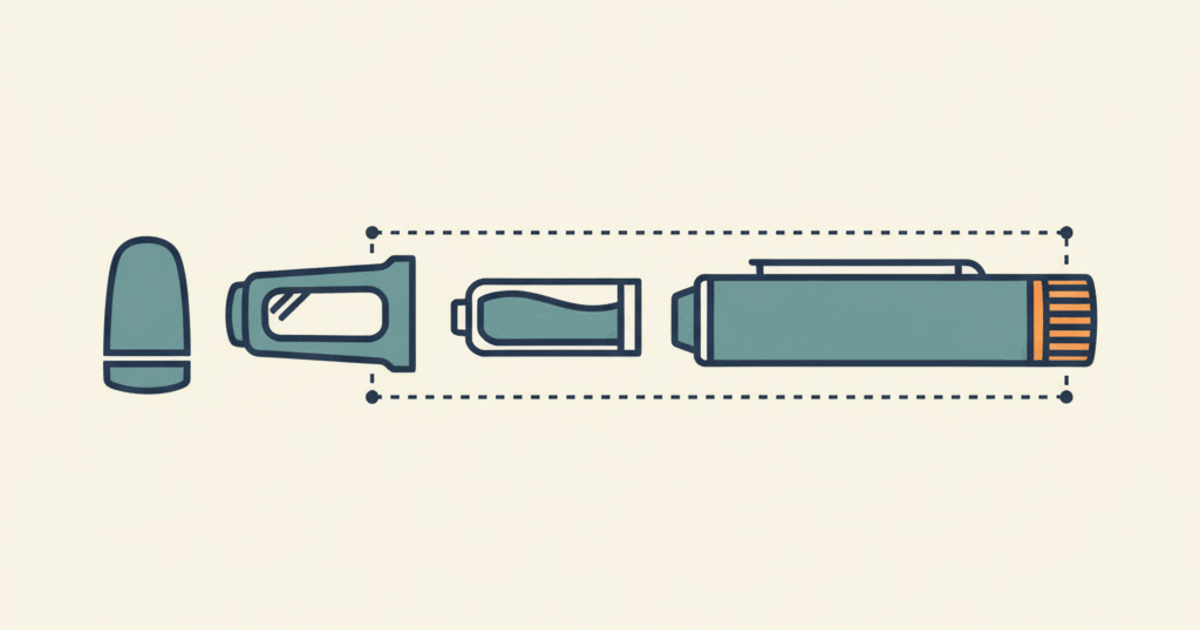
Peptide pens: the plain overview
The usual disclaimer, and it's a real one: this is general educational information, not medical advice and not a suggestion to inject anything. Only use a medicine a clinician prescribed and supervises; unapproved "research" compounds are not for human use. A pen is a measuring-and-delivery tool, nothing more, it never makes an unsafe or unapproved product safe.
Here's the map in one line: almost every reusable pen takes a standard 3 mL cartridge and screws on a normal pen needle; what separates them is manual vs automatic delivery, whether the dial clicks or stays silent, how fine the steps are (1 unit vs half a unit), the ceiling on a single dose, and a few extras like dose memory or a lockout that stops you dialling more than is left. Get those five straight and the long spec tables stop being scary.
What a reusable pen is
Strip away the branding and every pen is the same shape. A body holds a glass cartridge of solution. A dial at one end sets the dose, counting in units. A button drives a plunger rod forward, and a small pen needle screws onto the front for each injection. You dial, you press, you're done. Because the dial meters a fixed volume per click, you count clicks rather than reading a line on a barrel, which is the whole reason people move to a pen from a syringe in the first place.
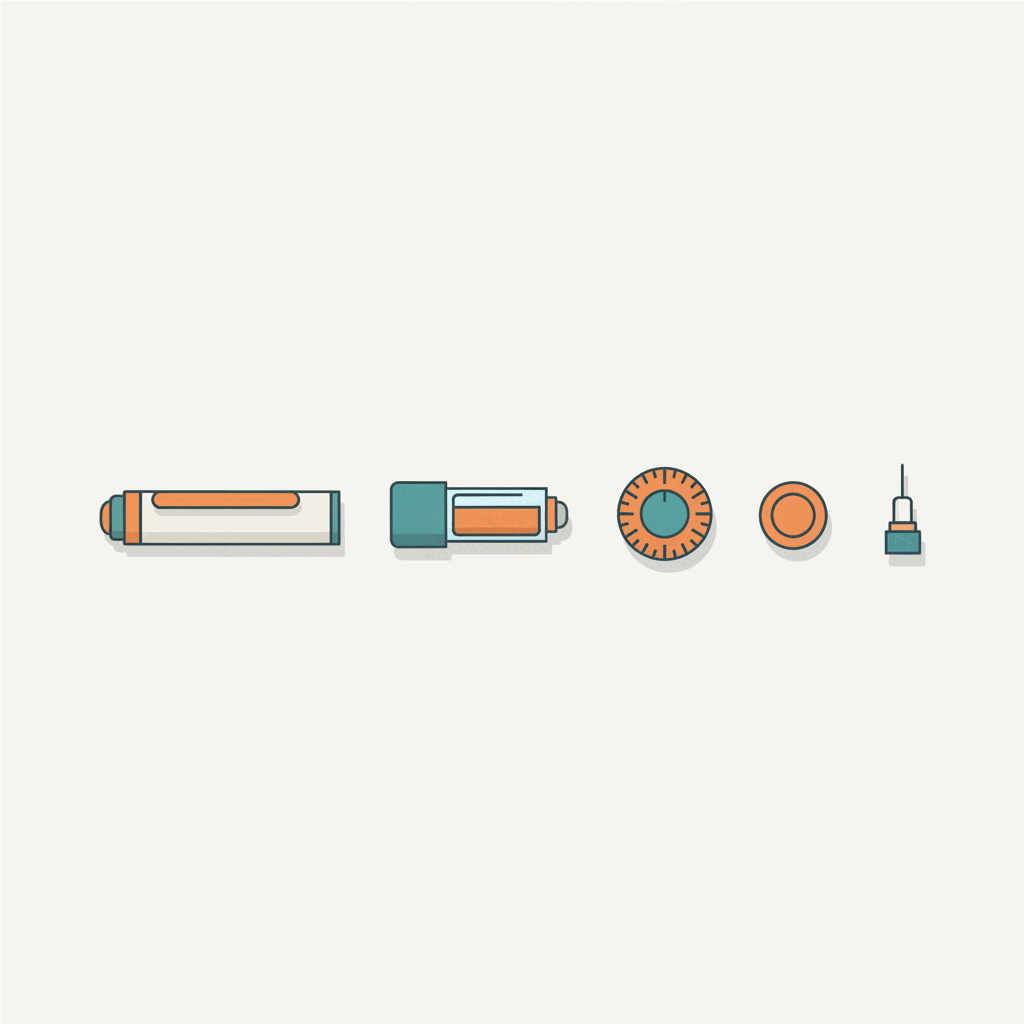
The features that actually differ
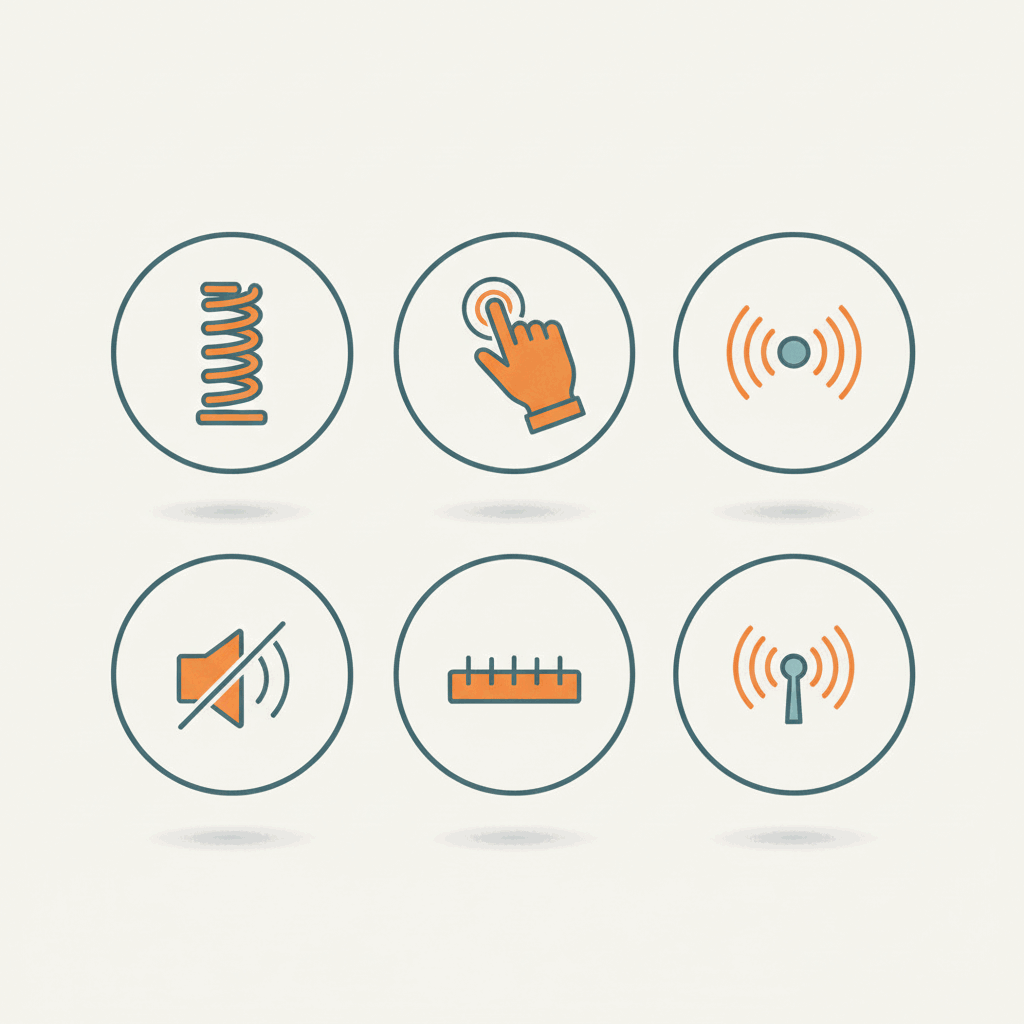
Five things genuinely change how a pen feels to live with. Everything else is colour choices.
Manual or automatic delivery. On a manual pen your thumb does the pushing. On an automatic one a spring fires the dose when you press the button. Most pens are manual; a handful (ConviPen, Gansulin, GensuPen2) are spring-loaded. This is the single biggest feel difference, so it has its own write-up: automatic vs manual.
Clicks or silent. Most pens click audibly as you dial and dose, which doubles as a way to count. A few, like Savvio and GensuPen2, are near-silent, which some people prefer for discretion and others dislike because they lose the audible count.
Dose steps: 1 unit or half a unit. Most pens move in 1-unit steps. A couple of them, JuniorSTAR and NovoPen Echo Plus, step in 0.5 units, which is the finer resolution you want when the dose is small and every fraction matters. The trade-off: those half-unit pens usually cap the maximum dose lower (around 30 units instead of 60).
Maximum single dose. Most pens top out near 60 units per injection; the half-unit models near 30; a few thin variants go to 80. If a single dose would exceed the ceiling, you'd split it, worth knowing before you buy.
The quiet extras. Some pens won't let you dial a dose bigger than what's left in the cartridge (a nice guardrail). Newer ones add dose memory (they remember your last dose and when you gave it), and a couple (NovoPen 6, NovoPen Echo Plus) push that to your phone over Bluetooth/NFC. A separate class of thin pens even hides the needle for the squeamish.
All the pens, side by side
The full lineup of reusable pens people load these solutions into. Every one takes a standard 3 mL cartridge and standard pen needles, so the real differences live in the columns below, not in the cartridge.
| Pen | Delivery | Dial | Step | Max dose | Notable |
|---|---|---|---|---|---|
| AllStar | Manual | Clicks | 1 U | ~60 U | Needs a spacer to empty the cartridge |
| AllStar Pro | Manual | Clicks | 1 U | ~60 U | Overdose lockout; needs a spacer |
| ConviPen | Automatic | Clicks | 1 U | ~60 U | Spring-loaded; overdose lockout; fully empties |
| Ergo2 | Manual | Clicks | 1 U | ~60 U | Simple; fully empties |
| Gansulin | Automatic | Clicks | 1 U | ~60 U | Spring-loaded; overdose lockout; fully empties |
| GensuPen2 | Automatic | Silent | 1 U | ~60 U | Spring-loaded and silent; fully empties |
| INSUpen Pro | Manual | Clicks | 1 U | ~60 U | Needs a spacer |
| JuniorSTAR | Manual | Clicks | 0.5 U | ~30 U | Half-unit steps; overdose lockout; needs a spacer |
| Luxura | Manual | Clicks | 1 U | ~60 U | Fully empties |
| NovoPen 4 | Manual | Clicks | 1 U | ~60 U | Needs a cartridge adapter; overdose lockout; fully empties |
| NovoPen 5 | Manual | Clicks | 1 U | ~60 U | Dose memory; needs adapter; overdose lockout |
| NovoPen 6 | Manual | Clicks | 1 U | ~60 U | Dose memory plus Bluetooth/NFC; needs adapter; overdose lockout |
| NovoPen Echo Plus | Manual | Clicks | 0.5 U | ~30 U | Half-unit plus dose memory plus Bluetooth; needs adapter; overdose lockout |
| Savvio | Manual | Silent | 1 U | ~60 U | Silent; overdose lockout; fully empties |
| V1 Thin | Manual | Clicks | 1 U | ~80 U | Higher 80-unit ceiling; needs a spacer |
| V1 | Manual | Clicks | 1 U | ~60 U | Basic clicker; needs a spacer |
| V2 | Manual | Clicks | 1 U | ~60 U | Hides the needle; fully empties |
| V3 | Manual | Clicks | 1 U | ~60 U | Hides the needle; needs a spacer |
A few patterns fall out of that. The NovoPen family (4, 5, 6, Echo Plus) is the "smart" route, with dose memory and, on the newer two, Bluetooth, but it is also the only family that needs a cartridge adapter. JuniorSTAR and NovoPen Echo Plus are the half-unit pair, at the cost of a 30-unit ceiling. Want silence? Savvio and GensuPen2. Want the spring to do the pushing? ConviPen, Gansulin and GensuPen2. The V-series V2 and V3 hide the needle for the squeamish, and the V1 Thin is the outlier that dials all the way to 80 units.
Cartridges, adapters and needles
Two practical gotchas save a lot of grief.
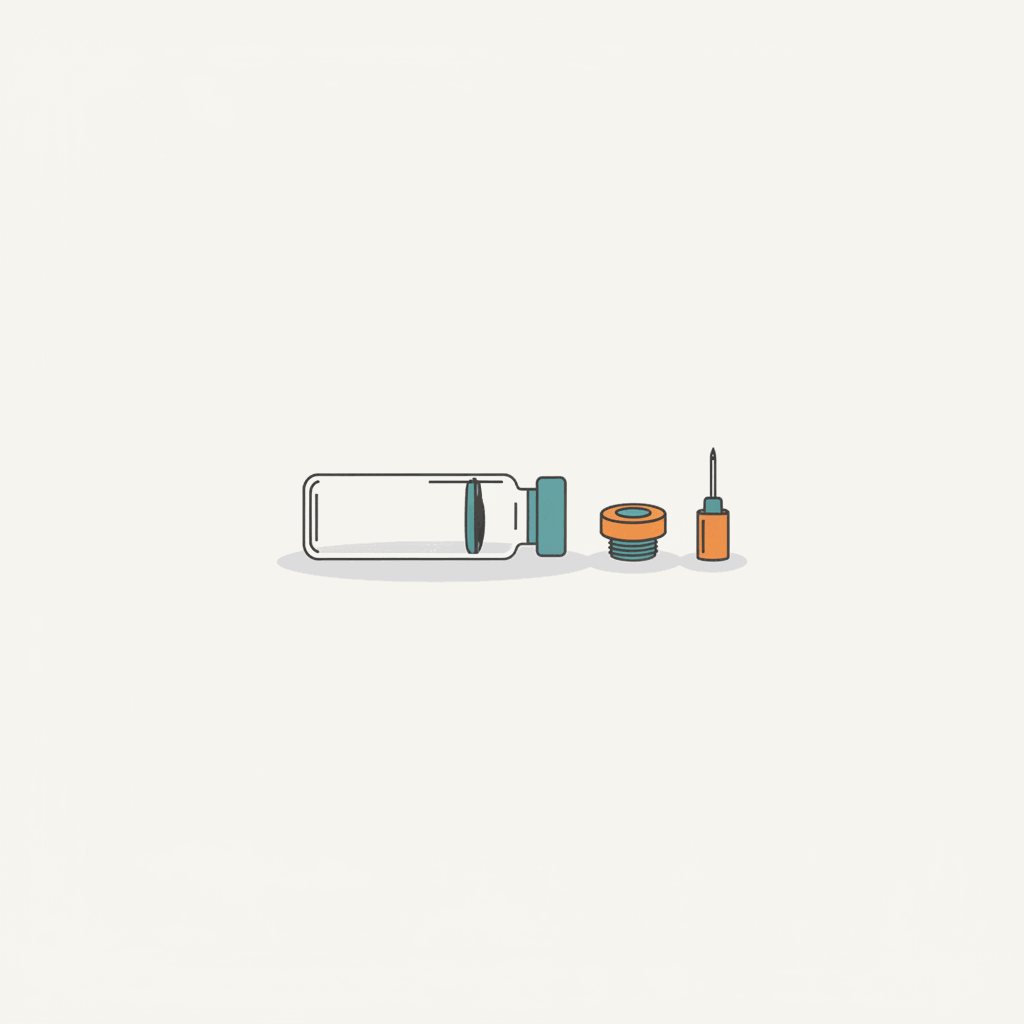
The NovoPen adapter catch. NovoPen models (4, 5, 6, Echo Plus) were built around a proprietary cartridge, so to run a standard 3 mL cartridge in them you need a small adapter. Every other pen in the list takes a standard cartridge straight. If you don't want to deal with an extra part, that rules the Novo pens in or out quickly.
Dead space and spacers. A pen can't push out the very last drop, some liquid stays in the cartridge and needle. Some pens "fully deplete" the cartridge; others "need a spacer" to reach the end. When the solution is precious, a fully-depleting pen wastes less. This is the same dead-space idea covered in the syringe vs pen comparison.
Needles. Almost all of these take standard screw-on pen needles, so needle choice is independent of pen choice.
How to pick, without overthinking it
- Do you want the spring to inject for you? If yes, you're in automatic territory (ConviPen, Gansulin, GensuPen2). If no, everything else is manual.
- Are your doses small? Half-unit steps (JuniorSTAR, Echo Plus) buy you finer control, at a lower max dose.
- Do you want tracking? NovoPen 5/6/Echo Plus remember doses; the newer two sync to a phone, though they need the adapter.
- Care about noise? Savvio and GensuPen2 are the quiet ones.
- Just want simple and cheap? A plain manual clicker like Ergo2 or an AllStar does the job with nothing to fuss over.
Whatever you land on, the pen only handles the delivery. The strength of what's inside comes from reconstitution, and the unit-to-volume maths is the calculator's job.
Common questions
Do all pens use the same cartridges? Nearly, most take a standard 3 mL cartridge. The exception is the NovoPen line, which needs an adapter for standard cartridges.
What's the point of half-unit pens? Finer steps for small doses. The trade-off is a lower maximum single dose, usually around 30 units.
Which pens are silent? Savvio and GensuPen2, among the common ones. Most others click as you dial.
Which pens track doses? NovoPen 5, 6 and Echo Plus have dose memory; the 6 and Echo Plus also sync over Bluetooth/NFC.
Automatic or manual, which is better? Neither, they just feel different. See automatic vs manual pens.
The part that matters
This is general educational information, not medical advice and not instructions to self-administer anything. Every pen here is a delivery device; none of them changes what's in the cartridge, verifies its purity, or replaces a clinician who knows your case. If you're weighing a pen against the simpler option, read syringe vs pen; for the numbers, the dose calculator handles concentration and volume for either.