
Automatic vs manual injection pens
Ground rules first: this is general educational information, not medical advice and not encouragement to inject anything. Only use a medicine a clinician prescribed and is supervising; unapproved "research" compounds are not for human use. A pen is a delivery tool — the delivery style doesn't change what's inside it.
The short version: on a manual pen, the force to push the dose in comes from your thumb; on an automatic pen, a spring does it for you when you press the button. Automatic means a consistent, hands-off injection that's easier if needles make you tense up. Manual means you control the speed and feel exactly what's happening. Both meter the dose the same way — a fixed volume per click — so accuracy isn't really the deciding factor here. Feel is.
How each one delivers
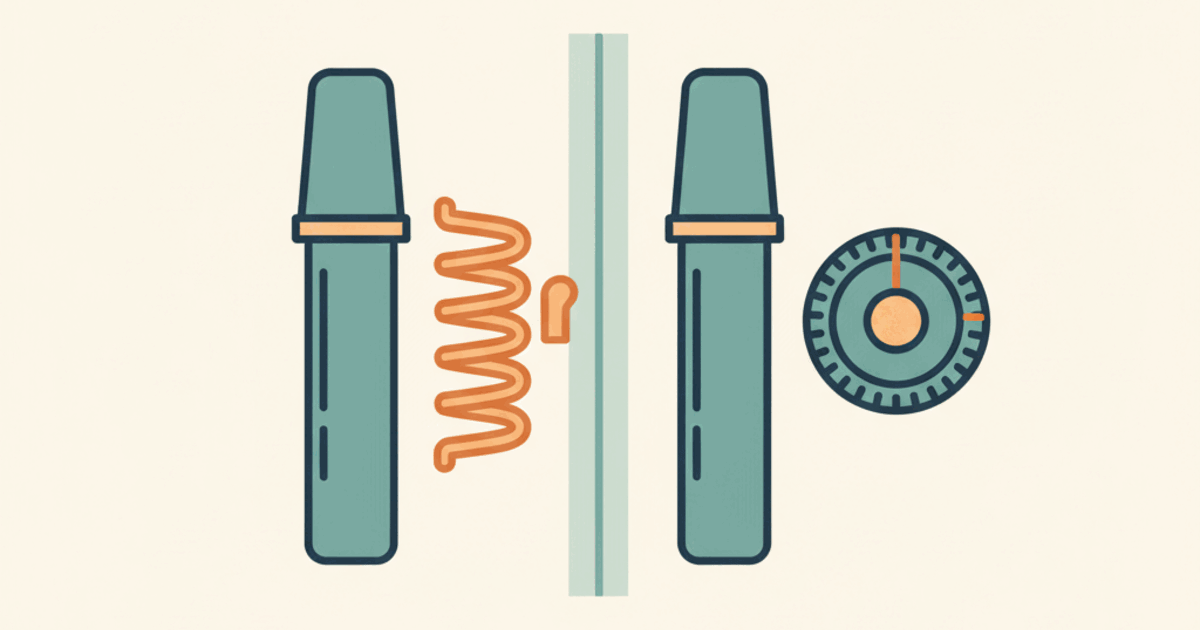
A manual pen is a plunger with a dial in front of it. You set the units, put the needle in, and press the button down with your thumb; the dose goes in at whatever pace you push. Stop pushing and it stops. That's the entire mechanism, which is part of the appeal.
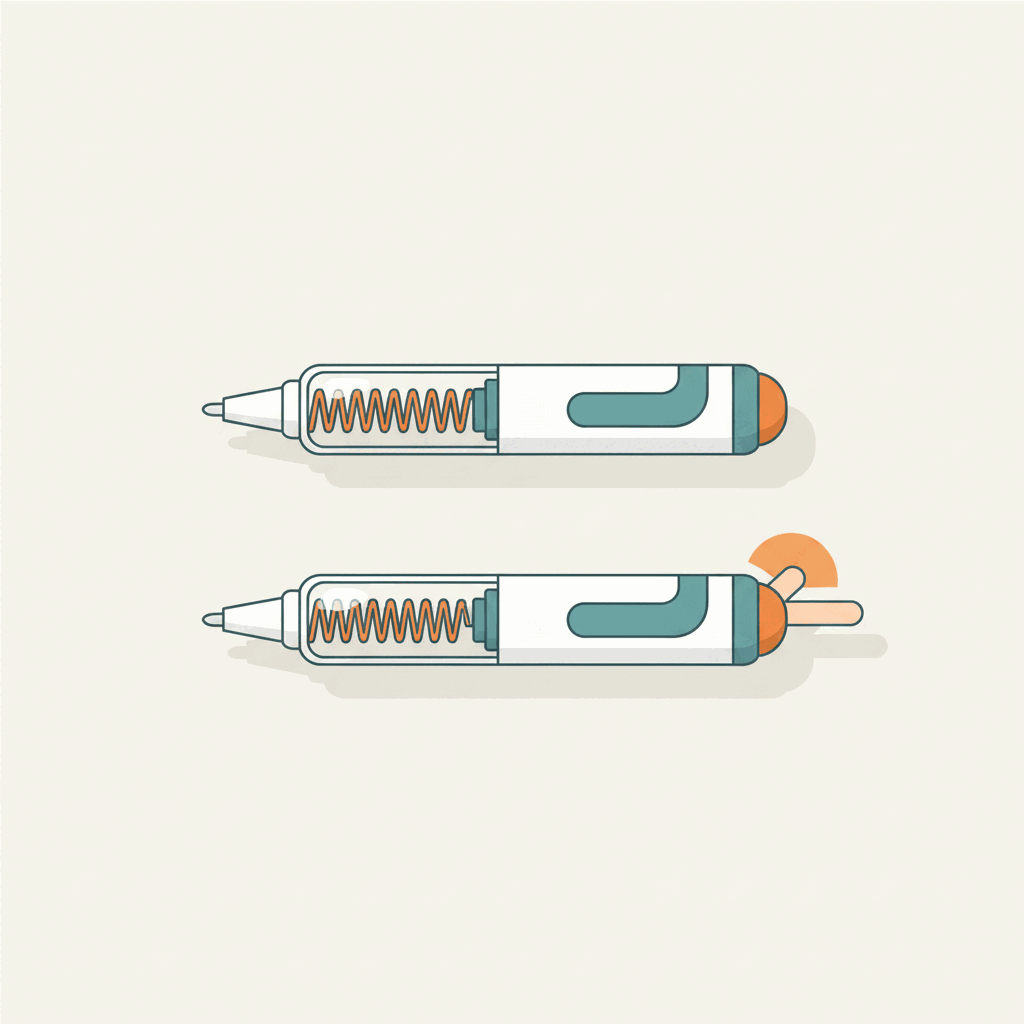
An automatic pen hides a compressed spring. You dial, insert the needle, press a trigger, and the spring drives the plunger through the full dose on its own at a fixed rate. You just hold it steady until it's finished. Think of it as the difference between pressing a French press down yourself and a device that pushes it for you at the press of a button.
The case for automatic
The spring buys you three things.
Consistency. Every injection goes in at the same rate and the same force, whoever is holding it and however steady their hand is that day. No "did I push too fast?"
It's kinder to nervous hands. If needles make you hesitate, an auto pen removes the moment where you have to consciously push a needle-full of liquid into yourself. You set it, trigger it, wait. A lot of needle-shy people find that single change makes the whole thing tolerable.
One-handed and steady. No second-hand plunger effort means the pen barely moves during delivery, which helps if your grip or dexterity isn't perfect.
The costs are modest but real: more parts inside means more that can, in principle, fail; you can't slow down or stop partway once it fires; and springs add a little to the price.
The case for manual
Manual pens are the default for good reasons.
You control the pace. Some people find a slow, gentle push more comfortable and less stingy than a spring firing at a fixed speed, especially with a thicker solution. You decide.
Feedback. Your thumb feels the dose going in and feels when it's done. For some, that tactile confirmation beats trusting a spring you can't feel.
Fewer things to break. A manual pen is close to just a dial and a plunger. Simple mechanisms tend to be reliable, and they're usually cheaper.
The downside is the mirror image of automatic's strength: the injection is only as smooth and consistent as your own hand, and if needles rattle you, you still have to do the pushing.
Clicks vs silent is a separate question
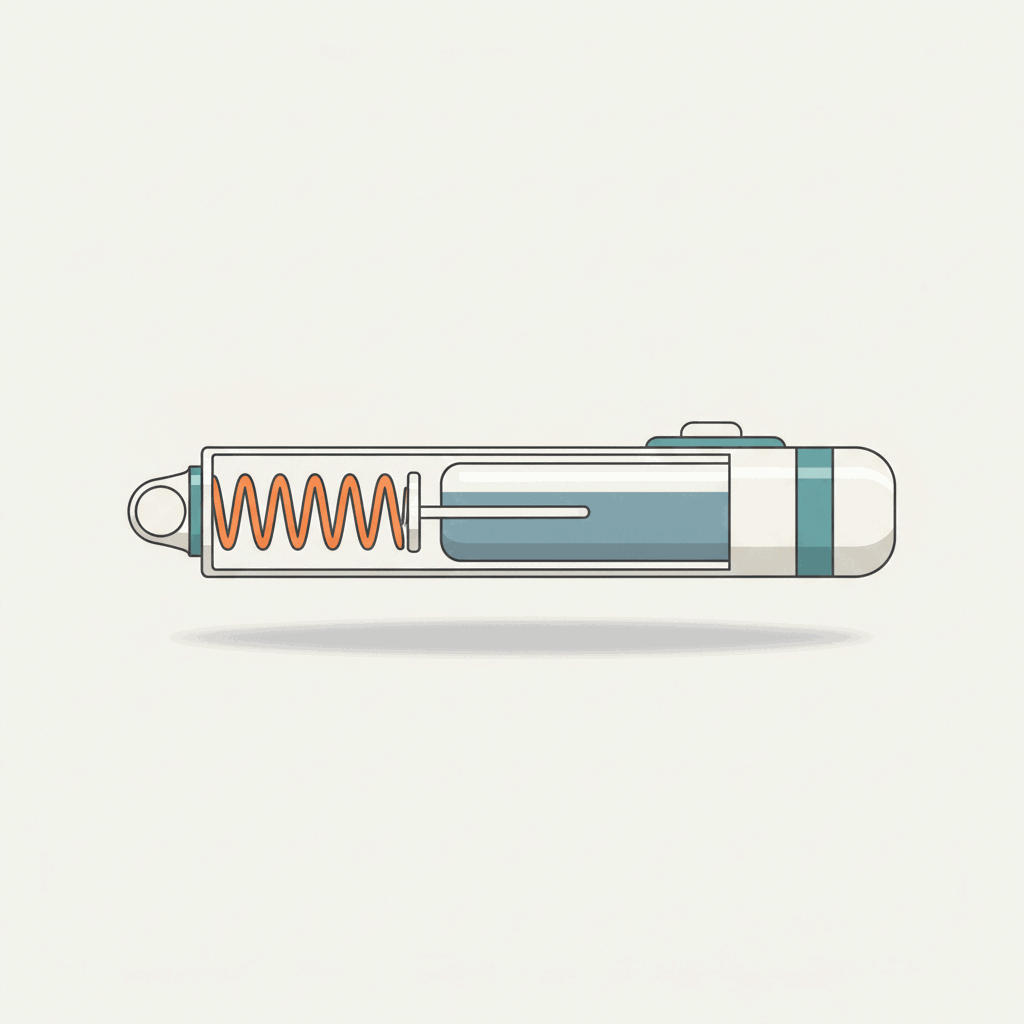
People mix this up with automatic-vs-manual, but they're independent. Clicks refers to whether the dial makes an audible tick as you turn and dose it — handy as a way to count, and reassuring to many. Silent pens keep it discreet but take away that audible count. You'll find manual pens that click and manual pens that are silent, and the same on the automatic side. So decide delivery and noise separately; a quiet automatic and a clicky manual both exist. The pen overview notes which common models are which.
What they have in common
Don't lose the forest for the trees — the two share more than they differ:
- Both meter the dose per click, so both are more consistent than eyeballing a syringe barrel.
- Both take a cartridge and a screw-on needle.
- Both assume a known concentration in the cartridge, which is why reconstitution and the calculator matter regardless.
- Both leave a little dead space you can't inject.
How to choose
- Needle-shy, or shaky hands? Lean automatic — it removes the push.
- Want control, feedback, and the simplest mechanism? Manual.
- On a budget? Manual pens are generally cheaper and there are more of them.
- Genuinely can't decide? You'll adapt to either in a session or two. This is the least consequential choice in the whole setup — put more of your attention on clean technique and correct mixing.
Common questions
Is one more accurate? No meaningful difference — both meter a fixed volume per click. Accuracy comes from the mechanism, not the delivery style.
Is automatic safer? Not inherently. It's more consistent and easier for nervous users, but it also can't be slowed or stopped mid-dose.
Can I stop a manual injection partway? Yes — you control it. An automatic one fires the whole set dose once triggered.
Are automatic pens silent? Some are, some click — that's a separate feature from the spring. Same for manual pens.
Which should a beginner pick? Either. If needles worry you, automatic is the gentler start; otherwise manual is simpler and cheaper.
The part that matters
This is general educational information, not medical advice and not instructions to self-administer anything. Automatic and manual pens are two ways to move the same liquid; neither changes what's in the cartridge or replaces a clinician's judgement. For the wider device picture see the pen overview and syringe vs pen; the dose calculator handles the numbers either way.