
Retatrutide liver damage: a fact-check

TL;DR
A 45-minute video titled "Mega Dosing vs Micro Dosing Retatrutide: Which Damages Your Liver More?" argues that retatrutide quietly injures your liver and pancreas unless you follow a specific dosing protocol — which the presenter then sells, alongside the peptides themselves. We checked it. The short version:
- The messenger. "Dr" Trevor Bachmeyer is not a physician. He is a former chiropractor whose California licence (DC 29377) was revoked effective 8 July 2020, as recorded by the California Board of Chiropractic Examiners. The same video funnels viewers to his paid coaching and to his own research-peptide shop, EliteBiogenix.
- "Glucagon floods your body with fat." Misleading. In humans, physiological glucagon does not directly break down body (white adipose) fat — it drives fat oxidation inside the liver (Perry et al., Nature 2020; Vasileva et al., 2022; Gravholt et al., 2001).
- "Lipase rises mean your pancreas is failing." Mostly false. Mild, symptom-free enzyme rises are common and benign; large trial datasets show no increase in acute pancreatitis (Steinberg et al., Diabetes Care 2017).
- "Retatrutide overloads and damages the liver." The opposite of the data. In the phase-2 liver-fat trial it cut liver fat by up to 86%, and ~93% of patients on the top dose normalised their liver fat (Sanyal et al., Nature Medicine 2024). Retatrutide is being developed as a treatment for fatty liver disease.
- What he gets right. Two things: don't panic-stop over an isolated lipase number, and rapid weight loss really does cost muscle (Koceva et al., 2025). Valid points wrapped in an invalid scare.
The fuller picture, and the science behind every line above, follows. The deep-dive at the end is a referenced primer on the whole drug class — written so you can check us, not just trust us.
Who is making the claim
Before the science, the source. He brands himself "Dr Trevor Bachmeyer, The Spartan" and "World's #1 Health Authority" to an audience of hundreds of thousands. Two verifiable facts matter.

First, he is not a medical doctor. He is a former chiropractor, and even that licence is gone: California licence DC 29377 was revoked effective 8 July 2020 by the California Board of Chiropractic Examiners. The action is recorded in the Board's own documents (meeting materials, 29 Oct 2020; Final Disciplinary Actions) and is verifiable through the state licence lookup — readers can consult the linked records for the precise findings. He continues to present himself as "Dr", a usage that, in our view, invites readers to assume a current medical qualification he does not hold.
Second, he sells the subject of his own advice. The video routes viewers to a paid "Black Card" coaching membership and to EliteBiogenix, his shop selling research peptides and SARMs "for in-vitro research only." So the person warning you that retatrutide will injure you unless you dose it correctly is also selling the dosing guidance and the peptides. That isn't disqualifying on its own — but it is exactly the conflict a careful viewer should keep in mind, and it is why this article exists.
What he actually argues — in fairness
It would be easy to strawman him, so let's be exact. His own video description states that "retatrutide itself doesn't directly cause liver or pancreatic damage; irresponsible dosing and poor monitoring causes biological damage." His chapter list runs "Glucagon Fat Flood → Pancreas Overload → Fatty Liver Cascade → Insulin Resistance Spiral," then pivots to a "Damage Control Protocol," "Safe Dosing Rules," and "Use It Responsibly."
So his thesis is not "this drug is poison, avoid it." It is "this drug will damage you unless you dose it my way." That is subtler, more credible-sounding, and far more marketable — and it is what we are checking. The problem isn't that he invents fake studies. It's that he builds a frightening mechanism out of real terminology, and the trial data don't support the scary part.
Claim 1: the "glucagon fat flood"
His engine is retatrutide's glucagon component: it supposedly unleashes a flood of fat — free fatty acids pouring out of your body fat and overwhelming the liver and pancreas.
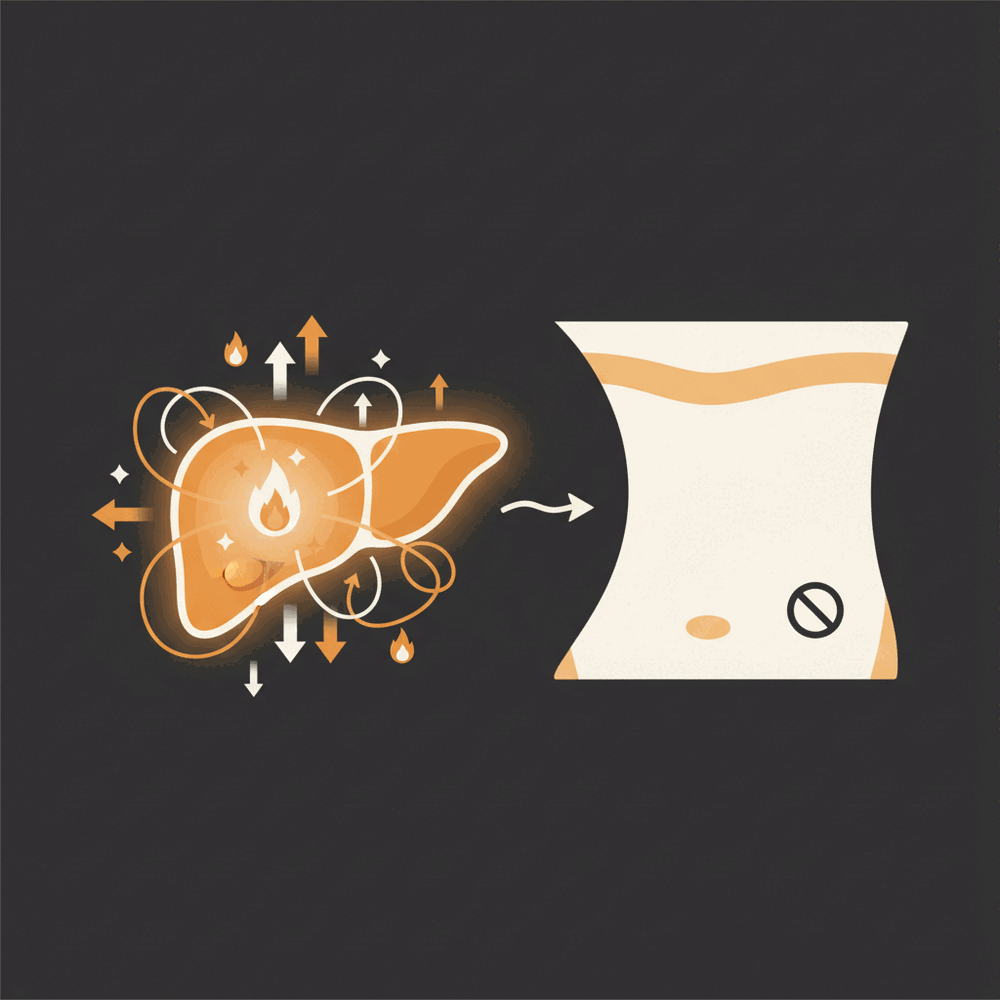
This is the oldest myth in glucagon physiology. Yes, glucagon is a powerful fat-burning signal — but in the liver, not in your body fat. The glucagon receptor is densely expressed on liver cells and barely present on human fat cells. When researchers deleted the glucagon receptor specifically from fat tissue in mice, nothing about their fat metabolism, body weight, or circulating free fatty acids changed (Vasileva et al., AJP-Endocrinology 2022). In humans, raising glucagon to physiological levels does not increase lipolysis in abdominal fat at all (Gravholt et al., JCEM 2001; Jensen et al., JCEM 1991). The lipolytic effect only appears in a test tube at supraphysiological concentrations the bloodstream never reaches.
What glucagon actually does is drive fat oxidation inside the liver — through a cAMP/PKA and calcium pathway that activates hepatic fat breakdown (Perry et al., Nature 2020; Kajani et al., Physiological Reviews 2024) — and raises whole-body energy expenditure. The image of glucagon "melting" your belly fat and flooding your organs with it is an in-vitro artefact, not human physiology. The foundation of his "flood" is cracked from the first chapter.
Claim 2: the pancreas "overload"
Next, elevated lipase as proof your pancreas is being driven toward failure.
The boring reality: mild, symptom-free rises in lipase and amylase are common and usually harmless on this drug class. They reflect stimulated but intact acinar cells leaking a little enzyme into the blood — a physiological "leak," not the organ digesting itself. We even know the receptor mechanism: GLP-1 receptors sit on pancreatic acinar cells and nudge them to release enzyme, in healthy tissue, with no damage (Hou… Williams et al., AJP-GI 2016).
And the hard endpoints are reassuring. In the large liraglutide trial programmes, amylase and lipase rose modestly without predicting acute pancreatitis (Steinberg et al., Diabetes Care 2017). A 2026 living systematic review pooling 31 placebo-controlled trials and over 40,000 patients found essentially identical pancreatitis rates on drug versus placebo (odds ratio ≈ 0.99) — though, in fairness, that one is still a preprint and not yet peer-reviewed. A 2024 analysis even reported fewer recurrent pancreatitis episodes in high-risk patients on GLP-1 drugs (Nassar et al., ENDO 2024 — conference abstract), plausibly because the drugs fix the underlying triggers. Crucially, acute pancreatitis is a clinical diagnosis — the revised Atlanta criteria require real pain plus lipase over three times the upper limit plus imaging (Banks et al., Gut 2013). A lone lab number doesn't qualify, and the jump from "your lipase is up" to "your pancreas is overloading toward failure" isn't supported.
Claim 3: the "fatty liver cascade"
This is the central inversion, and the one most worth getting right.
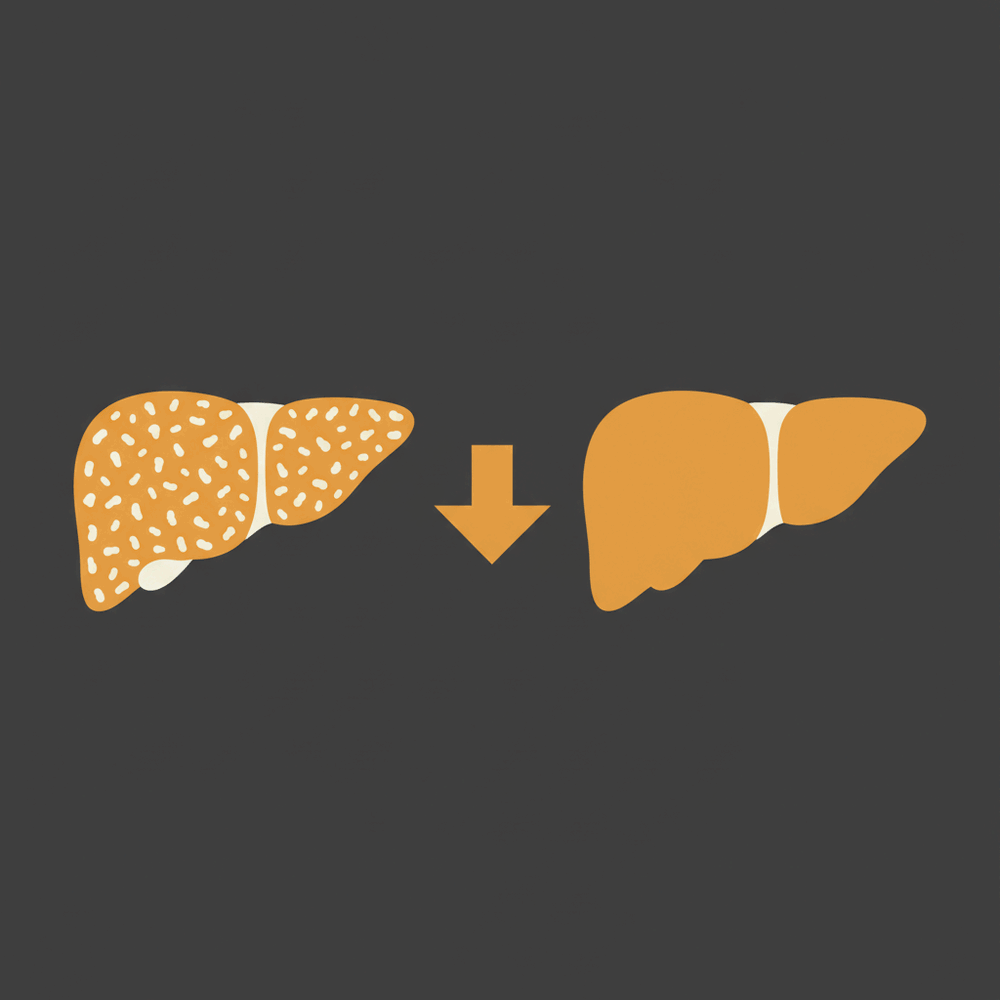
He frames retatrutide as overloading and damaging the liver — a "fatty liver cascade," a "liver overload." The trial data show the exact opposite. In the phase-2 liver-fat study, retatrutide reduced liver fat dose-dependently: at 48 weeks, −81.7% at 8 mg and −86.0% at 12 mg, versus −4.6% on placebo. In the top-dose group, about 93% of patients saw their liver fat fall below the 5% threshold — effectively a medical normalisation of their fatty liver (Sanyal et al., Nature Medicine 2024). This is among the largest liver-fat reductions reported in the drug's clinical development so far. Retatrutide isn't a hidden liver hazard; it is being developed as a treatment for fatty liver disease (MASLD). Its net effect on the liver, in controlled trials, is profoundly protective — the reverse of the cascade he describes.
What he gets right
A fair fact-check names the hits, not just the misses — and two of his underlying points are legitimate.
He is right that you should not panic and stop the drug over an isolated, symptom-free lipase rise; that genuinely matches what gastroenterology guidance implies. And he is right that rapid weight loss on these drugs costs lean mass — roughly a quarter to nearly half of the weight lost can be fat-free mass, much of it muscle (Koceva et al., 2025; Tinsley et al., 2024), which is why protein intake and resistance training belong in any serious plan (Locatelli et al., Diabetes Care 2024). Those points are real. The problem is the packaging around them.
The pattern
In our assessment, the structure here is a familiar one: real terminology is used to project authority; a frightening "damage cascade" is assembled that, on our reading of the trial data, the evidence does not support; other voices are labelled "misinformation"; and the proposed remedy is a paid protocol and peptides from the author's own shop. We do not claim to know his intent — we describe the effect as we see it, and readers can weigh the commercial context for themselves.
Retatrutide is a serious investigational drug with a real side-effect profile (mostly gastrointestinal, dose-dependent, worst during dose escalation) and genuine open questions about long-term use and muscle loss. It deserves caution and a prescribing clinician. It does not deserve a manufactured organ-failure narrative from someone selling the antidote.
The full scientific picture
The section above is the verdict. This part is the homework: a referenced primer on what these drugs actually do, so you can judge the claims yourself rather than take anyone's word — ours or his. It is dense on purpose.
From NAFLD to MASLD
For decades, fat building up in the liver without heavy drinking was called non-alcoholic fatty liver disease (NAFLD) — now the most common chronic liver condition on earth, affecting roughly 30–38% of adults. In 2023 an international consensus renamed it MASLD — metabolic dysfunction-associated steatotic liver disease — to put the metabolic root cause front and centre rather than defining the disease by what it isn't (Rinella et al., 2023).
The progression is described by a "multiple-hit" model: the first hit is fat accumulating in liver cells, which then makes the liver vulnerable to further insults — oxidative stress, mitochondrial dysfunction, gut-liver dysbiosis, inflammation (Buzzetti et al., 2016). The spectrum runs from simple steatosis, through steatohepatitis (MASH) with inflammation and cell injury, to fibrosis, cirrhosis and liver cancer. The driver of that progression is lipotoxicity — not inert triglyceride itself, but toxic lipid intermediates like ceramides and diacylglycerols that damage cell machinery and switch on inflammatory pathways.
Selective hepatic insulin resistance
One of the most important ideas here, developed largely by Samuel and Shulman, resolves a paradox: why a diabetic liver ignores insulin's signal to stop making glucose, yet still obeys insulin's signal to make fat (Samuel & Shulman, JCI 2016; Cell Metabolism 2018).
The mechanism: as fat accumulates in the liver, diacylglycerol builds up and activates an enzyme (PKCε) that jams the proximal insulin signal. Insulin can no longer suppress glucose output — so blood sugar rises — but the fat-making machinery keeps running on raw substrate and high insulin levels. Add the fact that resistant fat tissue spills free fatty acids straight into the liver, and you get a self-reinforcing loop of fat accumulation. Isotope studies put numbers on the inflow: in fatty-liver patients, about 59% of stored liver triglyceride comes from circulating free fatty acids (peripheral lipolysis), ~26% from de-novo lipogenesis, and ~15% from diet (Donnelly et al., JCI 2005). This is the genuine biology the video gestures at — and it is precisely why a drug that reduces that fat inflow helps rather than harms.
What glucagon really does — and the white-fat myth
Glucagon, long cast as just insulin's opposite, is now understood as a broad regulator of energy and lipid metabolism. Its main target is the liver, where it triggers glucose release and, importantly, drives fat oxidation and suppresses new fat synthesis through a cAMP/PKA pathway and a calcium-release mechanism that activates hepatic fat breakdown (Perry et al., Nature 2020; Galsgaard et al., 2019; Kajani et al., 2024). This hepatic "fat-burning" is exactly why drug developers bolted a glucagon signal onto retatrutide.
But — and this is the myth correction — that action is hepatic, not peripheral. Old in-vitro experiments showed isolated fat cells could break down fat when bathed in glucagon, but only at concentrations 10–100× higher than the body ever produces. Modern work settles it: knock the glucagon receptor out of fat tissue and lipid metabolism is unchanged (Vasileva et al., 2022); give humans physiological glucagon and abdominal-fat lipolysis doesn't budge (Gravholt et al., 2001; Jensen et al., 1991). Weight loss on glucagon-containing drugs comes from appetite suppression, raised energy expenditure, and liver fat oxidation — not from glucagon dissolving your belly fat and flooding your organs.
The poly-agonist leap: from semaglutide to retatrutide
Incretin drugs are gut-hormone mimics, engineered to resist rapid breakdown so they last. The first wave were GLP-1 mono-agonists: semaglutide produced about 14.9% mean weight loss in its pivotal obesity trial (STEP 1, Wilding et al., NEJM 2021). Next came dual GLP-1/GIP agonism: tirzepatide reached up to 20.9% (SURMOUNT-1, Jastreboff et al., NEJM 2022). For the physiology of how these hormones work together, see Holst, Nature Metabolism 2024 and Nauck et al., 2021.
Retatrutide (LY3437943) goes one further: a single molecule hitting GLP-1, GIP and glucagon receptors (trial NCT04881760). The glucagon arm adds hepatic fat oxidation and energy expenditure; the GLP-1 and GIP arms supply appetite suppression, insulin support, and — crucially — cancel out glucagon's tendency to raise blood sugar.
A note on naming: the phase-2 data below come from Jastreboff et al., NEJM 2023 and the MASLD substudy, Sanyal et al., Nature Medicine 2024. "TRIUMPH" is the later phase-3 programme — so don't let anyone present phase-2 figures as TRIUMPH-1 results.
Weight change at 48 weeks (phase 2, n=338; Jastreboff et al., 2023):
| Weekly dose | Mean weight change |
|---|---|
| Placebo | −2.1% |
| Retatrutide 1 mg | −8.7% |
| Retatrutide 4 mg | −17.1% |
| Retatrutide 8 mg | −22.8% |
| Retatrutide 12 mg | −24.2% |
Liver-fat change at 48 weeks (MASLD substudy, n=98; Sanyal et al., 2024):
| Weekly dose | Relative liver-fat change | Liver fat normalised (<5%) |
|---|---|---|
| Placebo | −4.6% | 0% |
| Retatrutide 1 mg | −51.3% | >50% |
| Retatrutide 8 mg | −81.7% | — |
| Retatrutide 12 mg | −86.0% | ~93% |
A near-quarter of body weight gone in under a year, in dimensions previously reached only by bariatric surgery — and a fatty liver normalised in over nine of ten patients at the top dose. These are the data a "liver overload" narrative has to ignore.
Gastrointestinal effects and the anesthesia question
The price of this efficacy is mostly gastrointestinal. Slowed stomach emptying and brainstem nausea signalling make nausea, vomiting, diarrhoea and constipation the common side effects — dose-dependent, worst during dose escalation, and usually transient (Jastreboff et al., 2023). Slow titration (starting low) is the standard mitigation.
One real-world consequence has prompted genuine medical debate: because these drugs slow gastric emptying, food can linger in the stomach longer, raising the chance of retained stomach contents before anaesthesia and a theoretical aspiration risk. Meta-analyses do find significantly higher residual gastric content in users (do Nascimento et al., 2024; Tan et al., 2025), even if actual aspiration events remain rare (Jalleh et al., JCEM 2024). Anaesthesia societies now advise pausing the drug before elective procedures (ASA guidance, 2024). This is a legitimate, well-characterised caution — and notably not the one the video centres on.
The pancreas: how it works, and the lipase question
Over 90% of the pancreas is exocrine tissue — acinar cells that make digestive enzymes. They store inactive enzyme precursors and release them on cue; premature activation inside the cell is what defines true pancreatitis. GLP-1 receptors are present on these acinar cells, so the drugs nudge enzyme release as a normal, receptor-mediated effect (Hou… Williams et al., 2016).
That is why mild lipase and amylase elevations are so common on therapy — and why they are usually meaningless. They are stimulated enzyme leak, not tissue destruction. The trial evidence (above) shows these rises don't predict pancreatitis (Steinberg et al., 2017), and pooled data show no excess pancreatitis risk versus placebo. The background risk that does exist tracks the population — people with obesity and type-2 diabetes carry a higher baseline pancreatitis risk from gallstones and high triglycerides, independent of any drug. Treating those drivers is plausibly why some data show reduced recurrence on GLP-1 therapy.
The real caveat: losing lean mass
If there is one warning that deserves the airtime the video spends on phantom organ damage, it's this. Across incretin trials, a substantial share of the weight lost is fat-free mass — roughly 25–40%, much of it skeletal muscle (Koceva et al., 2025; Tinsley et al., 2024). This isn't unique to these drugs — any large, rapid weight loss does it — but losing muscle lowers metabolic rate (feeding the rebound after stopping), reduces insulin sensitivity, and raises frailty and fall risk in older people. The evidence-based fix is unglamorous: adequate protein and progressive resistance training alongside the medication (Locatelli et al., 2024).
New frontiers: immunometabolism and cancer
Finally, a glimpse of where the science is heading. Obesity drives chronic inflammation and metabolically "exhausts" the immune cells that fight tumours. Early work suggests GLP-1 drugs can partly reverse this: in obese mouse models of lung cancer, a GLP-1 agonist slowed tumour growth and improved the anti-tumour immune environment — an effect seen only in obese animals (Pachimatla… Sanghvi et al., JCI Insight 2025). It is preclinical and early, but it hints that correcting metabolic dysfunction may have benefits well beyond the scale.
The honest verdict
Put the evidence together and the picture is the reverse of the video's. In controlled trials retatrutide lowers liver fat dramatically, does not raise pancreatitis risk, and does not dissolve your body fat through any glucagon flood. The real cautions — muscle loss, gastrointestinal effects, the anaesthesia interaction, and the blunt fact that gray-market product is unregulated and may not be what the label says — are precisely the ones a vendor selling you peptides has the least incentive to dwell on.
If you are considering or already using any of this, the move is not a 45-minute video and a checkout button. It is bloodwork, a real prescriber, and honest expectations. If something feels wrong, see the doctor you distrust the least — in person — before you trust a protocol sold by the person who diagnosed you on YouTube. For the trial doses as reported in the published literature, see our retatrutide reference; to understand the drug class first, start with what peptides are.
References
- Jastreboff AM, Kaplan LM, Frías JP, et al. Triple-Hormone-Receptor Agonist Retatrutide for Obesity — A Phase 2 Trial. N Engl J Med 2023. PubMed · NEJM
- Sanyal AJ, et al. Triple hormone receptor agonist retatrutide for MASLD: a randomized phase 2a trial. Nature Medicine 2024. PMC full text · Nature
- Phase-2 retatrutide obesity trial registration. ClinicalTrials.gov NCT04881760
- Perry RJ, et al. Glucagon stimulates gluconeogenesis by INSP3R1-mediated hepatic lipolysis. Nature 2020. PubMed
- Kajani S, et al. Hepatic glucagon action: beyond glucose mobilization. Physiological Reviews 2024. PubMed
- Galsgaard KD, et al. Glucagon Receptor Signaling and Lipid Metabolism. Front Physiol 2019. Full text
- Vasileva A, et al. Glucagon receptor signaling at white adipose tissue does not regulate lipolysis. Am J Physiol Endocrinol Metab 2022. PMC
- Gravholt CH, et al. Physiological levels of glucagon do not influence lipolysis in abdominal adipose tissue. JCEM 2001. PubMed
- Jensen MD, et al. Effects of glucagon on free fatty acid metabolism in humans. JCEM 1991. PubMed
- Hou Y, Ernst SA, Heidenreich K, Williams JA. GLP-1 receptor is present in pancreatic acinar cells and regulates amylase secretion. Am J Physiol Gastrointest Liver Physiol 2016. PMC
- Steinberg WM, et al. Amylase, Lipase, and Acute Pancreatitis in People With Type 2 Diabetes Treated With Liraglutide (LEADER). Diabetes Care 2017. PubMed
- GLP-1 receptor agonists and the risk of acute pancreatitis: a living systematic review. medRxiv 2026 (preprint, not yet peer-reviewed). Preprint
- Nassar M, et al. GLP-1 medications may lower risk of recurrent acute pancreatitis. ENDO 2024 (conference abstract). Press release
- Banks PA, et al. Classification of acute pancreatitis — 2012: revision of the Atlanta classification. Gut 2013. PubMed
- Rinella ME, et al. A multisociety Delphi consensus on new fatty liver disease nomenclature (MASLD). Hepatology / J Hepatol 2023. PMC
- Samuel VT, Shulman GI. The pathogenesis of insulin resistance. J Clin Invest 2016. PMC
- Samuel VT, Shulman GI. NAFLD as a Nexus of Metabolic and Hepatic Diseases. Cell Metabolism 2018. PMC
- Buzzetti E, Pinzani M, Tsochatzis EA. The multiple-hit pathogenesis of NAFLD. Metabolism 2016. PubMed
- Donnelly KL, et al. Sources of fatty acids stored in liver and secreted via lipoproteins in NAFLD. J Clin Invest 2005. PMC
- Locatelli JC, et al. Incretin-Based Weight Loss and Resistance Exercise. Diabetes Care 2024. Article
- Koceva A, et al. Impact of Incretin-Based Therapy on Skeletal Muscle Health. Medicina 2025. PMC
- Tinsley GM, et al. Body Composition Principles for Fat-Free and Skeletal Muscle Mass Changes. J Endocr Soc 2024. PMC
- do Nascimento TS, et al. GLP-1 receptor agonists and residual gastric content (perioperative). Perioper Med 2024. PMC
- Tan Y, et al. GLP-1 receptor agonists increase residual gastric content and aspiration risk. Dig Liver Dis 2025. PubMed
- Ushakumari DS, et al. ASA Consensus-based Guidance on Preoperative Management of GLP-1 RAs. Anesthesiology 2024. PubMed
- Jalleh RJ, et al. Clinical Consequences of Delayed Gastric Emptying With GLP-1 RAs. JCEM 2024. PMC
- Pachimatla AG, … Sanghvi VR, et al. GLP-1 receptor agonism improves lung cancer outcomes and tumor immunity (obese models). JCI Insight 2025. PubMed
- Wilding JPH, et al. Once-Weekly Semaglutide in Adults with Overweight or Obesity (STEP 1). N Engl J Med 2021. PubMed
- Jastreboff AM, et al. Tirzepatide Once Weekly for Obesity (SURMOUNT-1). N Engl J Med 2022. PubMed
- Holst JJ. GLP-1 physiology in obesity and incretin-based drugs. Nature Metabolism 2024. PubMed
- Nauck MA, et al. The evolving story of incretins (GIP and GLP-1). Diabetes Obes Metab 2021. Article
- California Board of Chiropractic Examiners. Meeting materials, 29 Oct 2020 (licence DC 29377, revoked 8 Jul 2020). PDF
- California Board of Chiropractic Examiners. Final Disciplinary Actions. Page
- California Department of Consumer Affairs. License Search. Lookup
- EliteBiogenix. Research peptides and SARMs vendor (in-vitro research only). Site
- Bachmeyer T. "Mega Dosing vs Micro Dosing Retatrutide: Which Damages Your Liver More?" YouTube. Video
Take myPeptides with you
Track doses, plans and progress on your phone — end-to-end encrypted.
This article is for informational purposes only and does not replace medical advice. myPeptides gives no dosing recommendations.